
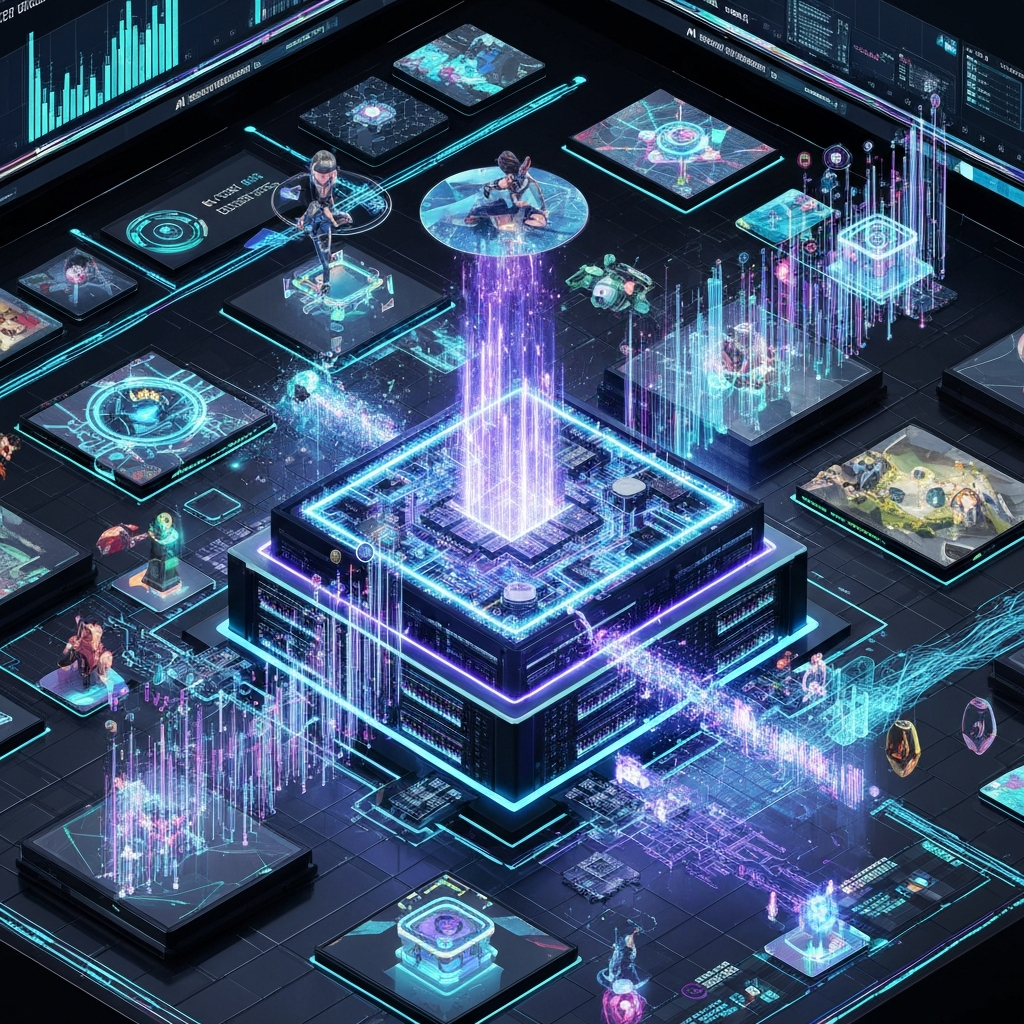
I’ve spent the better part of fifteen years watching video games evolve from predictable enemy patterns to genuinely surprising, adaptive experiences. When I first started covering game development back in 2009, “smart AI” meant enemies that could occasionally flank you. Today? We’re talking about systems that fundamentally reshape how games respond to individual players.
What Makes a Game System “Intelligent”?
Let me clear up a common misconception first. When we discuss intelligent game systems, we’re not necessarily talking about the same technology that powers language models or image generators. Game AI operates differently it’s purpose-built for entertainment, not general intelligence.
An intelligent game system essentially refers to any in-game mechanism that observes, processes, and responds to player behavior in non scripted ways. Think of it like this: traditional games run on rails. Smart games have steering wheels.
The goal isn’t to create unbeatable opponents. Honestly, that would be trivial. Any computer could destroy human players if raw calculation was the objective. The real challenge lies in crafting systems that feel alive, create memorable moments, and keep players engaged without frustrating them.
The Building Blocks of Game Intelligence
Non-Player Character Behavior
NPCs have come incredibly far from the days of walking set paths until disturbed. Modern behavior trees and finite state machines allow characters to prioritize goals, assess threats, and make contextual decisions.
Take The Last of Us Part II as an example. Enemies call each other by name, coordinate search patterns, and genuinely seem distressed when allies fall. That’s not random developers at Naughty Dog built layered decision-making systems that evaluate dozens of factors before characters act.
What fascinates me is the subtlety involved. These NPCs aren’t trying to win. They’re trying to behave believably while maintaining appropriate difficulty. That balance requires extensive playtesting and constant adjustment.
Dynamic Difficulty Adjustment
Here’s where things get interesting and occasionally controversial. Dynamic difficulty systems monitor player performance and quietly tweak game parameters in response.
Resident Evil 4 pioneered this approach back in 2005. Die too often? The game secretly reduces enemy aggression and damage. Breezing through? Health drops become scarcer. Most players never noticed these adjustments, which is precisely the point.
More recent implementations have grown sophisticated. Left 4 Dead’s AI Director doesn’t just adjust difficulty it controls pacing, item placement, enemy spawns, and even music cues to create optimal tension curves. After playing hundreds of hours, I still encounter genuinely surprising scenarios because the system constantly remixes elements.
Procedural Content Generation
Procedural generation powered by intelligent algorithms enables games to create virtually infinite variations of content. No Man’s Sky generates entire planets with distinct ecosystems. Spelunky constructs challenging levels that feel hand-designed despite being mathematically produced.
The intelligence here involves constraint satisfaction. Algorithms don’t just randomize they ensure playable, coherent, and enjoyable results. That requires teaching systems what “good level design” actually means, which turns out to be surprisingly difficult to codify.
Learning Systems and Player Modeling
Some games actively build profiles of individual players. Racing games like Forza Motorsport have utilized machine learning to create “Drivatars” that mimic how specific players drive their braking tendencies, cornering aggression, preferred racing lines.
Fighting games increasingly employ similar techniques. Killer Instinct on Xbox One introduced Shadow systems that learned player combos, defensive habits, and strategic tendencies. Fighting against your own shadow felt genuinely eerie the first time I tried it.
Real-World Applications Beyond Entertainment

Game AI research has broader implications than many realize. Pathfinding algorithms developed for strategy games now optimize logistics networks. Behavior simulation techniques inform crowd management and urban planning.
Military training simulations rely heavily on intelligent opponent modeling. Medical training games use adaptive systems to create realistic patient responses. Educational games adjust difficulty to maintain optimal learning zones.
The crossover works both ways too. Advances in reinforcement learning the technique behind AlphaGo have enabled new approaches to game testing and balance. Developers can simulate thousands of playthroughs to identify exploits or difficulty spikes before release.
Current Limitations and Honest Challenges
I’d be doing you a disservice by pretending game AI has solved all problems. Significant limitations persist.
Computational budgets remain tight. Every cycle spent on AI calculations competes with graphics, physics, and network code. Developers constantly compromise between intelligence and performance.
Believability still stumps us regularly. NPCs that act too perfectly feel robotic. Those that act too randomly seem broken. Finding that human-like middle ground requires extensive iteration and player testing.
Emergent behavior creates unpredictable bugs. When systems interact in complex ways, bizarre edge cases appear. I’ve seen AI enemies permanently trapped in logic loops, characters making absurd decisions, and difficulty systems that spiral in wrong directions.
Where Things Are Heading
Looking forward, I expect several trends to accelerate. Cloud computing may offload complex AI calculations, enabling smarter systems without taxing player hardware. Machine learning will likely enable more personalized experiences as games better understand individual preferences.
Natural language processing could eventually allow genuine conversations with NPCs rather than dialogue trees. Some experimental games already explore this territory, though results remain inconsistent.
The integration of large language models into game systems presents fascinating possibilities alongside legitimate concerns about coherence, safety, and creative control. These conversations are happening now within development studios.
Final Thoughts
Intelligent game systems represent a convergence of computer science, psychology, and entertainment design. The best implementations remain invisible—players simply experience games that feel responsive, fair, and alive.
That invisibility is the ultimate achievement. When AI works perfectly in games, nobody notices it’s there. They just remember the incredible moments it created.
Frequently Asked Questions
Can game AI truly learn from players?
Yes, certain games implement machine learning systems that adapt to individual playstyles, though most game AI uses sophisticated pre-programmed responses rather than real-time learning.
Why don’t games use the most advanced AI available?
Performance constraints, development costs, and gameplay priorities limit implementation. The smartest possible AI often isn’t the most entertaining.
Does AI make games more difficult?
Not necessarily. Most intelligent systems aim to maintain appropriate challenge levels rather than maximize difficulty. Many actively reduce difficulty when players struggle.
Which games have the best AI systems?
F.E.A.R., Halo, The Last of Us, Alien: Isolation, and Left 4 Dead are frequently cited for outstanding enemy behavior systems.
Will AI eventually replace game designers?
Unlikely for creative roles. AI assists with content generation and testing, but human creativity, cultural understanding, and artistic vision remain irreplaceable in game design.
How do developers test game AI?
Combinations of automated playtesting, machine learning simulations, and extensive human playtesting help developers refine AI behavior before release.
spent the better part of fifteen years watching video games evolve from predictable enemy patterns to genuinely surprising, adaptive experiences. When I first started covering game development back in 2009, “smart AI” meant enemies that could occasionally flank you. Today? We’re talking about systems that fundamentally reshape how games respond to individual players.
What Makes a Game System “Intelligent”?
Let me clear up a common misconception first. When we discuss intelligent game systems, we’re not necessarily talking about the same technology that powers language models or image generators. Game AI operates differently—it’s purpose-built for entertainment, not general intelligence.
An intelligent game system essentially refers to any in-game mechanism that observes, processes, and responds to player behavior in non-scripted ways. Think of it like this: traditional games run on rails. Smart games have steering wheels.
The goal isn’t to create unbeatable opponents. Honestly, that would be trivial. Any computer could destroy human players if raw calculation was the objective. The real challenge lies in crafting systems that feel alive, create memorable moments, and keep players engaged without frustrating them.
The Building Blocks of Game Intelligence
Non-Player Character Behavior
NPCs have come incredibly far from the days of walking set paths until disturbed. Modern behavior trees and finite state machines allow characters to prioritize goals, assess threats, and make contextual decisions.
Take The Last of Us Part II as an example. Enemies call each other by name, coordinate search patterns, and genuinely seem distressed when allies fall. That’s not random—developers at Naughty Dog built layered decision-making systems that evaluate dozens of factors before characters act.
What fascinates me is the subtlety involved. These NPCs aren’t trying to win. They’re trying to behave believably while maintaining appropriate difficulty. That balance requires extensive playtesting and constant adjustment.
Dynamic Difficulty Adjustment
Here’s where things get interesting—and occasionally controversial. Dynamic difficulty systems monitor player performance and quietly tweak game parameters in response.
Resident Evil 4 pioneered this approach back in 2005. Die too often? The game secretly reduces enemy aggression and damage. Breezing through? Health drops become scarcer. Most players never noticed these adjustments, which is precisely the point.
More recent implementations have grown sophisticated. Left 4 Dead’s AI Director doesn’t just adjust difficulty—it controls pacing, item placement, enemy spawns, and even music cues to create optimal tension curves. After playing hundreds of hours, I still encounter genuinely surprising scenarios because the system constantly remixes elements.
Procedural Content Generation
Procedural generation powered by intelligent algorithms enables games to create virtually infinite variations of content. No Man’s Sky generates entire planets with distinct ecosystems. Spelunky constructs challenging levels that feel hand-designed despite being mathematically produced.
The intelligence here involves constraint satisfaction. Algorithms don’t just randomize—they ensure playable, coherent, and enjoyable results. That requires teaching systems what “good level design” actually means, which turns out to be surprisingly difficult to codify.
Learning Systems and Player Modeling
Some games actively build profiles of individual players. Racing games like Forza Motorsport have utilized machine learning to create “Drivatars” that mimic how specific players drive—their braking tendencies, cornering aggression, preferred racing lines.
Fighting games increasingly employ similar techniques. Killer Instinct on Xbox One introduced Shadow systems that learned player combos, defensive habits, and strategic tendencies. Fighting against your own shadow felt genuinely eerie the first time I tried it.
Real-World Applications Beyond Entertainment
Game AI research has broader implications than many realize. Pathfinding algorithms developed for strategy games now optimize logistics networks. Behavior simulation techniques inform crowd management and urban planning.
Military training simulations rely heavily on intelligent opponent modeling. Medical training games use adaptive systems to create realistic patient responses. Educational games adjust difficulty to maintain optimal learning zones.
The crossover works both ways too. Advances in reinforcement learning—the technique behind AlphaGo—have enabled new approaches to game testing and balance. Developers can simulate thousands of playthroughs to identify exploits or difficulty spikes before release.
Current Limitations and Honest Challenges
I’d be doing you a disservice by pretending game AI has solved all problems. Significant limitations persist.
Computational budgets remain tight. Every cycle spent on AI calculations competes with graphics, physics, and network code. Developers constantly compromise between intelligence and performance.
Believability still stumps us regularly. NPCs that act too perfectly feel robotic. Those that act too randomly seem broken. Finding that human-like middle ground requires extensive iteration and player testing.
Emergent behavior creates unpredictable bugs. When systems interact in complex ways, bizarre edge cases appear. I’ve seen AI enemies permanently trapped in logic loops, characters making absurd decisions, and difficulty systems that spiral in wrong directions.
Where Things Are Heading
Looking forward, I expect several trends to accelerate. Cloud computing may offload complex AI calculations, enabling smarter systems without taxing player hardware. Machine learning will likely enable more personalized experiences as games better understand individual preferences.
Natural language processing could eventually allow genuine conversations with NPCs rather than dialogue trees. Some experimental games already explore this territory, though results remain inconsistent.
The integration of large language models into game systems presents fascinating possibilities alongside legitimate concerns about coherence, safety, and creative control. These conversations are happening now within development studios.
Final Thoughts
Intelligent game systems represent a convergence of computer science, psychology, and entertainment design. The best implementations remain invisible—players simply experience games that feel responsive, fair, and alive.
That invisibility is the ultimate achievement. When AI works perfectly in games, nobody notices it’s there. They just remember the incredible moments it created.
Frequently Asked Questions
Can game AI truly learn from players?
Yes, certain games implement machine learning systems that adapt to individual playstyles, though most game AI uses sophisticated pre-programmed responses rather than real-time learning.
Why don’t games use the most advanced AI available?
Performance constraints, development costs, and gameplay priorities limit implementation. The smartest possible AI often isn’t the most entertaining.
Does AI make games more difficult?
Not necessarily. Most intelligent systems aim to maintain appropriate challenge levels rather than maximize difficulty. Many actively reduce difficulty when players struggle.
Which games have the best AI systems?
F.E.A.R., Halo, The Last of Us, Alien: Isolation, and Left 4 Dead are frequently cited for outstanding enemy behavior systems.
Will AI eventually replace game designers?
Unlikely for creative roles. AI assists with content generation and testing, but human creativity, cultural understanding, and artistic vision remain irreplaceable in game design.
How do developers test game AI?
Combinations of automated playtesting, machine learning simulations, and extensive human playtesting help developers refine AI behavior before release.