
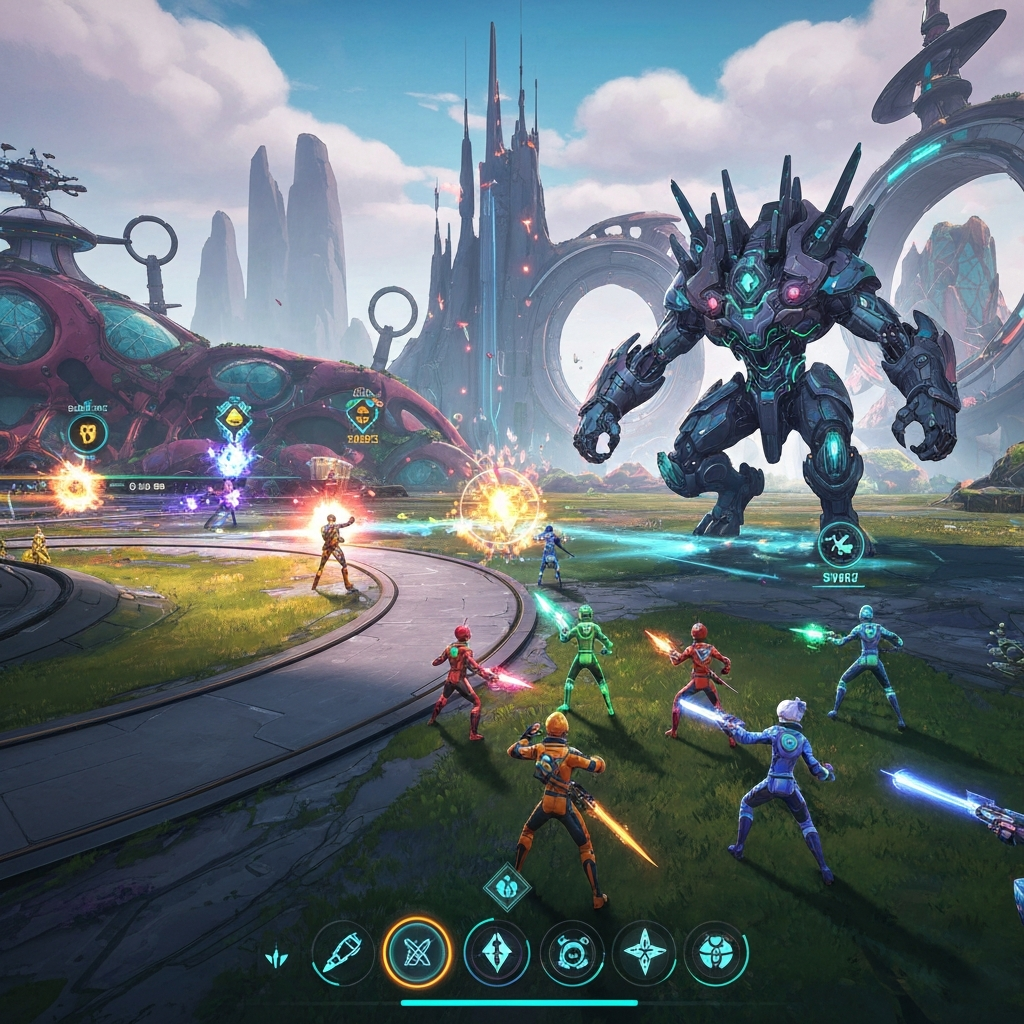
There’s this moment in RimWorld I’ll never forget. My colony was thriving decent food supplies, solid defenses, happy colonists. Then the game decided things were too comfortable. A solar flare knocked out my power grid. Simultaneously, a manhunter pack of wild boars appeared on the map edge. And one of my best colonists chose that exact moment to have a mental breakdown and start wandering into danger.
None of this was scripted. The game’s AI systems evaluated my situation, determined I needed chaos, and constructed a perfect storm from available possibilities. That’s the magic of AI generated in game events moments that feel authored but emerge from systems rather than predetermined scripts.
The Death of Predictable Worlds
Traditional game design relied heavily on handcrafted content. Developers placed every enemy, scripted every encounter, designed every event down to precise triggers. Play the game twice, get the same experience. Reliable, polished, but ultimately limited.
AI-generated events represent a fundamental shift. Instead of pre-programming specific occurrences, developers create systems that understand game states, player behavior, and narrative possibilities then let those systems generate events dynamically. The result? Games that surprise even their creators.
This isn’t random number generation slapping together nonsensical occurrences. Modern event generation involves sophisticated evaluation of context, pacing, difficulty, and player engagement. The goal is creating meaningful moments that feel intentional while remaining genuinely unpredictable.
How These Systems Actually Work
At the technical level, AI event generation combines several approaches. Most systems start with a library of potential events raids, weather changes, character interactions, resource discoveries, random encounters. But the selection and timing of these events depends on dynamic analysis.
Games track numerous variables: player resources, time since last major event, current threat level, story progression, player playstyle, and session duration. An event manager (sometimes called an AI Director, narrative engine, or drama system) processes these inputs and determines what should happen next.
Dwarf Fortress uses what creator Tarn Adams describes as a “story generator” systems so complex that fortress destruction often results from cascading failures nobody anticipated. A dragon attacks, starting a fire that melts ice, flooding tunnels, drowning dwarves, whose rotting corpses create miasma that sickens survivors. None of this was explicitly programmed. It emerged from interacting systems.
Shadow of War’s Nemesis system takes a character-focused approach. Orcs remember encounters, develop grudges, exploit player weaknesses, and create persistent rivalries. Get killed by a particular enemy? He might get promoted, develop new abilities, and return to mock your failure. These aren’t scripted characters they’re generated from templates and shaped by your specific interactions.
Pacing and Emotional Rhythm
The most impressive aspect of sophisticated event generation isn’t randomness it’s rhythm. Good systems understand that constant chaos exhausts players while endless calm bores them.
Left 4 Dead’s AI Director became legendary for managing emotional pacing. It monitored player stress indicators health, ammunition, proximity to teammates and adjusted zombie spawns accordingly. Struggling groups received breathing room. Dominant teams faced intensified opposition. The goal was maintaining a specific feeling throughout sessions.
Hades uses similar principles for its roguelike structure. Each run feels distinct because encounter selection, room layouts, and reward offerings adapt to your current build and past choices. The game seems to know when you need help and when you need challenge, creating runs that feel personally tailored.
This emotional intelligence separates great AI event generation from crude randomization. Players should feel like the game understands them, not like they’re subject to arbitrary dice rolls.
The Storytelling Revolution
What excites me most about AI generated events is their narrative potential. We’re moving toward games that tell genuinely unique stories for each player.
No Man’s Sky demonstrates both the promise and limitations here. Its universe contains billions of procedurally generated planets, creatures, and discoveries. Every player explores different worlds. But early versions felt hollow variety without meaning. Subsequent updates added more contextual event generation, giving those random discoveries narrative weight through missions, factions, and interconnected systems.
Crusader Kings III achieves something remarkable by generating events based on character traits, relationships, and historical context. Your paranoid king receives different events than your generous queen. Family dynamics create soap opera drama that feels written specifically for your playthrough. Players share wildly different stories because their games evolved differently based on countless small decisions and generated events.
Limitations Worth Acknowledging
Let’s be honest about current constraints. AI generated events can feel repetitive once you recognize patterns. Play any procedural game long enough, and you’ll see the seams the limited event types, the predictable triggers, the recycled dialogue with swapped names.
Generating truly novel content remains extraordinarily difficult. Most systems remix and recombine existing elements rather than creating genuinely new material. That’s not failure it’s realistic expectation setting. We’re generating variations, not inventing entirely new experiences from nothing.
Quality control presents another challenge. Handcrafted content gets polished until it shines. Generated content might produce awkward combinations, broken difficulty curves, or narrative nonsense. Balancing systemic freedom against quality consistency requires careful design.
Where This Goes Next
Current generation systems represent early steps toward something more ambitious. Future implementations will likely incorporate natural language generation for dialogue, more sophisticated player modeling, and genuine learning from aggregate player behavior.
Imagine games where NPCs discuss events you’ve experienced in contextually appropriate ways not from scripted responses but from understanding what happened. Or worlds where generated events create persistent consequences that ripple through economies, factions, and storylines across dozens of hours.
Some developers experiment with games that essentially never repeat. Each session generates fresh content built around core mechanics but expressed through endless variation. Whether that’s desirable or just exhausting probably depends on the player.
The Human Touch Still Matters

Despite my enthusiasm for AI generated events, I believe handcrafted moments remain essential. The most memorable gaming experiences often combine systemic emergence with authored beats generated chaos punctuated by designed climaxes.
The goal isn’t replacing human creativity but augmenting it. Let systems handle variety and responsiveness while designers focus on meaning and impact. That combination creates games that feel both surprising and intentional, both personal and polished.
Every time RimWorld throws an absurd crisis at my colonists, I’m reminded why this technology matters. Those generated disasters become my stories, unique to my playthrough, impossible to replicate. That’s worth pursuing.
Frequently Asked Questions
What are AI-generated in game events?
Dynamic occurrences created by game systems analyzing player behavior and game state rather than being pre-scripted by developers, resulting in unique experiences each playthrough.
How do games decide which events to trigger?
Systems evaluate multiple factors including player resources, time since previous events, difficulty curves, story progression, and session pacing to select contextually appropriate events.
Which games use AI generated events effectively?
RimWorld, Dwarf Fortress, Left 4 Dead, Shadow of War, Crusader Kings III, and Hades represent notable implementations across different genres.
Can AI generate truly original content?
Currently, most systems recombine existing elements rather than creating genuinely novel material. True originality remains a significant technical challenge.
Do generated events replace handcrafted content?
Best implementations blend both approaches, using generated events for variety and responsiveness while maintaining authored moments for narrative impact.
Will AI generated events improve over time?
Absolutely. Advances in procedural generation, player modeling, and narrative systems continue expanding possibilities for dynamic, personalized gameplay experiences.