

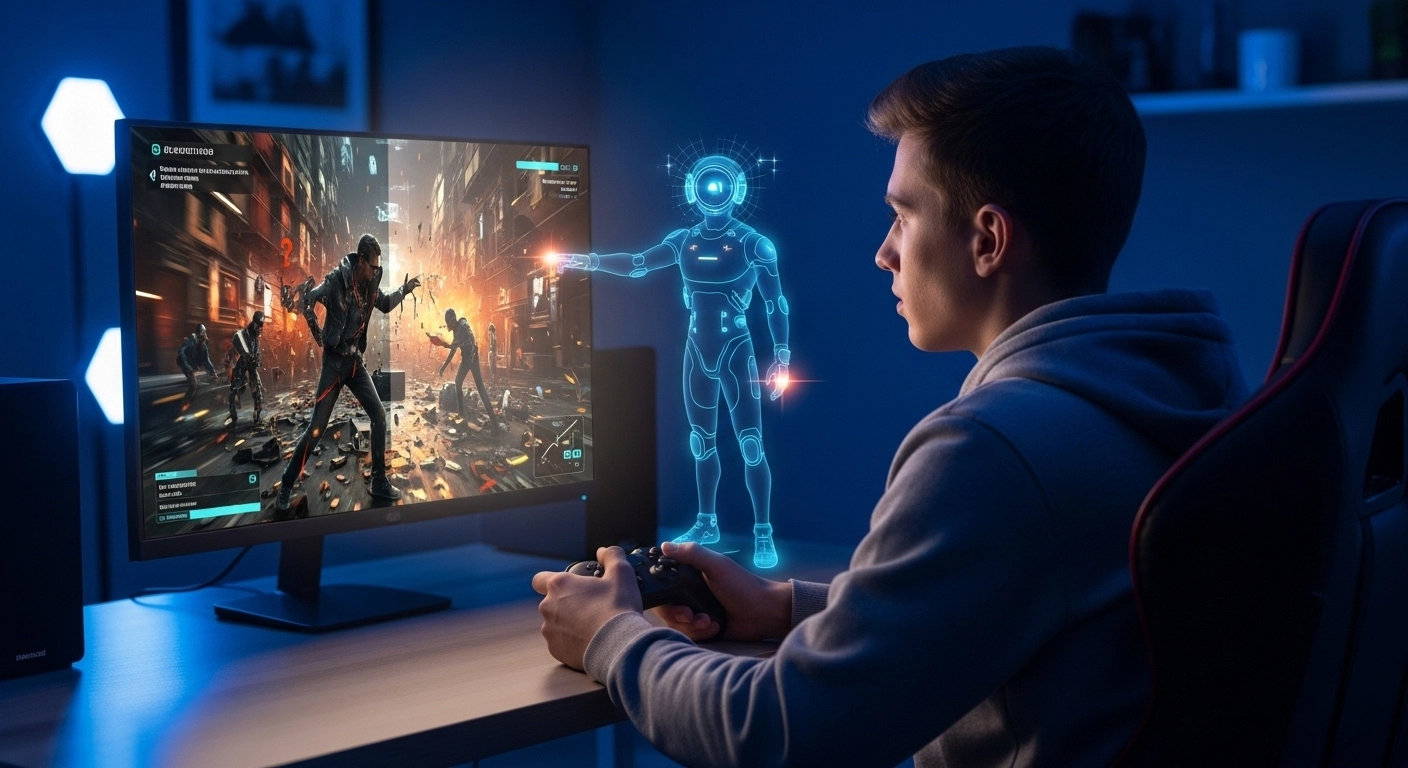
Starting a new game used to mean hours of frustration, countless deaths, and maybe even rage quitting before you really got going. I remember picking up Dark Souls years ago and spending an entire evening just trying to understand the basic combat system. Nobody enjoys that initial feeling of being completely lost.
But things are changing rapidly. Artificial intelligence has quietly transformed how newcomers learn games, and honestly, it’s about time.
With the emergence of AI Assisting New Players: Smarter Gaming Learning, gamers can now enjoy a more streamlined introduction to their favorite titles.
The Old Way Versus the New Reality
Traditional tutorials were either painfully long or completely useless. You’d sit through twenty minutes of hand holding that explained obvious mechanics, then get thrown into situations where you had no idea what to do. Game developers struggled to find that balance between helpful guidance and letting players discover things naturally.
Modern AI systems approach this problem differently. Instead of static tutorials that treat every player identically, intelligent systems now observe how you play and adapt accordingly. They notice when you’re struggling with a particular mechanic and offer contextual help without interrupting your flow.
I’ve been playing competitive shooters for over fifteen years, and watching my nephew learn Valorant recently showed me how far we’ve come. The game’s practice mode uses AI opponents that adjust their difficulty based on his performance. When he improved his aim, they got tougher. When he struggled, they eased up just enough to rebuild his confidence.
Dynamic Difficulty Adjustment: Your Personal Coach
Dynamic difficulty adjustment isn’t new, but AI has made it remarkably sophisticated. Games like Resident Evil have used this concept for decades, but current implementations feel almost invisible.
Take FIFA or NBA 2K for example. New players often get destroyed online because they’re matched against experienced veterans. Now, AI systems analyze your playstyle, reaction times, and decision making patterns to find opponents at similar skill levels. More importantly, single player modes adjust enemy AI behavior in real time.
This matters because frustration is the number one reason beginners abandon games. Nobody wants to feel incompetent for hours on end. Smart difficulty systems keep you in what psychologists call the “flow state” challenged enough to stay engaged but not overwhelmed to the point of giving up.
In Game AI Companions That Actually Help
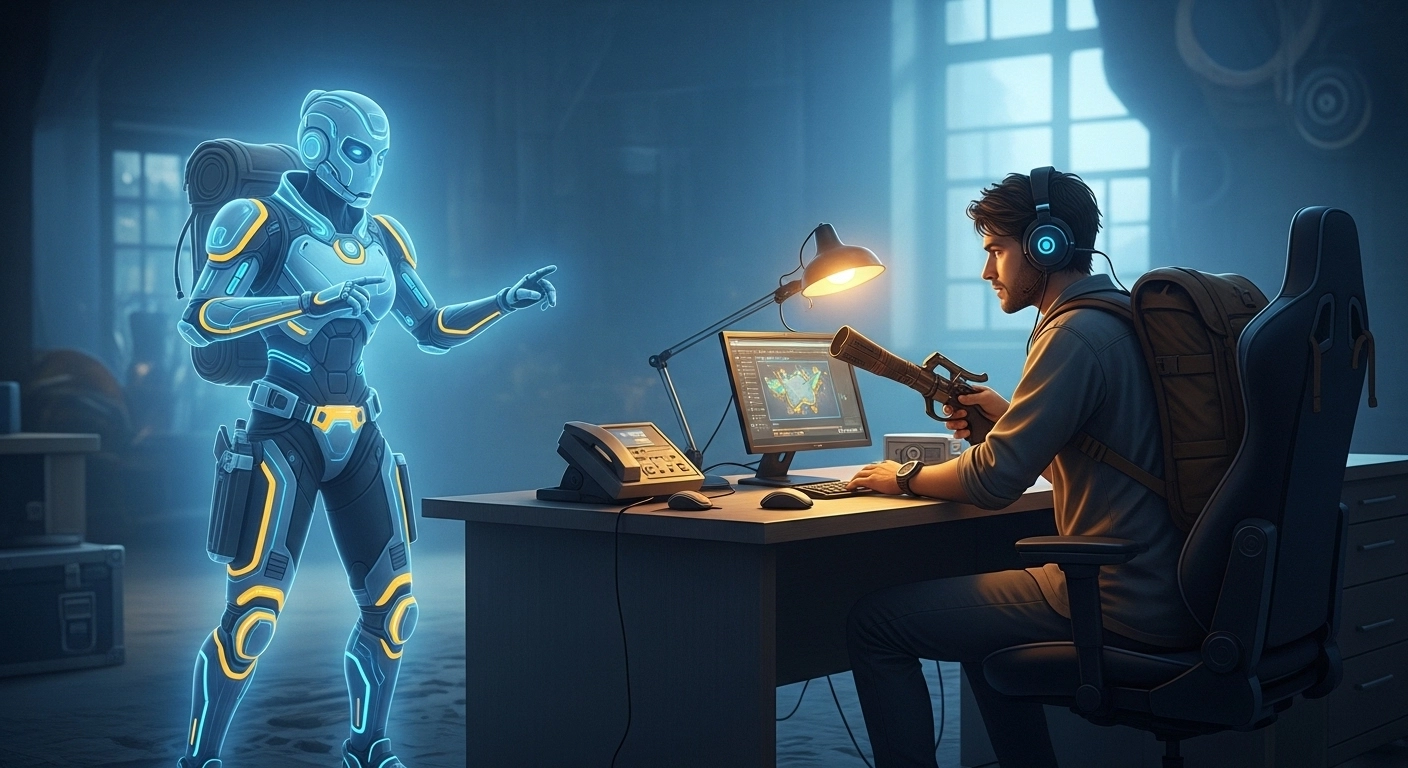
Remember when AI companions were basically useless? They’d stand in doorways, alert enemies, or just watch you struggle. Those days are largely behind us.
Modern AI companions in games like Horizon Forbidden West or God of War Ragnarok actually contribute meaningfully. For new players, these companions serve as subtle teachers. They’ll suggest tactics during difficult encounters, highlight important items you might miss, and even adjust their support level based on your apparent experience.
My friend started playing cooperative games last year with zero background in the genre. She mentioned how helpful the AI partner in It Takes Two was not just for completing puzzles, but for demonstrating how movement mechanics worked before she had to execute them herself.
Personalized Learning Through Pattern Recognition
Here’s where things get really interesting. Advanced AI systems now track thousands of data points about your playing habits and use that information to personalize your experience.
League of Legends implemented an AI recommendation system that suggests champions based on your playstyle preferences and current skill level. Instead of overwhelming newcomers with 160+ character options, the system identifies patterns in how you prefer to play and narrows choices accordingly.
Fighting games have embraced this approach enthusiastically. Street Fighter 6 includes an AI driven training mode that identifies your weaknesses and designs custom practice routines. If you consistently drop certain combos or struggle against specific attack patterns, the system creates targeted exercises.
This personalization extends beyond combat. Narrative games use AI to adjust pacing, dialogue complexity, and even story branching based on how engaged you seem. If you’re rushing through conversations, the system might streamline exposition. If you’re exploring thoroughly, it might surface additional content.
The Social Side: AI Powered Matchmaking and Communities
Finding other players at your skill level used to depend entirely on luck. Now, sophisticated matchmaking algorithms consider dozens of factors beyond simple win loss records.
Newer systems analyze playstyle compatibility, communication preferences, and even toxicity patterns. For beginners, this means more enjoyable first experiences with online communities. Getting matched against smurfs or paired with hostile teammates can permanently sour someone on multiplayer gaming.
Games like Fortnite initially place new accounts in lobbies filled with AI controlled opponents that look and behave like real players. This gives genuine newcomers space to learn basic mechanics without the pressure of actual competition. Gradually, more human players enter their matchmaking pool as skills develop.
Potential Concerns and Limitations
Not everything about AI assistance is perfect, and we should acknowledge that.
Some argue that overly helpful AI creates dependency. Players might never develop problem-solving skills if the game always smooths their path. There’s validity to this concern struggling through challenges builds resilience and makes eventual victories more satisfying.
Privacy considerations exist too. These systems require extensive data collection about your behavior. Most players probably don’t think twice about this, but the information gathered goes well beyond simple gameplay statistics.
There’s also the homogenization worry. If everyone receives optimized, personalized experiences, do we lose those shared difficult moments that gaming communities bond over? Part of what made certain games memorable was their uncompromising difficulty.
Looking Forward
The trajectory seems clear. AI assistance will become increasingly seamless and sophisticated. We’re heading toward games that understand not just what you’re doing, but why you’re doing it.
Virtual coaching, emotional response detection, and predictive assistance are already in development. Imagine a game that recognizes frustration in your controller inputs and adjusts before you even realize you’re struggling.
For new players entering gaming in 2026 and beyond, the barrier to entry has never been lower. And honestly, that’s something worth celebrating.
Frequently Asked Questions
Does AI assistance make games too easy?
Not necessarily. Most systems aim to maintain appropriate challenge levels rather than eliminate difficulty entirely. You can often disable these features if you prefer traditional experiences.
Are AI opponents in practice modes realistic?
Modern AI opponents closely mimic human behavior patterns, though highly experienced players can usually identify them. For learning purposes, they’re remarkably effective.
Do all games use AI to help new players?
Implementation varies widely. AAA titles typically feature extensive AI assistance, while indie games and older titles may have limited or no AI support systems.
Can AI assistance help with competitive gaming?
Absolutely. AI training tools, personalized practice routines, and skill based matchmaking all help newcomers develop competitive skills faster than previous generations could.
Does using AI assistance affect achievements or rankings?
Most games separate assisted modes from competitive rankings. Practice modes with AI help generally don’t impact online statistics or achievement systems.