
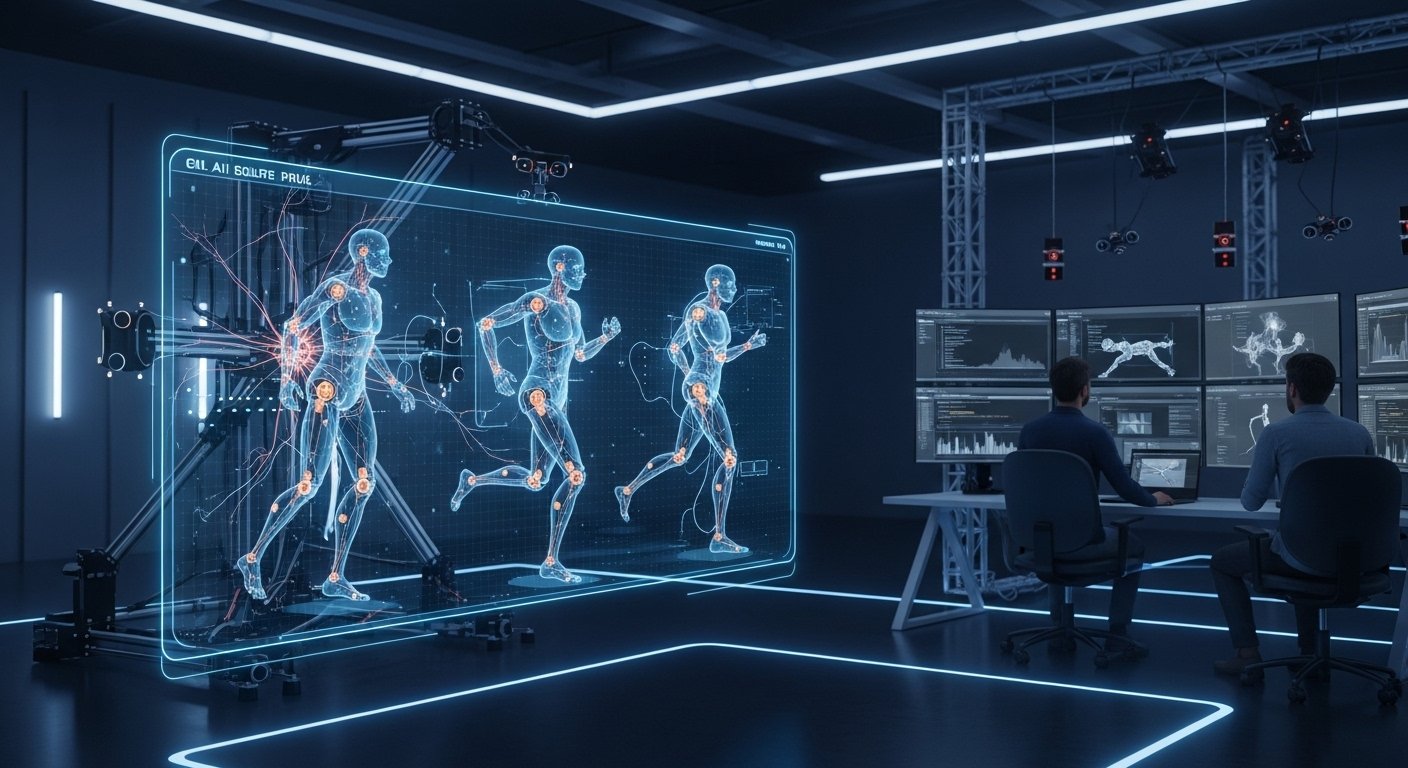
I still remember the first time I watched a character in a modern game seamlessly transition from walking to climbing without any visible “pop” or awkward interpolation. It was one of those small moments that made me realize just how far game animation has come and how much of that progress now relies on artificial intelligence.
For years, game animators painstakingly created every single movement frame by frame, or motion captured actors in expensive studios wearing sensor covered suits. While those methods aren’t going away entirely, AI driven animation is quietly revolutionizing how characters move, react, and feel alive in virtual worlds. And honestly? The implications are bigger than most players realize.
The Old Way Versus the New Reality
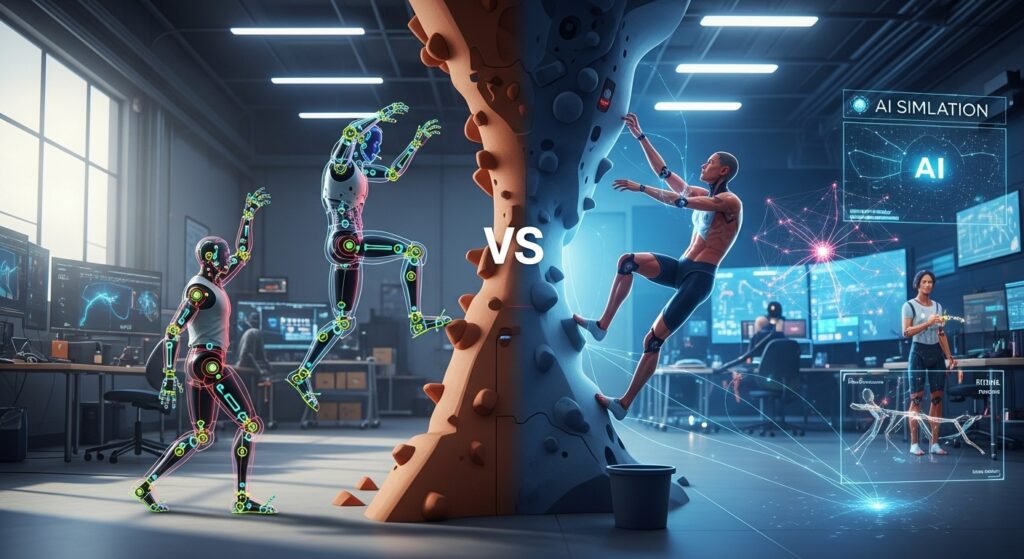
Traditional game animation follows a pretty straightforward path. Animators create discrete animation clips walk cycles, jump animations, attack motions and then programmers blend these clips together based on player input. This works fine for many situations, but it has limitations. Ever noticed how characters sometimes shuffle their feet unnaturally when changing direction? Or how climbing a ladder looks stiff compared to real movement? That’s the limitation of pre-made clips trying to work across infinite scenarios.
AI animation generation tackles this differently. Instead of relying solely on pre built sequences, machine learning models can generate animations on the fly, responding to environmental context, physics, and player actions in real time. The character doesn’t just play a “climb ladder” animation it actually figures out how to climb that specific ladder, adjusting hand placement and body position dynamically.
How It Actually Works (Without Getting Too Technical)
The most common approach involves training neural networks on massive datasets of motion captured movements. The AI learns patterns how weight shifts during a run, how arms swing relative to leg movement, how the spine rotates during a turn. Once trained, these systems can interpolate and extrapolate movements that were never explicitly programmed.
One technique gaining traction is called “motion matching.” Here’s the simplified version: the system maintains a database of animation frames. Every single frame of gameplay, it searches this database for the frame that best matches what the character needs to do next, considering momentum, direction, terrain, and dozens of other factors. The result? Incredibly fluid, responsive movement that adapts to situations the animators never specifically planned for.
Another approach uses procedural generation powered by AI. Think of a character navigating rocky terrain. Instead of triggering canned “step on rock” animations, the AI calculates foot placement, weight distribution, and balance adjustments procedurally. The character moves like it’s actually responding to the ground beneath it, because in a computational sense, it is.
Where This Shows Up Right Now
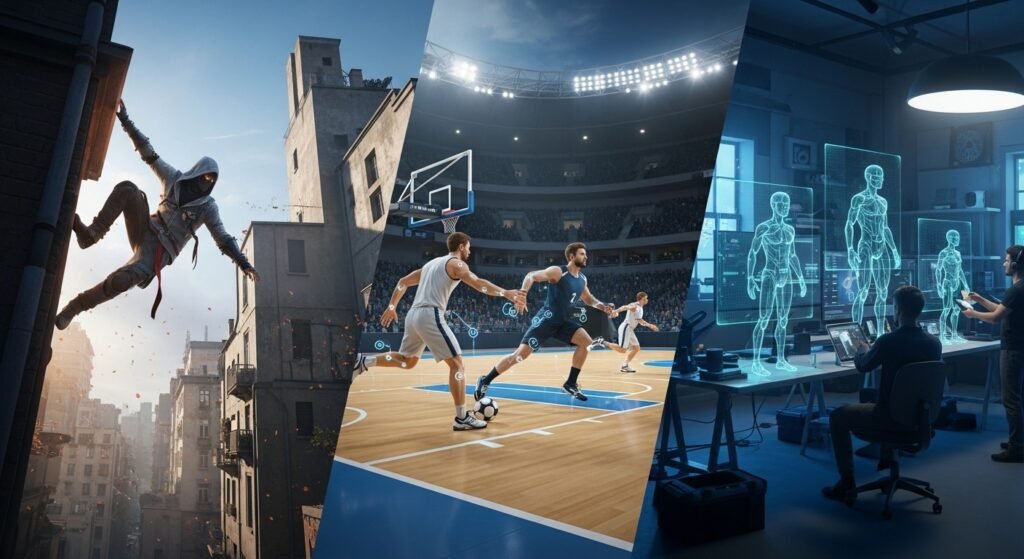
You’ve probably experienced AI assisted animation without knowing it. Ubisoft’s “La Forge” research division has been experimenting with learned motion matching for years, and you can see elements of it in recent Assassin’s Creed titles. That fluid parkour? Not entirely hand animated anymore.
EA Sports has been using machine learning to make athletes move more realistically in their sports franchises. The subtle weight shifts of a basketball player posting up or a soccer player preparing to change direction these micro movements are increasingly AI generated based on analysis of real athlete footage.
Even indie developers are getting access to these tools. Middleware solutions are emerging that don’t require a Ph.D. in machine learning to implement. Unity and Unreal Engine have both introduced features that make AI-driven animation more accessible to smaller teams.
The Obvious Benefits
The efficiency gains alone are substantial. An animation team that might have needed six months to create all the movement variations for a game character can now focus on hero animations and edge cases, letting AI handle the massive middle ground of everyday movement.
But the real win is quality of experience. Characters feel more grounded and present when their animations respond intelligently to their environment. That sense of “game iness” that pulls you out of immersion the robotic transitions, the foot sliding, the weird hovering on slopes diminishes significantly when AI handles the micro-adjustments.
Accessibility benefits matter too. Developers can more easily create animations for characters with different body types, mobility aids, or movement styles without multiplying their workload exponentially. The AI can adapt learned patterns to new skeletal rigs with less manual intervention.
The Complications Nobody Talks About Enough
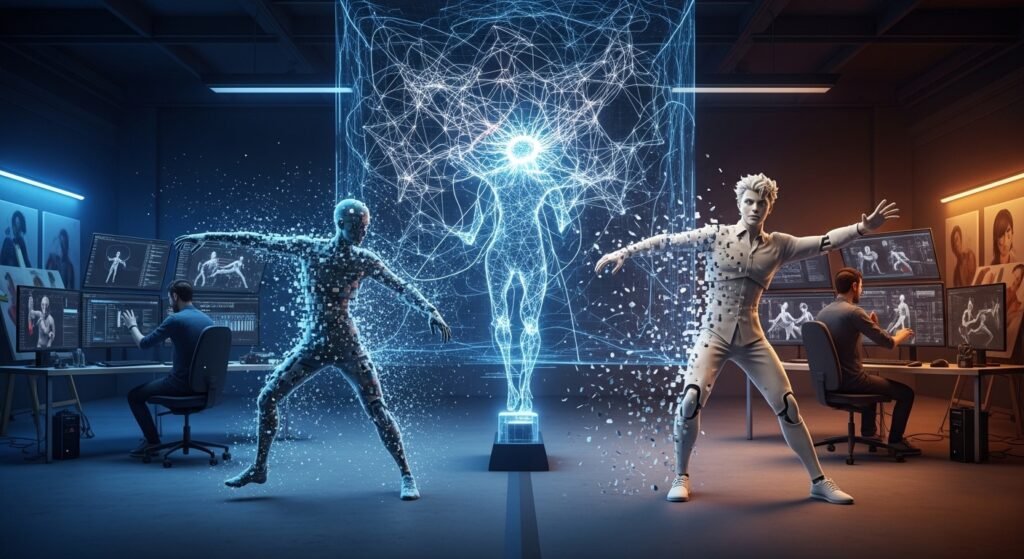
Here’s something I don’t see discussed much in the hype articles: AI animation can be really hard to debug. When an animator hand crafts a movement and something looks off, they know exactly which frames to adjust. When a neural network produces a weird glitch, tracking down why can be genuinely difficult. The solution isn’t always obvious, and sometimes it requires retraining the entire model.
There’s also a legitimate concern about creative control. Animation is an art form, and the best game animators inject personality and style into movement. AI tends toward naturalism and efficiency which is great for background NPCs but might flatten the exaggerated, characterful animations that make stylized games memorable. Finding the balance between AI assistance and artistic intent is still very much a work in progress.
And we should probably talk about the data question. These systems need to be trained on something, usually motion capture data. Who performed those movements? Are they compensated fairly? As AI takes on more of the animation workload, what happens to the motion capture performers and junior animators who would have done that work? The industry hasn’t fully grappled with these questions yet.
Looking Down the Road
The trajectory seems clear: AI won’t replace animators, but it will fundamentally change what they do. The role shifts from creating every movement to directing and curating AI systems, focusing creative energy on the animations that truly matter while letting machine learning handle the infinite variations.
We’re probably heading toward a future where game characters can adapt their movement style based on narrative context limping after taking damage not as a triggered state but as a natural consequence of simulated injury, or gradually showing fatigue during extended gameplay sequences. The technology is nearly there.
The really wild possibility? Characters that learn from player behavior, developing personalized movement quirks over time. Your companion NPC might start mimicking your movement patterns, or enemies could adapt their combat animations based on your playstyle. That’s speculative, but not science fiction anymore.
The Bottom Line
AI animation generation isn’t a magic bullet, and it won’t make traditional animation obsolete. What it does is expand the possibilities making richer, more responsive character movement achievable without infinite budgets and development time. The best implementations I’ve seen treat AI as a powerful tool in the animator’s toolkit, not a replacement for human creativity.
For players, the result is games that feel more alive, where characters exist in their worlds rather than skating across them in predetermined loops. For developers, it’s a chance to punch above their weight class, creating quality movement without resources.
The technology is here, it’s improving rapidly, and it’s already changing games you’re playing right now. Whether that’s exciting or concerning probably depends on where you sit in the industry but either way, it’s worth paying attention to.
FAQs
What is AI animation in video games?
AI animation uses machine learning to generate or enhance character movements dynamically, rather than relying solely on pre-made animation clips created by hand.
Does AI animation replace human animators?
No. It changes their role to focus on creative direction and key animations while AI handles variations and transitions, similar to how photoshop didn’t replace artists.
Which games currently use AI animation?
Recent titles in franchises like Assassin’s Creed, FIFA, NBA 2K, and various indie games use AI assisted animation techniques, though developers don’t always publicize specific implementations.
What are the main benefits?
More natural looking movement, better environmental responsiveness, reduced development time, and the ability to create more movement variations with smaller teams.
Are there downsides?
Debugging difficulties, potential loss of stylized animation personality, ethical questions about training data, and concerns about employment impacts on motion capture performers and junior animators.
Can small indie developers use AI animation?
Yes, increasingly accessible middleware tools and game engine features are making AI animation techniques available to smaller development teams without requiring specialized machine learning expertise.