
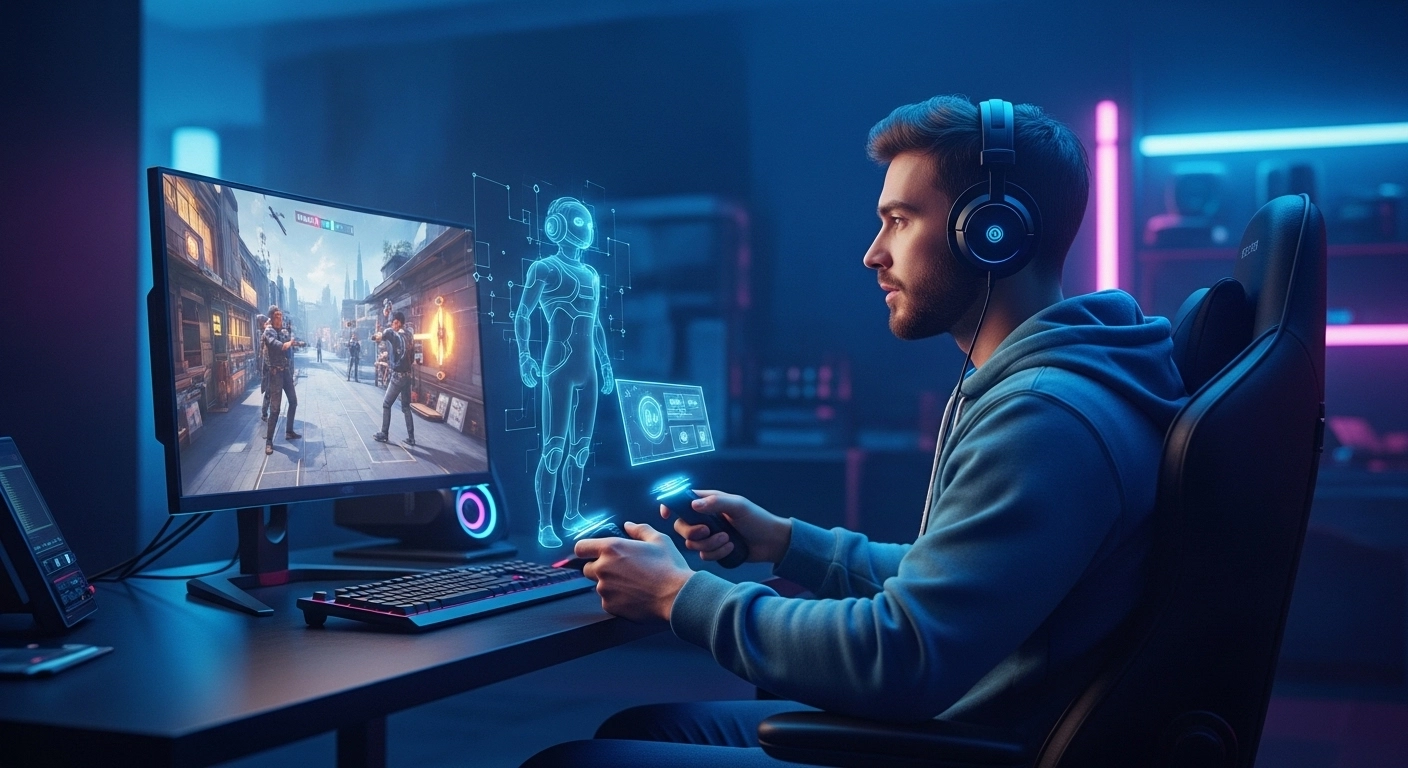
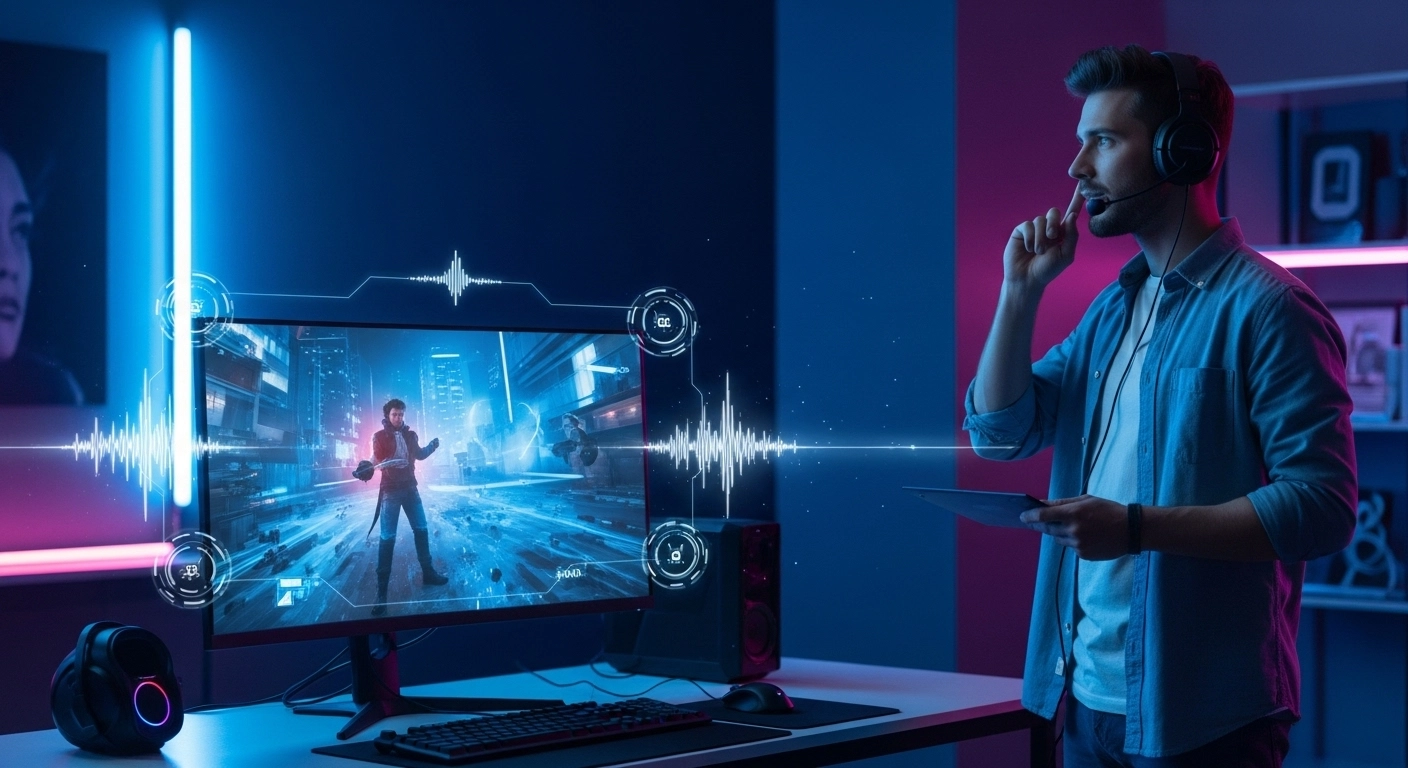
I still remember the first time I watched my nephew play a game using nothing but his voice. He was commanding troops in Tom Clancy’s EndWar, shouting orders across the living room while his grandmother looked on in bewilderment. That was back in 2008. Fast forward to today, and voice controlled gaming has evolved from a novelty into something genuinely transformative.
The Rise of Voice Commands in Video Games
Voice controlled gameplay isn’t exactly new, but what artificial intelligence has done to this technology over the past few years is remarkable. Early attempts were clunky at best. Anyone who tried Hey You, Pikachu! on the Nintendo 64 knows the frustration of screaming at a yellow creature that simply refused to cooperate.
Modern AI powered voice recognition operates on an entirely different level. These systems don’t just recognize predetermined commands they understand context, adapt to different accents, and learn individual speech patterns over time.
How AI Powers Modern Voice Gaming
The technology behind voice controlled gameplay involves several sophisticated layers working simultaneously. Natural language processing breaks down your spoken words into understandable data. Machine learning algorithms then interpret your intent, even when you don’t use the exact phrases the developers anticipated.
Take Star Trek: Bridge Crew as an example. Players can issue complex commands to virtual crew members without memorizing specific phrases. You might say “take us to the nearest starbase” or “head toward that space station over there,” and the AI figures out you want the same thing. This contextual understanding separates modern voice gaming from its primitive ancestors.
Speech recognition engines now process audio in real time, with latency dropping to mere milliseconds. For competitive gaming, this matters enormously. Nobody wants their character to dodge a second after they yelled “duck.”
Real World Applications Changing How We Play
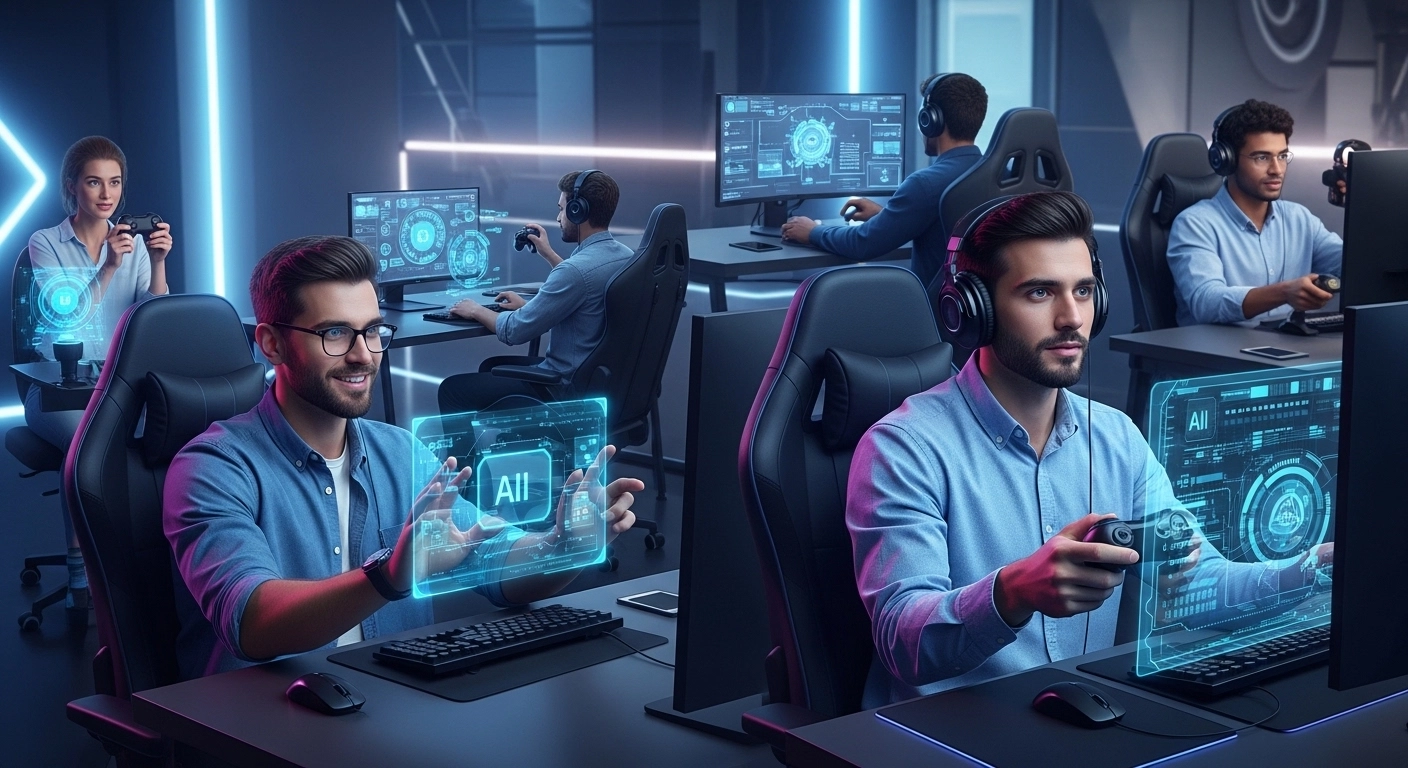
Several genres have embraced voice control in meaningful ways. Strategy games benefit tremendously from this technology. Issuing commands to multiple units while keeping your hands free for other inputs creates genuine tactical advantages.
Simulation games like Microsoft Flight Simulator have implemented voice control for cockpit operations. Pilots can request clearances, adjust radio frequencies, and communicate with air traffic control through spoken commands. The immersion factor alone justifies the technology for many players.
Role playing games offer perhaps the most exciting possibilities. Imagine having actual conversations with non-player characters instead of selecting dialogue options from a menu. Some indie developers are already experimenting with AI characters that respond dynamically to natural speech.
Racing games use voice commands for pit stop instructions and in race adjustments. The Forza Motorsport series allows drivers to change settings without taking their hands off the controller during intense races.
Benefits Beyond Convenience
Accessibility stands out as perhaps the most significant advantage of voice controlled gameplay. Players with mobility challenges can enjoy games that would otherwise remain inaccessible. Veterans recovering from injuries, individuals with muscular disorders, and elderly gamers with arthritis all benefit from reduced reliance on physical controls.
I spoke with a rehabilitation therapist last year who described using voice enabled games in physical therapy sessions. Patients who struggled with traditional controllers found renewed engagement through speech-based interaction.
The immersion factor shouldn’t be underestimated either. Speaking commands to squadmates feels infinitely more natural than pressing button combinations. This psychological connection deepens player investment in game worlds.
Challenges and Honest Limitations
Let’s be realistic about current limitations. Background noise remains problematic for voice recognition systems. Playing in a busy household or during a party creates obvious difficulties. My attempts at voice gaming while my neighbors were having a barbecue produced amusing but useless results.
Regional accents and speech impediments present ongoing challenges for AI training. While systems have improved dramatically, someone with a thick Scottish accent might still encounter more recognition errors than a speaker with Received Pronunciation.
Privacy concerns hover over any technology that requires always listening microphones. Gamers rightfully question what happens to their recorded speech data. Reputable developers now offer transparency about data handling, but the gaming community remains appropriately cautious.
Competitive balance creates design headaches too. How do you ensure voice commands don’t provide unfair advantages? Some games restrict voice controls in multiplayer modes, while others integrate them so deeply that all players benefit equally.
Where Voice Gaming Is Headed
The integration of large language models into gaming represents the next frontier. Developers are working on AI companions that respond intelligently to conversational speech, creating truly dynamic narratives shaped by player dialogue.
Virtual reality amplifies voice control’s potential exponentially. When you’re wearing a headset and holding motion controllers, speaking commands feels completely intuitive. VR social platforms already rely heavily on voice interaction, and games are following suit.
Cloud gaming services may accelerate adoption by handling intensive AI processing remotely. This could enable sophisticated voice recognition on devices that currently lack the necessary computing power.
Making Voice Control Work for You
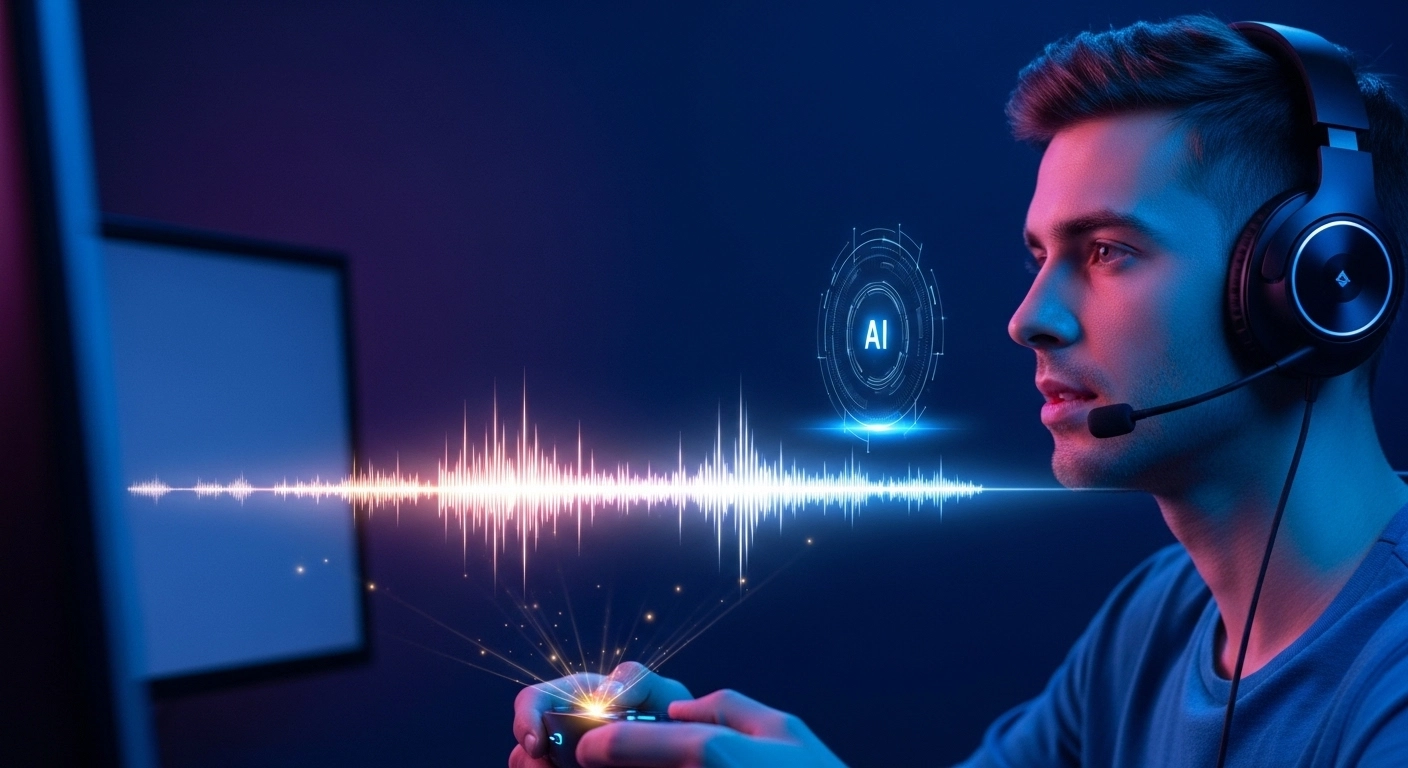
If you’re interested in exploring voice controlled gaming, start with titles designed specifically around the technology. Jumping into complex games with voice features tacked on typically disappoints. Purpose built experiences showcase what’s actually possible.
Invest in a decent microphone. Built in laptop microphones or television pickups struggle with ambient noise and clarity issues. A modest USB microphone improves recognition accuracy significantly.
Train the system properly. Most voice enabled games offer calibration options. Taking time to complete these steps pays dividends in recognition accuracy.
Final Thoughts
Voice controlled gameplay represents gaming’s ongoing evolution toward more natural, accessible interaction. The technology isn’t perfect anyone telling you otherwise hasn’t spent much time actually using it. But the trajectory is unmistakably positive.
For players with accessibility needs, voice control opens doors that remained locked for decades. For everyone else, it offers new dimensions of immersion and convenience. As AI continues advancing, the gap between speaking and action will continue shrinking until voice commands feel as natural as pressing buttons feels today.
Frequently Asked Questions
What games support voice control?
Popular titles include Tom Clancy’s EndWar, Star Trek: Bridge Crew, Mass Effect 3, Skyrim (with mods), Microsoft Flight Simulator, and various VR games like Beat Saber’s voice enabled mods.
Do I need special equipment for voice gaming?
Most voice enabled games work with standard microphones, though dedicated gaming headsets or USB microphones provide better accuracy and reduced background noise interference.
Is voice control available on all gaming platforms?
Voice features are available across PC, PlayStation, Xbox, and VR platforms, though specific game support varies by platform and title.
Can voice commands replace traditional controllers?
Currently, voice serves as a supplementary input method rather than a complete controller replacement. Most games combine voice with traditional inputs for optimal gameplay.
Does voice gaming work with different accents?
Modern AI has improved accent recognition significantly, but results vary. American and British English typically achieve highest accuracy rates, with continued improvements for other accents.
Is my voice data being recorded and stored?
Data handling policies differ between developers. Check individual game privacy policies for specifics about voice data collection and storage practices.