
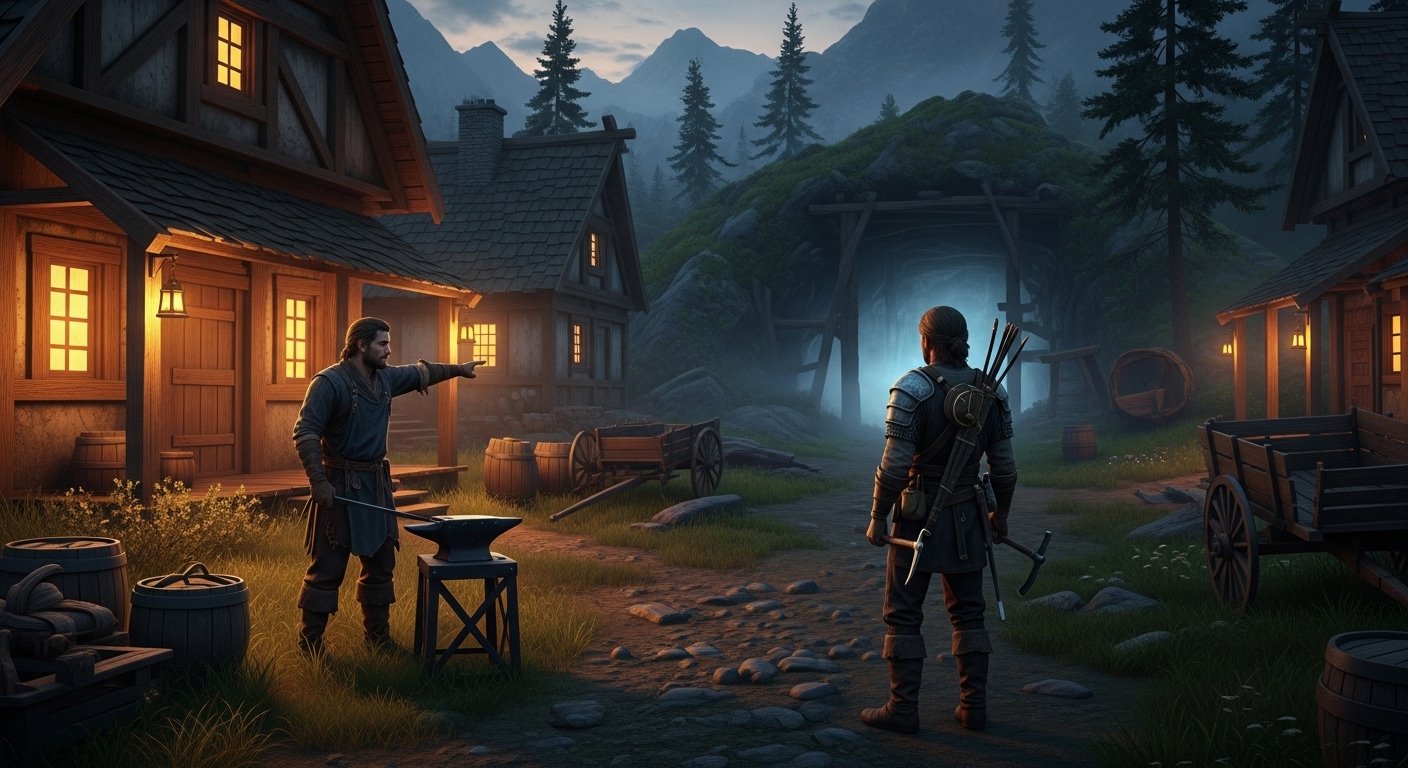
There’s this moment I remember vividly from playing a survival RPG last winter. I stumbled into a small village, expecting the usual fetch quest find the missing goat, deliver some herbs, you know the drill. Instead, the blacksmith asked me to investigate a strange noise coming from the abandoned mine. The quest felt weirdly specific to my character’s backstory. The dialogue referenced a tool I’d crafted three hours earlier. And the resolution? Completely unexpected.
That quest wasn’t written by a human designer. It was generated on the fly by the game’s AI system, and honestly, it fooled me completely.
Welcome to the era of AI Created Side Quests, where games are learning to tell stories we never expected. These AI Created Side Quests are revolutionizing the way we engage with gaming narratives and enhancing our overall experience.
What Exactly Are AI Generated Side Quests?
Let’s get the basics straight. Side quests have always been the bread and butter of open world games. They’re those optional missions that flesh out the world, give you extra loot, and sometimes tell better stories than the main campaign. Traditionally, every single one was painstakingly written by narrative designers, then coded into the game months before release.
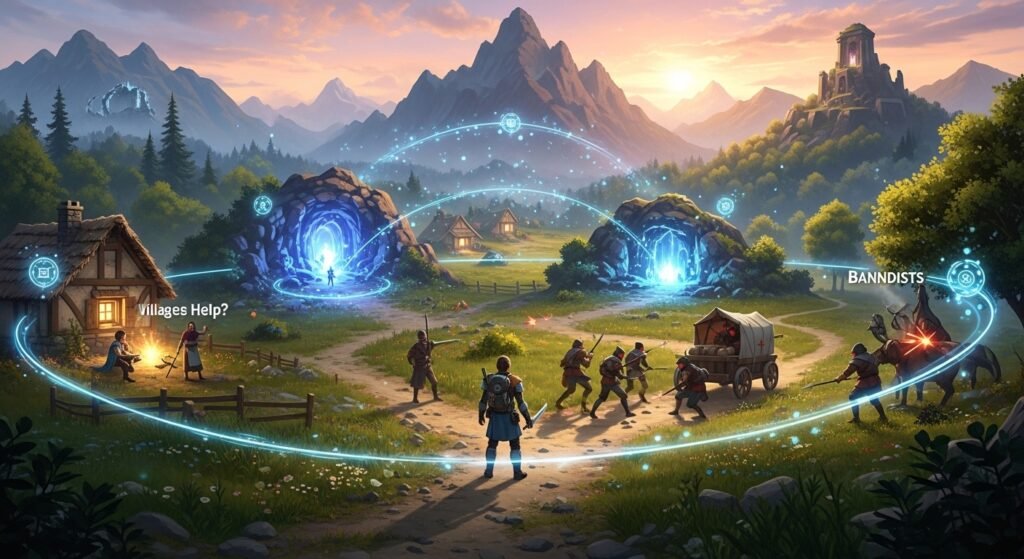
AI generated side quests flip this model entirely. Using various techniques procedural generation, machine learning, and natural language processing games can now create missions in real time. These systems analyze your playstyle, your inventory, your location, and even past decisions to construct something that feels tailored specifically for your journey.
Think of it like having a dungeon master who never sleeps, constantly improvising new adventures based on how you play.
The Tech Behind the Magic
Without getting too deep into the weeds, here’s roughly how these systems work.
Most AI quest generators rely on modular storytelling. The game maintains a database of quest templates rescue missions, investigations, deliveries, combat challenges along with thousands of variables: character names, locations, motivations, rewards, and complications. The AI mixes and matches these elements, checking them against your current game state to ensure coherence.
More advanced systems incorporate narrative graphs. These are essentially flowcharts of cause and effect. If you helped a merchant last week, the AI might generate a quest where that merchant’s cousin needs assistance. If you’ve been stealing from shops, maybe guards start offering bounty hunter missions.
Some games are experimenting with large language models to generate actual dialogue. Instead of pulling from pre written lines, the AI constructs conversations that feel organic to the situation. This is still rough around the edges sometimes characters say weird things but the potential is enormous.
Where We’re Seeing This Already
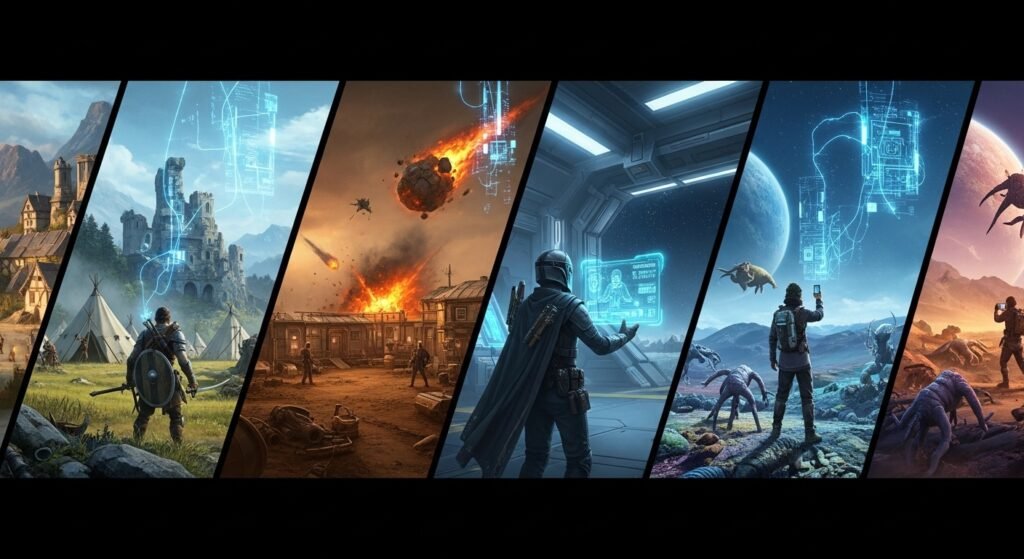
You’ve probably encountered AI generated quests without even realizing it.
The Elder Scrolls V: Skyrim, despite being over a decade old, introduced the Radiant Quest system. It wasn’t sophisticated by today’s standards, but it dynamically assigned you tasks based on locations you hadn’t explored and factions you’d joined. Sometimes it worked brilliantly. Other times you’d be sent to clear the same bandit camp for the fifth time.
No Man’s Sky evolved its mission system over multiple updates. The procedural generation extends beyond planets and creatures into the quests themselves. Space stations offer dynamically generated bounties, trading missions, and exploration tasks that adapt to the system you’re in.
More recently, Watch Dogs: Legion used AI to populate its world with recruitable characters, each with procedurally generated backstories and personal vendettas that created natural side quest hooks.
The survival crafting genre has embraced this too. Games like RimWorld generate entire storylines from AI driven event systems, creating side quest-like scenarios based on your colony’s unique circumstances.
The Good, The Bad, and The Repetitive
Here’s where I have to be honest: AI created side quests are a mixed bag right now.
The benefits are obvious. More content, more variety, more reasons to keep playing. For developers, it means smaller teams can create larger worlds. For players, it means surprise that genuine feeling of not knowing what’s around the corner because literally nobody knows.
Personalization is the real game changer. When a quest acknowledges something you did fifteen hours ago, it creates immersion that pre written content struggles to match. You feel like your choices actually matter because the world remembers them.
But the downsides are equally real. AI generated quests often lack the emotional depth of human crafted stories. That blacksmith quest I mentioned earlier? It was engaging, but it didn’t make me cry like The Witcher 3’s Bloody Baron storyline. There’s a ceiling to procedural storytelling that we haven’t broken through yet.
Repetition remains a problem too. Even sophisticated systems eventually reveal their patterns. After enough hours, you start recognizing the templates, and the magic fades.
The Ethical Dimension

We should talk about what this means for game writers. Some developers use AI quest generation as a supplement, freeing human writers to focus on the main story while AI handles smaller diversions. That seems reasonable.
But there’s concern within the industry about replacement rather than supplementation. If AI can generate “good enough” side quests, will studios invest in human storytellers? The jury’s still out on this.
Looking Forward
The technology is advancing faster than most people realize. Current systems are just the beginning. Future games will likely generate quests with branching consequences, fully voiced AI dialogue, and storylines that evolve over months of play.
Some developers are experimenting with AI systems that learn what each player finds engaging. Don’t like combat? Fewer fighting quests. Love mysteries? More investigations. The game essentially adapts its narrative offerings to your preferences.
Whether that sounds exciting or dystopian probably depends on how much you value human creativity versus personalized entertainment. For me, I want both. The best games will likely blend carefully crafted main stories with AI generated side content that keeps the world feeling alive.
Frequently Asked Questions
Are AI generated quests as good as hand-written ones?
Not typically. They’re improving rapidly but currently lack the emotional nuance and narrative depth of human crafted stories.
Which games use AI created side quests?
Skyrim’s Radiant system, No Man’s Sky, RimWorld, and Watch Dogs: Legion all feature variations of procedurally generated missions.
Will AI replace game writers?
Unlikely entirely. Most studios use AI to supplement human writing rather than replace it, though industry concerns exist.
Do AI quests affect main storylines?
Usually no. Most systems keep AI generated content separate from primary narrative arcs to maintain story coherence.
Can players tell the difference?
Sometimes. Experienced players often recognize patterns in AI generated content, though newer systems are becoming harder to distinguish.