
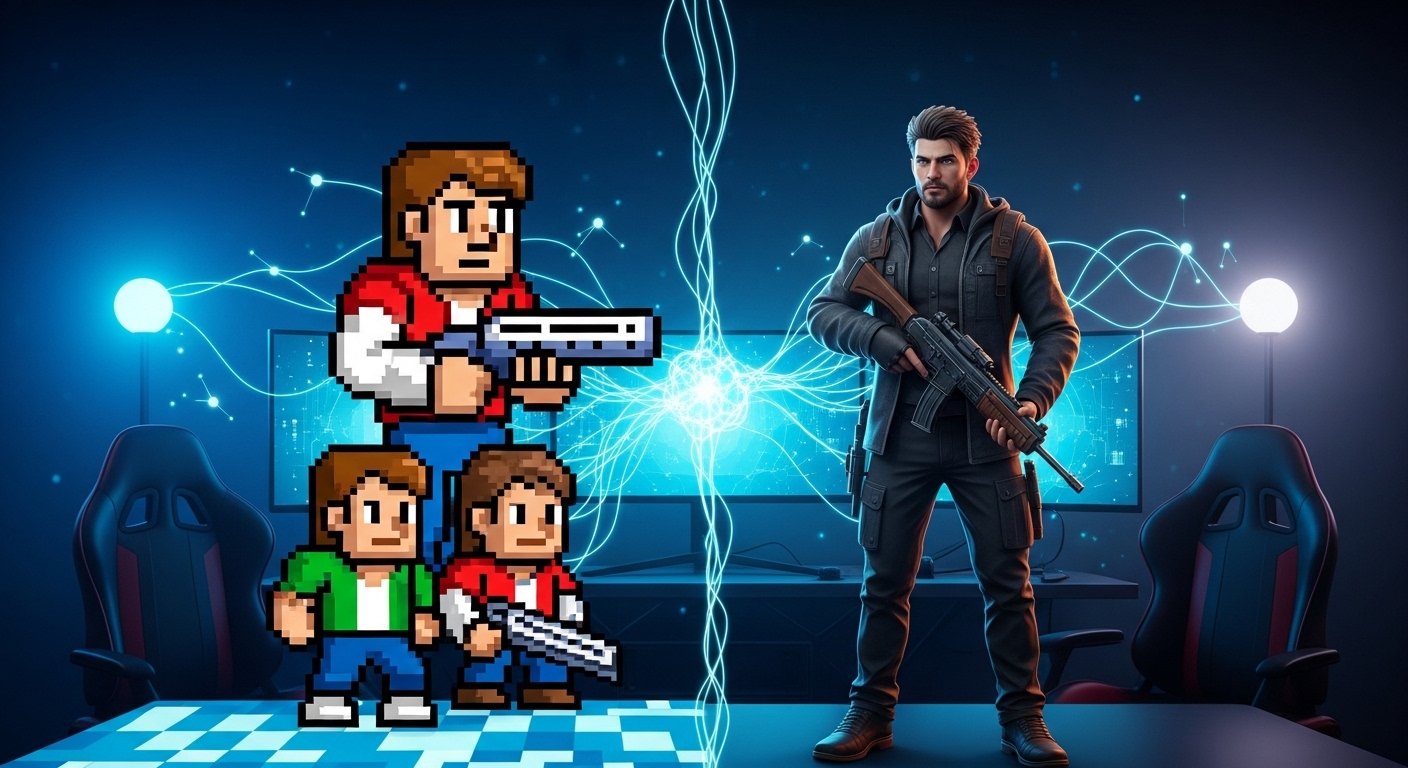
Gaming has come a long way since the days of predictable enemy patterns and scripted NPC behaviors. I still remember playing early shooters where enemies would follow the exact same patrol routes every time. You could literally memorize their movements and exploit the same weaknesses repeatedly. Today’s games feel fundamentally different, and much of that evolution traces back to neural networks reshaping how game AI thinks and adapts.
Understanding the Shift from Traditional to Neural Network-Based AI
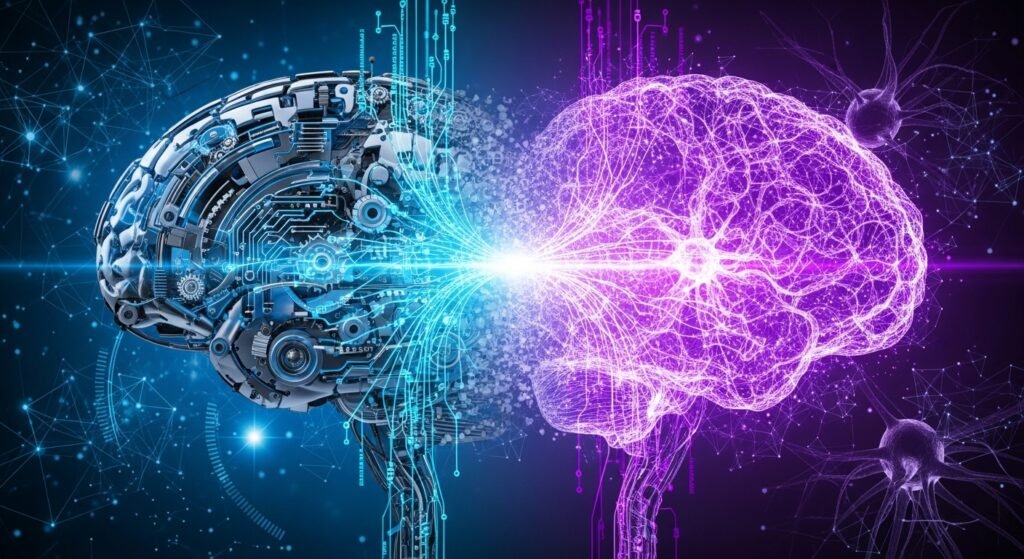
Traditional game AI relied heavily on finite state machines and decision trees. Developers would manually program every possible scenario, creating branching paths for NPC behavior. The problem? These systems felt mechanical. Players eventually recognized patterns and the illusion of intelligence crumbled.
Neural networks changed the game entirely. Instead of programming explicit rules, developers now train AI systems to learn behaviors through experience. These networks process inputs, recognize patterns, and generate outputs that can surprise even their creators. The result is game AI that feels organic, unpredictable, and genuinely responsive.
Think about racing games for a moment. Old school AI opponents would simply follow predetermined optimal racing lines. Modern racing games use neural networks that actually learn to drive, making mistakes, adapting to player tactics, and discovering creative shortcuts the developers never anticipated.
How Neural Networks Actually Work in Games
At their core, neural networks in gaming function similarly to their counterparts in other industries. They consist of interconnected nodes organized in layers, with each connection carrying adjustable weights. During training, these weights get fine-tuned based on performance outcomes.
What makes gaming applications unique is the real time constraint. Unlike image recognition systems that can process data over several seconds, game AI needs to make decisions in milliseconds. This requirement has pushed developers toward efficient network architectures specifically optimized for gaming scenarios.
Reinforcement learning has become particularly popular in game development. Rather than training on pre labeled datasets, the AI learns by playing the game repeatedly, receiving rewards for successful actions and penalties for failures. After millions of iterations, the network develops sophisticated strategies that emerge naturally from gameplay.
Real World Applications Transforming Modern Games
The practical applications span nearly every gaming genre imaginable. Here’s where neural networks are making the biggest impact:
Adaptive Difficulty Systems
Gone are the simple difficulty sliders. Modern games use neural networks to analyze player performance continuously, adjusting challenge levels dynamically. If you’re breezing through combat encounters, the AI notices and subtly increases enemy coordination. Struggling with puzzles? The system might provide contextual hints without breaking immersion.
Believable NPC Behavior
NPCs powered by neural networks don’t just react to player proximity anymore. They develop emergent behaviors, form social structures, and respond to environmental changes in ways that feel authentic. Games like Red Dead Redemption 2 showcase NPCs with daily routines that adapt based on weather, player actions, and random events.
Procedural Content Generation
Neural networks excel at creating game content that follows stylistic rules without feeling repetitive. Level layouts, quest structures, and even dialogue can be generated procedurally while maintaining coherence and quality. This approach extends game longevity significantly while reducing development costs.
Enemy Tactics and Strategy
Perhaps the most visible application involves combat AI. Neural network driven enemies learn from player tactics, adapting their strategies mid fight. Play aggressively, and enemies start keeping distance. Rely heavily on specific weapons, and they develop counters. This creates genuinely challenging encounters that reward creative thinking.
Notable Examples Worth Studying
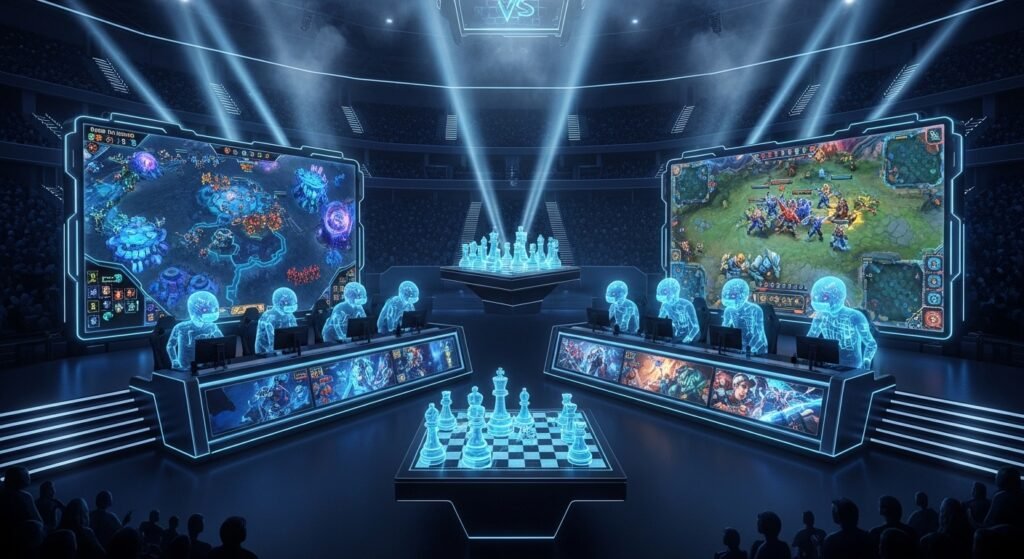
DeepMind’s work with StarCraft II demonstrated neural networks mastering complex real time strategy gameplay. Their AlphaStar system achieved Grandmaster status by developing novel strategies that surprised professional players. What fascinated me watching those matches was seeing the AI make unconventional decisions that somehow worked brilliantly.
OpenAI Five’s performance in Dota 2 showcased team coordination emerging naturally through training. Five separate neural networks learned to cooperate, communicate, and execute sophisticated strategies without explicit programming for teamwork.
On the commercial gaming front, titles like F.E.A.R. pioneered goal-oriented action planning enhanced by learning systems, creating memorable enemy encounters that still hold up today.
Challenges Developers Face
Implementing neural networks in games isn’t straightforward. Training requires massive computational resources and extensive playtesting data. Small studios often lack the infrastructure necessary for sophisticated implementations.
Debugging presents another headache. When a neural network makes strange decisions, tracing the reasoning becomes incredibly difficult. Unlike traditional code where you can step through logic, neural networks operate as black boxes where behavior emerges from thousands of weighted connections.
Balancing unpredictability with fun creates design tension too. AI that learns too effectively can become frustrating rather than engaging. Players enjoy winning sometimes, and an AI that perfectly counters every strategy quickly stops being entertaining.
The Future Looks Promising
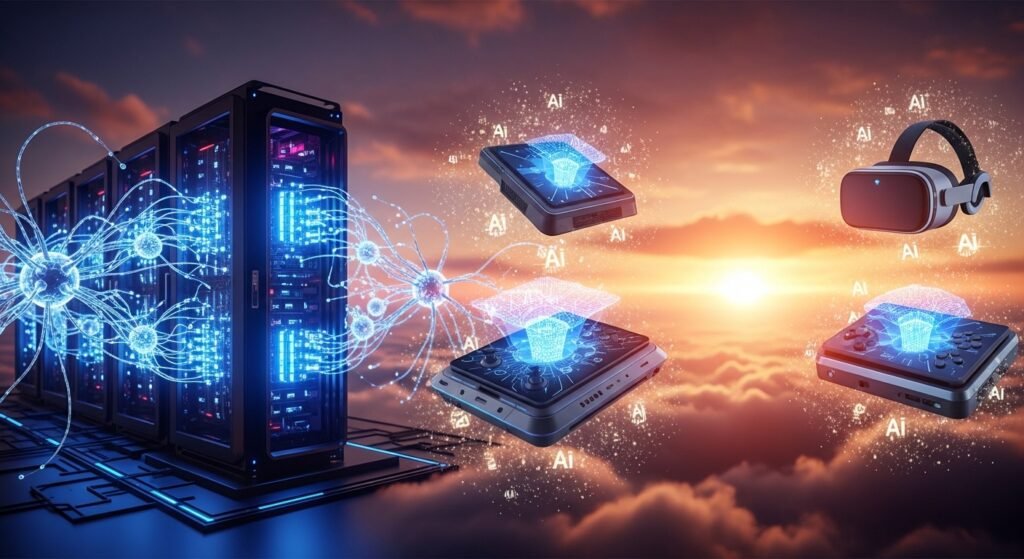
Cloud computing is democratizing access to neural network capabilities. Smaller developers can now leverage cloud-based training and inference, bringing sophisticated AI to independent titles previously limited to basic behavioral systems.
Hybrid approaches combining traditional AI techniques with neural networks are gaining traction. These systems use neural networks for specific tasks like tactical decisions while maintaining deterministic systems for core gameplay mechanics.
As hardware continues advancing, we’ll likely see more processing dedicated to AI systems. Modern consoles and graphics cards increasingly include specialized components for machine learning operations, enabling more complex neural networks without sacrificing frame rates.
Final Thoughts
Neural networks represent a fundamental shift in how we approach game AI development. They’ve moved us from programming specific behaviors to cultivating learning systems that develop their own solutions. The games feel more alive, more responsive, and ultimately more engaging.
The technology continues maturing rapidly, and I’m genuinely excited to see where it leads. Every few years, some game arrives that demonstrates capabilities we thought were years away. That pace of innovation shows no signs of slowing down.
Frequently Asked Questions
Do neural networks make games harder?
Not necessarily. They make games more adaptive. Neural networks enable AI that adjusts to player skill levels, potentially creating better-balanced experiences rather than uniformly harder ones.
Which games currently use neural network AI?
Notable examples include Forza Motorsport series, F.E.A.R., recent FIFA titles, and various indie games. Many AAA studios experiment with neural networks but don’t always publicize their implementations.
Can neural networks replace traditional game AI completely?
Unlikely in the near future. Hybrid approaches combining traditional AI with neural networks offer better control and predictability while maintaining the adaptability benefits.
Are neural networks expensive to implement in games?
Training requires significant resources, but inference (running trained networks) has become increasingly affordable. Cloud solutions make sophisticated AI accessible to smaller studios.
Do players actually notice neural network AI improvements?
Research suggests players perceive neural network driven opponents as more human like and engaging, even without knowing the underlying technology. The improvement in gameplay feel often registers subconsciously.