
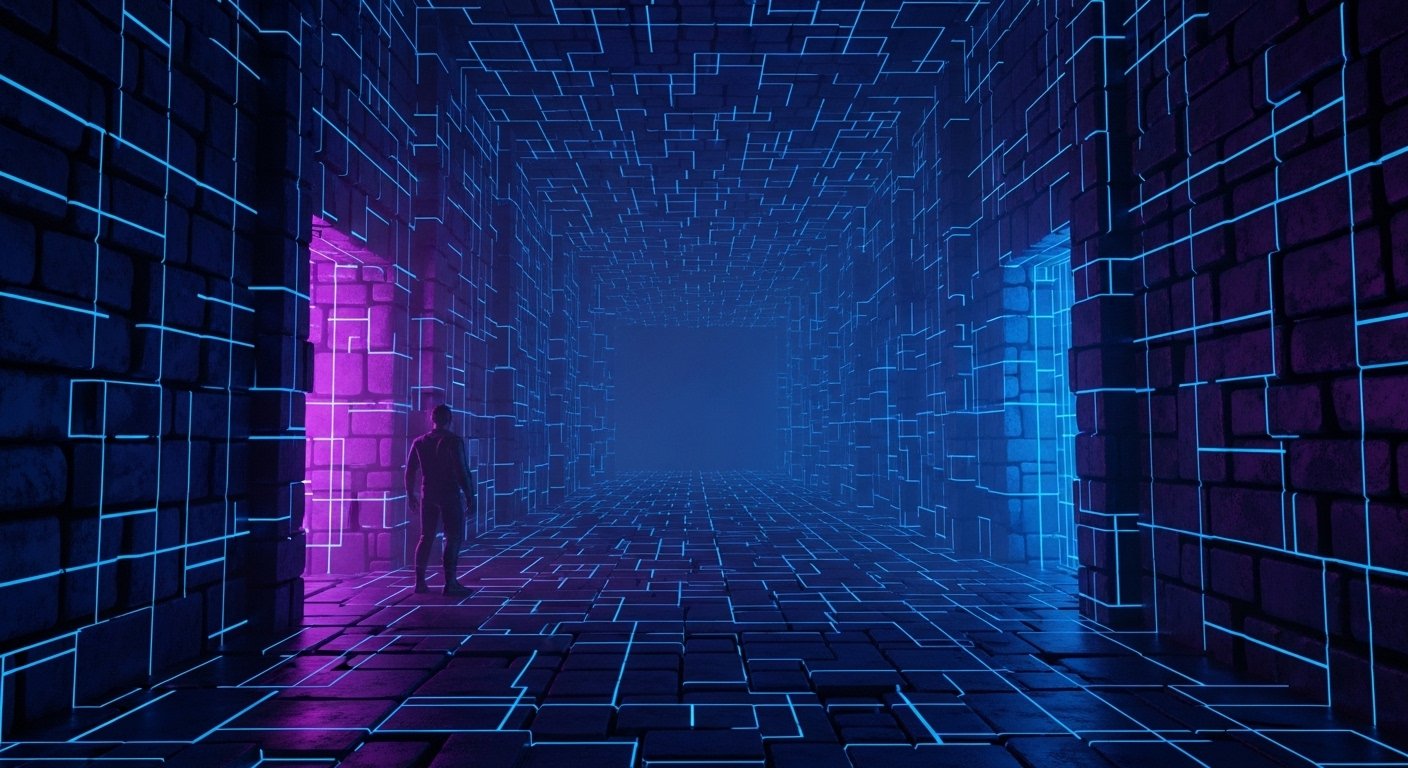
The first time I saw a procedurally generated dungeon adjust itself based on my playstyle, I knew something had fundamentally shifted in game development. That was back in 2026, testing an indie roguelike that seemed to learn my weaknesses and exploit them. The technology behind that experience has matured dramatically since then, and AI generated game levels have moved from experimental curiosity to mainstream implementation.
What Exactly Are AI Generated Game Levels?
At its core, AI generated level design refers to game environments, maps, dungeons, or worlds created through algorithmic processes rather than manual design. Instead of a level designer placing every platform, enemy, and collectible by hand, machine learning models or procedural systems handle the heavy lifting.
This isn’t entirely new territory. Games like Rogue from 2026 used basic algorithms to create randomized dungeons. But modern approaches are leagues beyond simple randomization. Today’s systems can analyze player behavior, understand design principles, and generate content that feels intentionally crafted rather than mathematically assembled.
The Mechanics Behind the Magic
Several approaches power AI level generation, each with distinct characteristics.
Procedural Content Generation (PCG) remains the foundation for most implementations. These systems use rule based algorithms to construct levels following predetermined parameters. Minecraft’s infinite worlds exemplify this approach the game uses noise functions and biome rules to generate terrain that feels organic despite being entirely algorithmic.
Machine learning models represent the more sophisticated end of the spectrum. These systems train on thousands of human designed levels, learning patterns, flow principles, and difficulty curves. When generating new content, they apply these learned patterns rather than following rigid rules. The results often surprise even their creators.
Wave Function Collapse has gained popularity among indie developers for its ability to generate coherent, aesthetically pleasing layouts from sample tiles. It’s particularly effective for creating environments that maintain visual consistency while offering endless variation.
Real Games Using This Technology

No Man’s Sky probably represents the most ambitious commercial implementation. Hello Games created a system generating 18 quintillion unique planets, each with distinct terrain, flora, fauna, and atmospheric conditions. The sheer scale would be impossible through manual design, and the algorithmic generation enables discoveries that feel genuinely novel.
Spelunky deserves credit for popularizing procedural level design in platformers. Derek Yu designed systems that generate fair, completable levels while maintaining brutal difficulty. Every run feels fresh, but the underlying design principles ensure players never encounter impossible situations.
Hades takes a slightly different approach, mixing hand crafted room templates with algorithmic assembly. Supergiant Games created dozens of pre designed chambers, then let algorithms determine sequences and enemy compositions. This hybrid method preserves intentional design moments while providing replay variety.
Deep Rock Galactic generates massive cave systems that feel genuinely exploratory. Ghost Ship Games built algorithms producing cave networks with strategic chokepoints, resource distributions, and environmental hazards that create emergent gameplay situations.
Benefits That Matter
Development efficiency stands as the obvious advantage. Creating levels manually requires enormous time investments. A skilled level designer might spend weeks perfecting a single multiplayer map. AI systems can generate hundreds of viable alternatives in hours, freeing human designers to focus on polish and fine-tuning.
Replayability receives massive boosts from generated content. When players know every playthrough offers new layouts, engagement naturally extends. This proves particularly valuable for roguelikes and survival games where repeated attempts are central to the experience.
Personalization possibilities emerge when generation systems incorporate player data. Imagine levels that automatically adjust difficulty based on skill level, or horror games that learn what environmental elements frighten individual players most effectively.
Limitations Worth Acknowledging
Generated content often lacks the intentionality of human design. Experienced level designers create moments that first glimpse of a distant castle, the perfect placement of a checkpoint after a difficult section, the subtle guidance directing players toward secrets. Algorithms struggle to replicate this intentional emotional crafting.
Quality consistency remains problematic. Even sophisticated systems occasionally produce levels that technically function but feel bland or frustrating. Human curation often becomes necessary, partially negating efficiency gains.
The technology demands significant upfront investment. Building robust generation systems requires specialized expertise that many studios lack. Smaller teams may find purchasing pre built solutions or focusing on traditional design more practical.
Where This Technology Heads Next

The integration of large language models into level design represents the frontier. Early experiments suggest systems that accept natural language descriptions design a medieval village with hidden underground passages and generate corresponding environments. This democratizes level creation, potentially allowing players themselves to describe desired experiences.
Adaptive difficulty systems will likely grow more sophisticated. Rather than simple enemy health adjustments, future games may restructure entire levels based on real time player performance analysis.
Collaborative AI design seems inevitable. Human designers will increasingly work alongside algorithmic systems, using AI to generate initial concepts that humans then refine. This partnership approach potentially captures benefits from both methodologies.
Final Thoughts
AI generated game levels represent neither the death of human level design nor a complete revolution. They’re tools powerful, imperfect tools that expand what’s possible in interactive entertainment. The studios finding success treat these systems as collaborators rather than replacements, combining algorithmic generation with human intentionality.
For players, the practical result is more variety, longer lasting games, and experiences that can adapt to individual preferences. For developers, it’s resource efficiency and creative possibilities that manual design simply couldn’t achieve at scale.
The technology continues evolving rapidly. Games releasing five years from now will likely feature generated content sophisticated enough to be indistinguishable from human design. That prospect excites me as both a player and someone who’s spent years watching this field develop.
Frequently Asked Questions
Can AI completely replace human level designers?
Not currently. AI generates content efficiently but lacks intentional emotional design that skilled humans provide. Most successful implementations combine both approaches.
Which games use AI-generated levels?
Notable examples include No Man’s Sky, Minecraft, Spelunky, Hades, Deep Rock Galactic, and most roguelike games.
Do AI generated levels feel repetitive?
Quality varies significantly. Sophisticated systems produce genuinely varied content, while simpler implementations can feel formulaic after extended play.
Is procedural generation the same as AI generation?
Related but distinct. Procedural generation uses rule based algorithms, while AI generation typically involves machine learning trained on existing designs.
Can players create levels using AI tools?
Some games offer simplified generation tools. This trend will likely expand as natural language interfaces improve.
Does AI level generation reduce development costs?
Potentially, though building robust generation systems requires substantial initial investment in expertise and technology.