
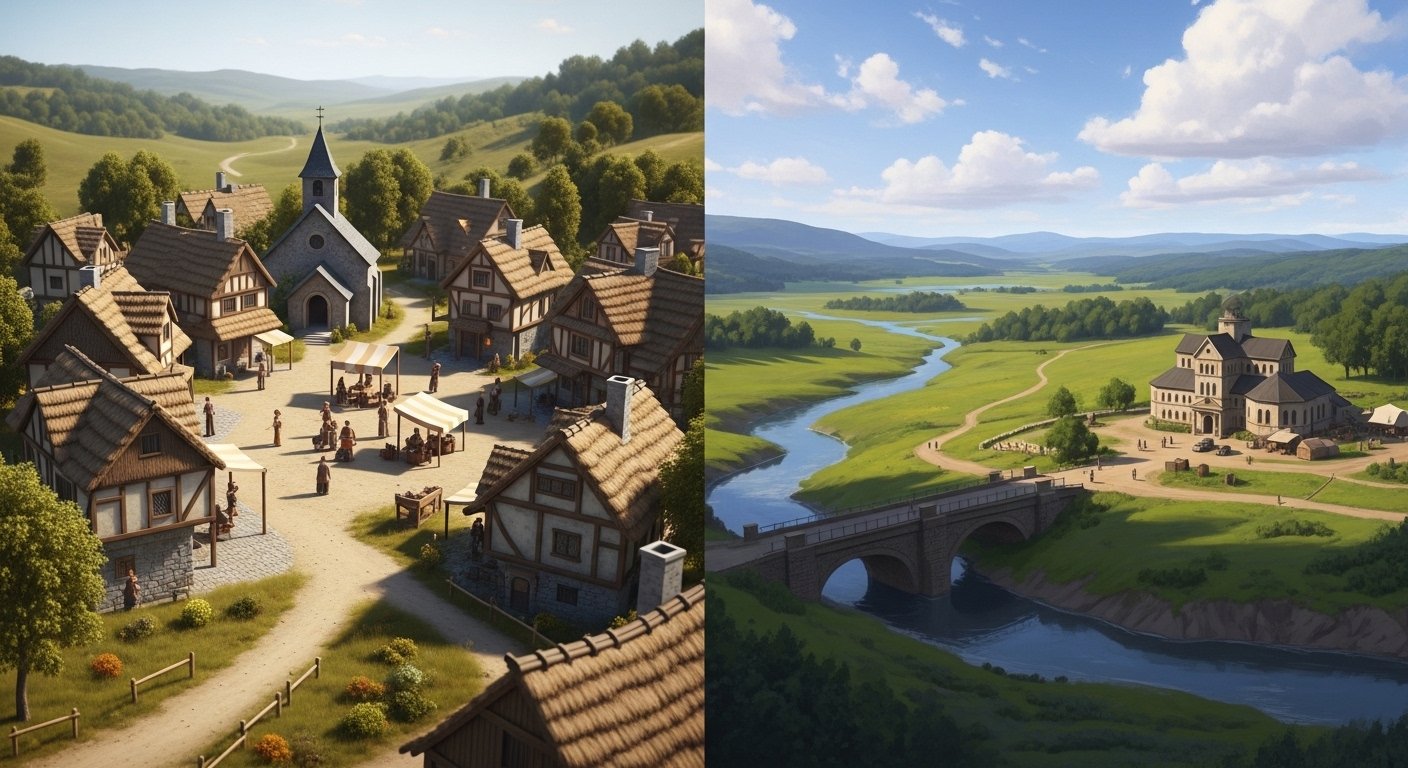
I remember spending hours in the early 2000s exploring handcrafted game worlds, marveling at how developers created every hill, every dungeon, every forest clearing. Fast forward to today, and the landscape looks dramatically different. Modern games feature worlds so vast that no human team could possibly build them manually. The secret? Procedural world generation powered by artificial intelligence.
Having worked adjacent to game development for over a decade and followed this technology’s evolution closely, I’ve watched procedural generation transform from a novelty into an essential tool. Let me walk you through what’s actually happening behind the scenes.
Understanding the Basics of Procedural World Generation
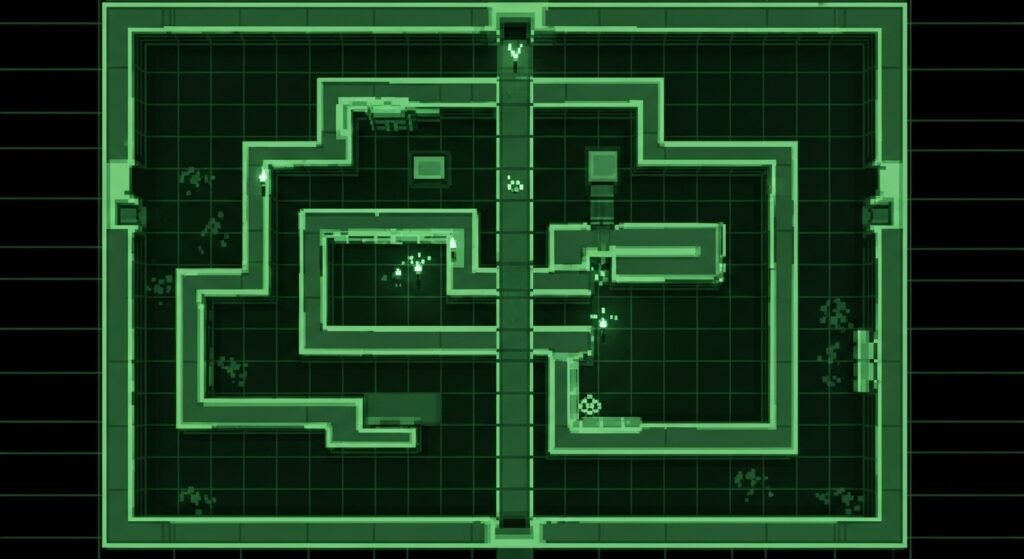
Procedural world generation isn’t new. Games like Rogue in 12026 used mathematical algorithms to create random dungeon layouts. But those early systems were relatively simple following preset rules to arrange tiles and spawn enemies.
What’s changed is the sophistication. Traditional procedural generation relied on fixed algorithms. You’d input some parameters, and the system would spit out content based on rigid mathematical formulas. The results worked, but they often felt repetitive or artificial after extended play sessions.
Modern procedural generation incorporates machine learning techniques that fundamentally change how these systems operate. Instead of following predetermined rules, AI driven generators learn patterns from existing data and create new content that feels organic and believable.
How AI Transforms the Generation Process
The integration of neural networks and machine learning algorithms has pushed procedural generation into genuinely impressive territory. Here’s what makes contemporary systems different.
Traditional generators might place trees randomly within certain parameters. An AI enhanced system understands that pine trees cluster on northern slopes, deciduous forests thin near water sources, and vegetation density relates to rainfall patterns. The system learned these relationships by analyzing real geographic data.
Take terrain generation as another example. Early methods used Perlin noise and similar mathematical functions to create height maps. They produced acceptable results, but experienced players could spot the patterns. AI approaches analyze real world topography how mountains form, how rivers carve valleys, how erosion shapes coastlines and apply these learned principles to generate terrain that mirrors natural geological processes.
Real World Applications and Examples
No Man’s Sky represents perhaps the most ambitious commercial application of procedural world generation. The game features over 18 quintillion planets, each with unique geography, flora, and fauna. Players have explored the game for years without exhausting its content.
The system behind No Man’s Sky doesn’t just randomly combine elements. It applies learned rules about planetary formation, atmospheric conditions, and evolutionary biology. Purple grass might grow under a blue sun because the system understands how photosynthesis might adapt to different stellar radiation.
Minecraft took a different approach, using procedural generation for terrain while keeping other elements relatively simple. Yet its world generation algorithm has evolved significantly since 2026, now creating more realistic cave systems, mountain ranges, and biome transitions.
On the indie side, Dwarf Fortress generates entire histories civilizations rise and fall, wars reshape borders, legendary figures live and die all before players even start playing. The procedural generation extends beyond geography into narrative and cultural development.
Technical Approaches Worth Knowing

Several techniques drive modern procedural world generation, and understanding them helps appreciate what’s happening under the hood.
Generative Adversarial Networks (GANs) pit two neural networks against each other. One creates content; the other judges whether it seems realistic. Through millions of iterations, the generator learns to produce increasingly convincing outputs. This approach works particularly well for texture generation and small-scale details.
Wave Function Collapse algorithms excel at creating coherent structures from smaller components. They ensure that generated content maintains logical consistency castle walls connect properly, city streets form navigable networks, dungeon rooms link in sensible ways.
Reinforcement learning allows systems to optimize for playability. A generator might create thousands of level layouts, test them against criteria like difficulty balance or pacing, and refine its approach based on results.
Current Challenges and Honest Limitations
Despite impressive advances, AI driven procedural generation faces real constraints. The “1000 bowls of oatmeal” problem remains relevant generating a million unique things matters little if they all feel samey.
Meaningful variety represents the biggest ongoing challenge. Creating landscapes that look different is straightforward. Creating landscapes that play differently, that offer genuinely distinct experiences, proves much harder.
Computational costs present practical barriers too. Sophisticated AI generation requires significant processing power. Mobile games and smaller studios often can’t implement cutting edge techniques because the hardware requirements exceed their audience’s capabilities.
There’s also the question of artistic intent. Handcrafted content carries authorial purpose. Procedural systems generate without understanding meaning or narrative. Balancing algorithmic efficiency with intentional design remains an active area of experimentation.
Where This Technology Is Heading
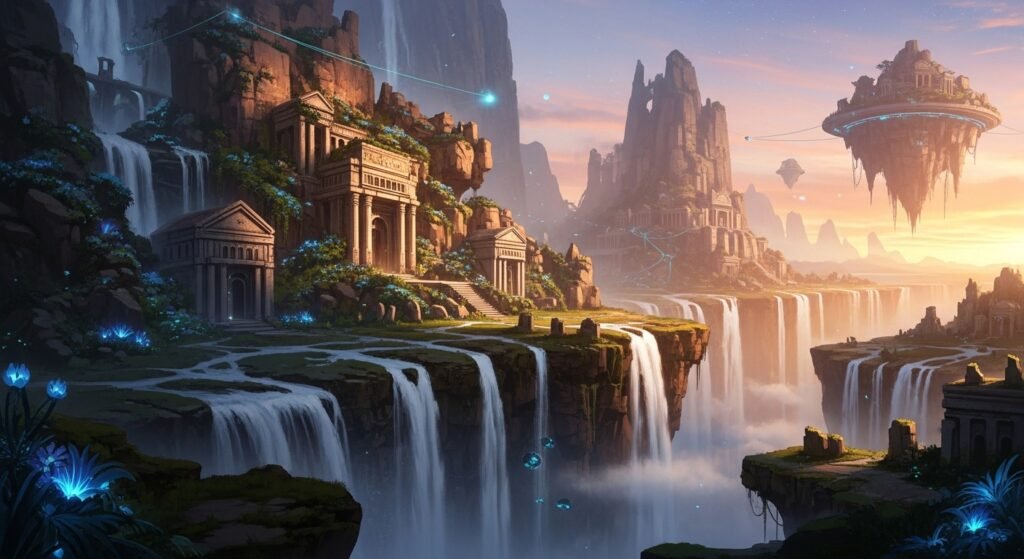
The trajectory seems clear. Procedural generation will become more sophisticated, more capable of creating content indistinguishable from human designed alternatives.
I’m particularly excited about systems that generate narrative alongside geography worlds where the history embedded in the landscape emerged from the same generation process that created the mountains and rivers.
We’re also seeing procedural techniques extend beyond gaming. Architectural visualization, film production, and urban planning all benefit from AI-generated environments. The applications multiply as the technology matures.
Final Thoughts
Procedural world generation powered by AI represents one of the most fascinating intersections of technology and creativity happening right now. It’s not replacing human designers it’s expanding what’s possible for them to create.
The games we’ll play in ten years will feature worlds of unprecedented scope and detail, generated on the fly, tailored to individual players. That future is already taking shape, one algorithm at a time.
Frequently Asked Questions
What is procedural world generation AI?
It’s technology that uses artificial intelligence and algorithms to automatically create game worlds, landscapes, and environments without manual design for every element.
Which games use procedural world generation?
No Man’s Sky, Minecraft, Dwarf Fortress, Terraria, and Spelunky are popular examples that rely heavily on procedural generation techniques.
Can procedural generation replace human game designers?
No. It handles scale and variety but lacks intentional design and narrative purpose that human creators provide.
How does AI improve traditional procedural generation?
AI learns patterns from real data, creating more realistic and coherent results compared to purely mathematical approaches.
Is procedural generation only used in games?
No. It’s applied in film visual effects, architectural visualization, simulation training, and urban planning applications.
What are the main limitations of procedural world generation?
Creating meaningful variety, maintaining artistic coherence, and managing computational requirements remain significant challenges.