
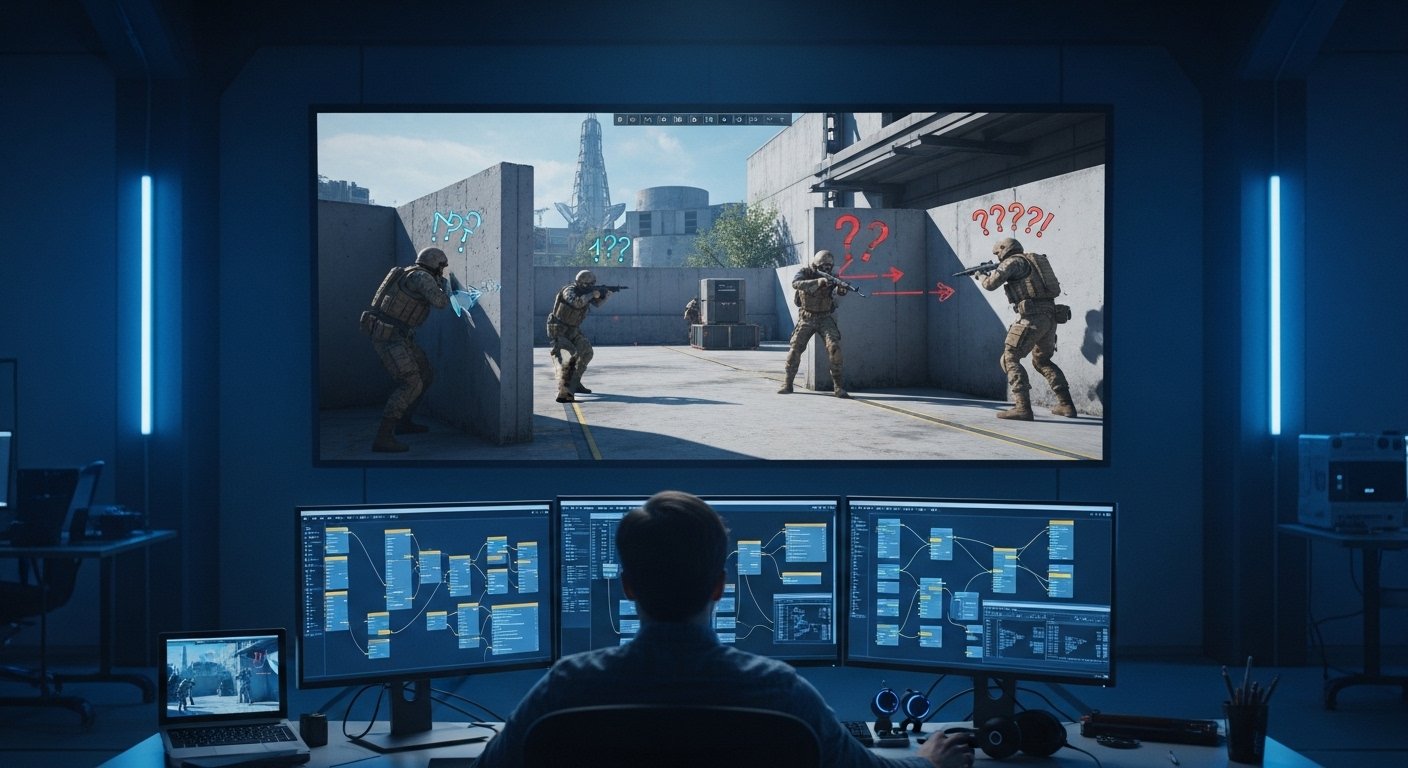
There’s a moment every game developer dreads. You’ve spent months crafting beautiful environments, tuning weapons, and polishing animations. Then playtesters sit down, and within five minutes, enemies are walking into walls, ignoring obvious threats, or worse standing completely still while getting shot. Your carefully designed combat falls apart because the enemy behavior system wasn’t given enough attention.
I’ve been working in game development for over a decade now, and if there’s one thing I’ve learned, it’s that enemy AI makes or breaks player immersion faster than almost any other system. Great enemy behavior feels invisible. Bad enemy behavior becomes a meme.
Understanding the Fundamentals
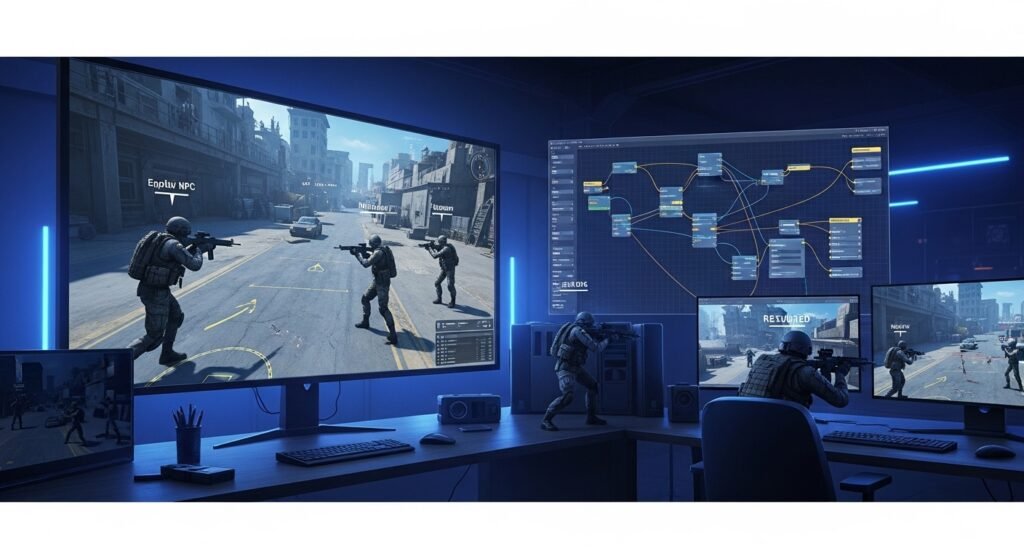
At its core, enemy behavior programming comes down to one question: how do we make digital opponents feel alive without actually giving them consciousness?
The most common approach beginners encounter is the finite state machine (FSM). Picture it like a flowchart. An enemy might exist in one of several states patrolling, chasing, attacking, fleeing, or searching. Each state has clear rules for transitioning to another. If the player comes within twenty meters, switch from patrol to chase. If health drops below thirty percent, switch to fleeing.
State machines work beautifully for simpler enemies. The zombies in early Resident Evil games, the Goombas in Mario they don’t need complex decision-making. Their predictability is actually part of the design.
But here’s where things get interesting. As players grew more sophisticated, games needed smarter opponents. That’s where behavior trees entered the picture.
Behavior Trees: The Industry Standard
Behavior trees revolutionized enemy design when they gained mainstream adoption in the mid 2000s. Halo 2 famously implemented them, and suddenly enemies felt dramatically more reactive and believable.
Think of behavior trees as prioritized to do lists. Instead of rigid state transitions, enemies constantly evaluate what they should be doing based on changing conditions. The tree structure allows for complex nested decisions while remaining relatively easy to debug and modify.
A typical combat behavior tree might look something like this: First, check if wounded and needing cover. Then, check if reloading is necessary. Next, evaluate whether an attack opportunity exists. Finally, default to repositioning or supporting teammates.
The beauty lies in modularity. You can create behavior sub trees for specific actions and reuse them across different enemy types. That grunt soldier and the elite commander might share the same cover seeking behavior, but the commander’s tree includes additional branches for coordinating squad movements.
Going Beyond: Utility AI and GOAP
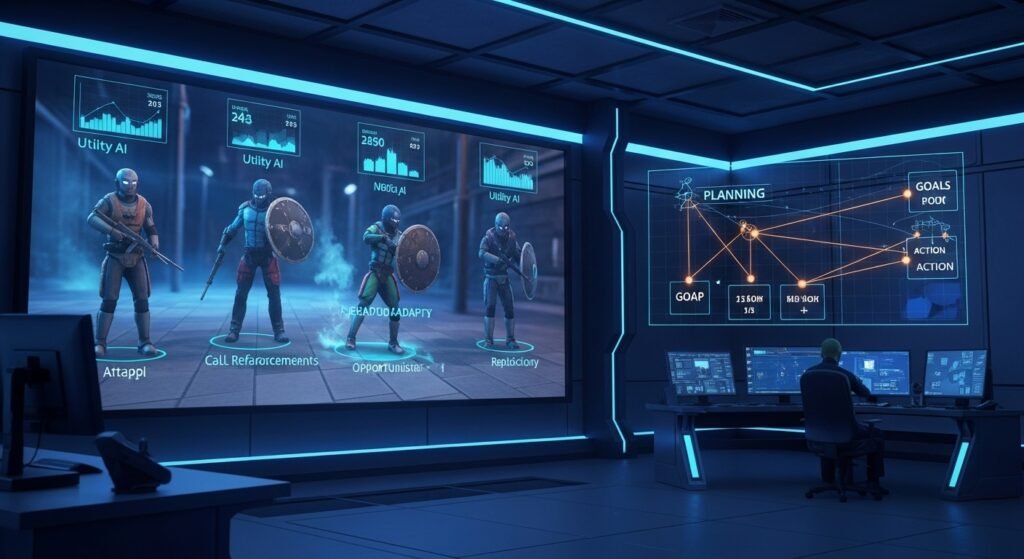
Sometimes behavior trees still feel too scripted. When you’re designing enemies that need to genuinely adapt, you might reach for Utility AI or Goal Oriented Action Planning.
Utility AI assigns numerical scores to possible actions based on current circumstances. An enemy doesn’t follow predetermined branches it continuously calculates what action provides the highest utility right now. Should I attack? Score: 75. Should I heal? Score: 90. Should I call reinforcements? Score: 60. The healing wins.
The Sims franchise built its entire character behavior system on utility principles. In combat games, this approach creates opponents that feel genuinely responsive rather than predictable.
GOAP takes another route entirely. Enemies have goals they want to achieve and actions available to them. The system plans backward from goals to determine action sequences. It’s computationally expensive but produces remarkably organic-feeling behavior. F.E.A.R. showcased this brilliantly back in 2026, and its enemies remain impressive even by today’s standards.
Real World Implementation Challenges
Here’s something they don’t teach in tutorials: technically sophisticated AI often creates worse player experiences.
I worked on a project once where we implemented beautifully complex enemy behaviors. Enemies flanked perfectly, coordinated suppressive fire, and exploited player weaknesses. Testers hated it. The game felt unfair, frustrating, and exhausting.
We ended up deliberately dumbing down the AI, adding intentional delays before enemies reacted, missing shots they should have landed, and telegraphing attacks more obviously. The game became fun.
This reveals a crucial truth about enemy behavior systems they’re not about creating the smartest possible opponents. They’re about creating entertaining opponents. Sometimes that means enemies who could theoretically outplay you choose not to.
Perception Systems: What Enemies Know
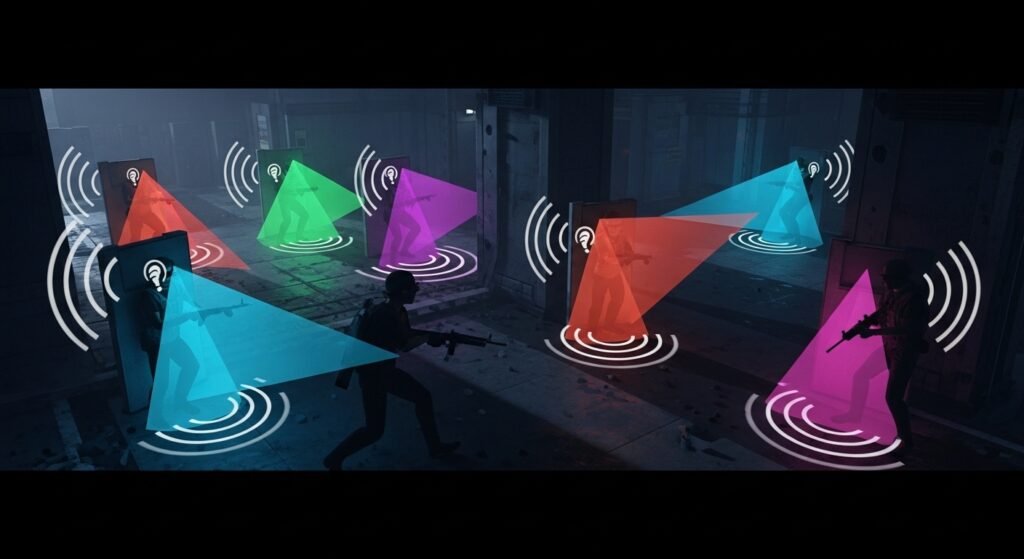
Every behavior system relies on perception. How does an enemy detect the player? What information do they have access to?
Most games simulate sight cones, hearing ranges, and sometimes smell. Line of sight checks prevent enemies from magically knowing where you’re hiding behind walls though plenty of games cheat this when dramatic tension requires it.
The perception system directly impacts game feel. Horror games typically give enemies narrow vision cones but excellent hearing, encouraging slow, careful movement. Action games might provide broader awareness but slower reaction times, favoring aggressive play.
Balancing perception systems requires extensive iteration. Too sensitive, and stealth becomes impossible. Too lenient, and enemies feel stupid.
The Future of Enemy Behavior
Machine learning has entered enemy AI conversations, though practical implementations remain limited. The challenge isn’t technical capability it’s consistency. Players need enemies to behave believably, and neural network unpredictability doesn’t always serve gameplay.
What excites me more is the integration of systemic design with behavior systems. Games like Middle-earth: Shadow of Mordor showed how enemies remembering past encounters creates emergent storytelling. That orc who killed you returns, scarred and vengeful. Suddenly enemy behavior becomes narrative.
Procedural personality systems represent another frontier. Rather than handcrafting every enemy variation, designers define personality parameters that influence behavior tree selections. One enemy becomes cowardly, another reckless, creating variety without exponentially increasing development workload.
Final Thoughts
Enemy behavior systems represent some of the most challenging and rewarding work in game development. When done well, players never think about them they’re too busy enjoying the combat, the tension, the satisfaction of outmaneuvering worthy opponents.
When done poorly, nothing else matters. No amount of graphical fidelity compensates for enemies that feel lifeless or broken.
The craft continues evolving. New tools make sophisticated behaviors more accessible. Player expectations keep rising. And somewhere, right now, developers are iterating on systems that will define how we experience interactive combat for years to come.
Frequently Asked Questions
What’s the difference between behavior trees and state machines?
State machines use rigid transitions between defined states, while behavior trees continuously evaluate prioritized conditions, allowing more flexible and complex decision-making.
Why do game enemies sometimes feel stupid despite advanced AI?
Developers intentionally limit enemy capabilities to ensure fun gameplay. Technically perfect AI often creates frustrating experiences.
What games have the best enemy AI?
F.E.A.R., Halo series, The Last of Us Part II, and Alien: Isolation are frequently praised for exceptional enemy behavior systems.
Can machine learning improve enemy behavior?
Potentially, though unpredictability makes it challenging for gameplay consistency. Most studios prefer deterministic systems they can balance precisely.
How do enemies detect players in stealth games?
Through simulated perception systems including vision cones, hearing ranges, and environmental awareness, balanced specifically for each game’s intended difficulty.