

I’ll never forget watching my friend Mike slam his controller down after dying to the same boss for the twentieth time. His jaw was clenched, his grip had gone white knuckled about fifteen deaths earlier, and he’d stopped talking entirely always a bad sign. Any human watching could see he was one death away from uninstalling the game. But here’s what’s fascinating: modern gaming systems can detect that frustration too, often before we even rage quit.
The technology behind AI powered frustration detection has quietly become one of the most significant developments in game design over the past few years, and honestly, most players have no idea it’s even happening.
What Player Frustration Detection Actually Means
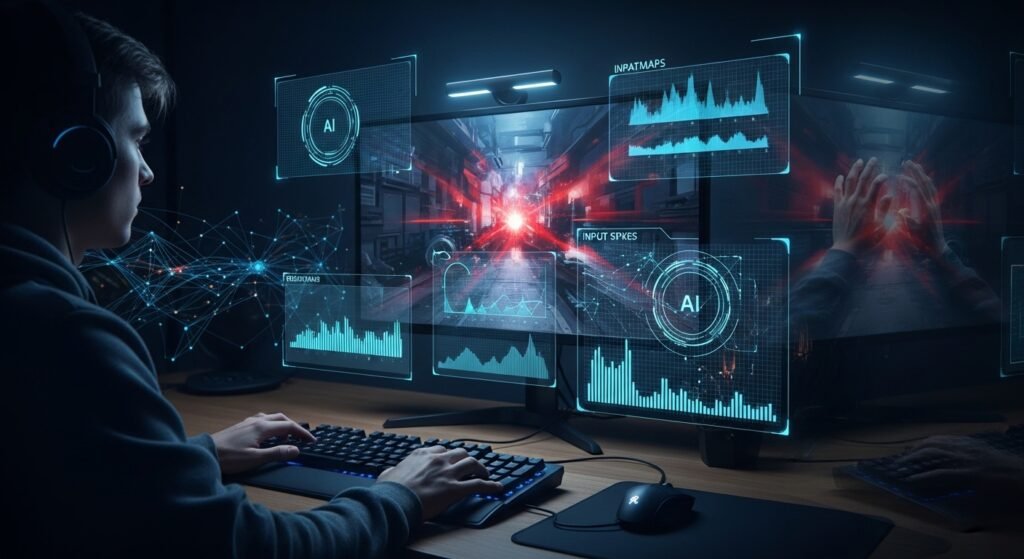
When we talk about AI detecting player frustration, we’re really discussing systems that monitor various inputs to gauge your emotional state while playing. These aren’t mind reading algorithms they’re sophisticated pattern recognition systems that pick up on behavioral cues, performance metrics, and sometimes even biometric data.
Think about how you play differently when you’re having fun versus when you’re about to throw your keyboard across the room. Your inputs get more frantic. You might button mash. Your reaction times change. You die in the same spot repeatedly. You pause the game more often, or you stop using certain features entirely. These patterns tell a story, and machine learning models have gotten scary good at reading it.
The Technology Behind the Curtain
The detection methods vary depending on the platform and how invasive developers want to be. On the simpler end, games analyze your in game behavior: death frequency, time spent in menus, completion rates of attempts, even the interval between button presses. I’ve spoken with developers who track something as subtle as whether players stop exploring and start rushing through areas a telltale sign of mounting frustration.
More advanced systems incorporate biometric feedback. Some gaming headsets now include heart rate monitors. Controllers with haptic feedback can detect grip strength and hand temperature changes. PC setups with webcams can use facial recognition to spot frowns, eye-rolling, or that thousand yard stare we all get during loading screens after repeated failures.
The AI models themselves typically use supervised learning, trained on thousands of gaming sessions where player frustration was labeled by observers or self-reported by players. Over time, these systems learn to predict frustration with surprising accuracy, sometimes identifying it before the player consciously realizes they’re tilting.
Real World Applications
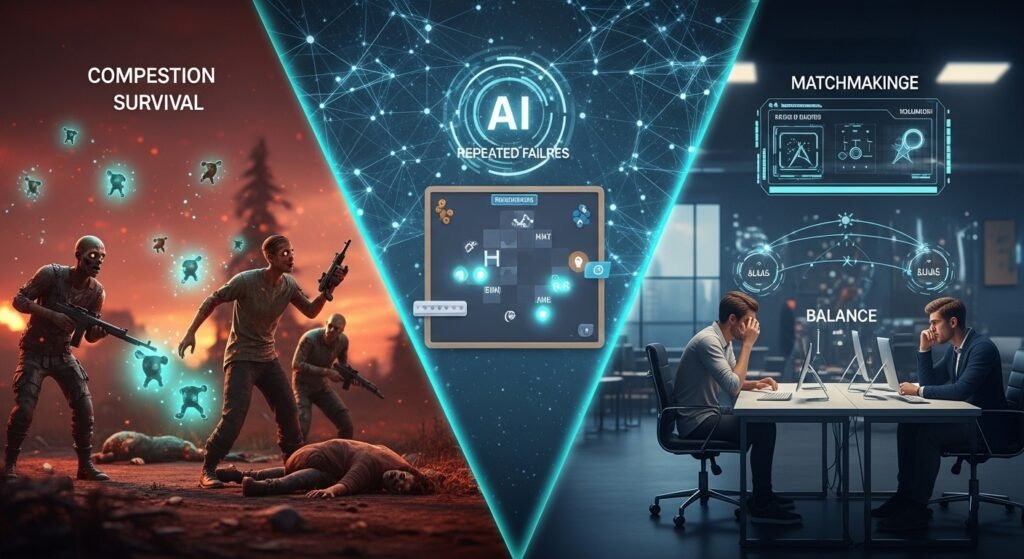
Left 4 Dead’s AI Director is probably the most famous early example, though it wasn’t marketed as frustration detection. The system adjusted difficulty on the fly based on team performance. Struggling? You’d get fewer enemy spawns and more health pickups. Breezing through? The game would ramp up pressure. Players rarely noticed these adjustments consciously, but the experience felt more balanced.
Modern implementations are more sophisticated. Several major mobile games now use frustration detection to adjust difficulty curves or offer strategic help prompts. I’ve noticed this in puzzle games especially fail the same level five times and suddenly a hint appears, or the next attempt seems slightly easier even though nothing obvious changed.
Competitive multiplayer games face a trickier challenge. Developers can’t just make matches easier without compromising fairness, but they’ve gotten creative. Some matchmaking systems factor in apparent frustration levels when forming teams, trying to avoid placing tilted players in high stakes matches. Others adjust the pace of ranked progression or offer cosmetic rewards after tough losing streaks anything to keep you engaged rather than uninstalling.
The Benefits Are Actually Pretty Significant
From a player perspective, when done well, frustration detection creates a more personalized experience. We all have different tolerance levels. What’s challenging for one player is impossible for another and boring for a third. Dynamic systems that respond to individual emotional states can thread that needle better than static difficulty settings.
I’ve seen this work beautifully in single player narrative games. There’s nothing worse than loving a story but getting stuck on a difficulty spike that blocks your progress. Smart frustration detection can smooth those spikes without making players feel patronized or cheapening their achievements.
For developers, the business case is straightforward: frustrated players quit, and players who quit don’t buy DLC or battle passes. Player retention directly impacts revenue, especially in games as service models. Beyond money though, many developers genuinely want players to have good experiences. Nobody creates a game hoping people will hate it.
The Uncomfortable Questions
But we need to talk about the ethical dimensions because this technology raises legitimate concerns.
First, there’s transparency. Most players have no idea these systems are monitoring them. Game companies aren’t exactly advertising “now with enhanced emotional surveillance.” That lack of disclosure feels problematic, even when the intentions are good.
Then there’s data privacy. What happens to all that behavioral and biometric information? Who has access to it? Could it be sold to advertisers or used for purposes beyond game balancing? The answers vary wildly by company, and often we just don’t know.
There’s also the question of manipulation. If a system can detect frustration to provide help, it can also detect when to apply pressure for monetization. Mobile games have been caught using similar techniques to prompt purchases at psychologically vulnerable moments. The same technology that offers a helpful hint could just as easily suggest buying a power up or loot box when you’re most likely to impulse buy out of desperation.
Some players simply don’t want games adjusted based on their performance. The “pride and accomplishment” of overcoming difficult challenges is central to certain gaming communities. When games secretly ease up, it can feel like having your achievement cheapened, like getting a participation trophy nobody asked for.
Where This Is All Heading
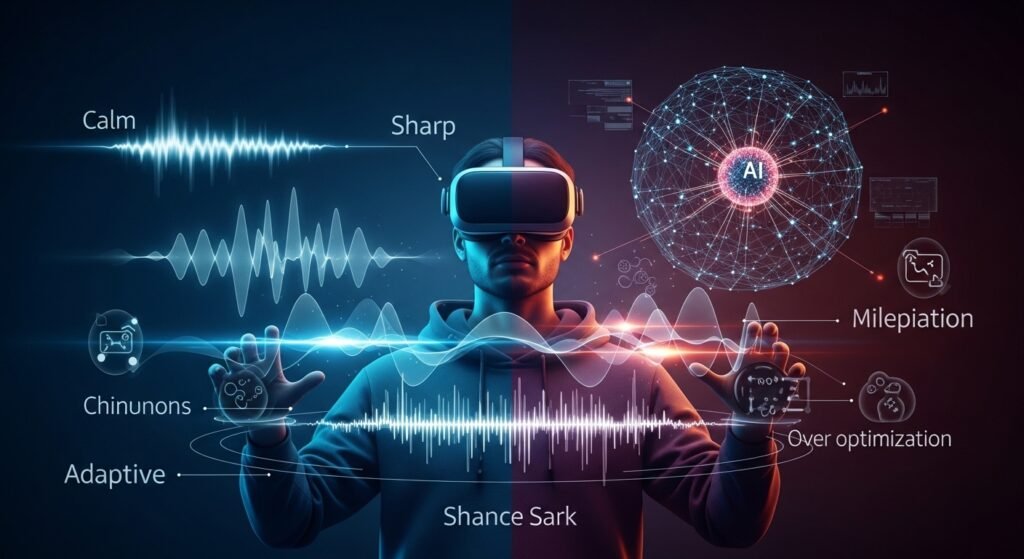
The technology will only get more refined. We’re likely moving toward games that adapt not just to frustration but to a whole spectrum of emotional states excitement, boredom, curiosity, satisfaction. Virtual reality will accelerate this, with headsets already capable of tracking eye movement, voice stress, and eventually probably brain activity.
The optimistic vision is games that flow perfectly with your mood and skill level, providing exactly the right challenge at the right moment. The pessimistic version involves psychological manipulation designed to maximize engagement and spending.
Realistically, we’ll get both, depending on the developer and their priorities.
The Bottom Line
AI frustration detection is already here, embedded in games you probably play regularly. Like most technologies, it’s neither inherently good nor bad the ethics depend entirely on implementation and intent.
As players, we deserve transparency about when and how these systems operate. As an industry, gaming needs clear standards about data collection and usage. And as individuals, we should stay aware that the games we play are increasingly playing us back, reading our emotions and responding in real-time.
Next time you notice a game getting suddenly easier or a timely hint appearing after multiple failures, you might not be imagining things. The game might genuinely know you’re frustrated. Whether that’s helpful or creepy probably depends on your perspective and possibly your current frustration level.
FAQs
Can games really tell when I’m frustrated?
Yes, through behavioral patterns like death frequency, input timing, menu usage, and sometimes biometric data from controllers or headsets.
Is this technology invading my privacy?
It depends on the game. Most use only in game behavioral data, but some collect biometric information. Check privacy policies for specifics.
Do all modern games use frustration detection?
No, but it’s increasingly common, especially in mobile games, live service titles, and games with dynamic difficulty systems.
Can I turn off frustration detection?
Rarely. Most games don’t disclose these systems or offer opt out options. Disabling dynamic difficulty (when available) might limit some detection.
Does this make games easier or harder?
Usually easier when frustration is detected, though the adjustments are often subtle. Competitive games may handle it differently to maintain fairness.
Should I be concerned about this technology?
Stay informed about data collection practices and be aware that games may use frustration detection for both helpful adjustments and monetization strategies.