

I’ve spent enough years watching the gaming industry evolve to recognize when something fundamental shifts beneath the surface. The way games keep us coming back has changed dramatically over the past decade, and most players don’t even realize they’re experiencing highly sophisticated retention systems powered by machine learning algorithms.
Let me be clear from the start: this isn’t necessarily sinister, but it’s important to understand what’s happening behind the curtain of your favorite games.
What Are We Actually Talking About?

When I first encountered these systems during a consulting project with a mobile game studio back in 2026, I was genuinely impressed by the sophistication. AI driven retention systems are essentially intelligent frameworks that analyze player behavior in real time and automatically adjust game elements to keep you engaged. Think of it as a game that learns what makes you tick and adapts accordingly.
Unlike the old static approach where every player got the same difficulty curve or reward schedule, these systems treat each player as an individual. They track hundreds of data points: how long you play, when you’re about to quit, what rewards excite you, which challenges frustrate you, and what social features keep you invested.
How They Actually Work in Practice
The mechanics are more nuanced than you might expect. I remember talking with a game designer who explained their system tracked something called “churn probability”essentially a constantly updating prediction of whether you’re likely to abandon the game within the next few days.
Here’s what happens: You boot up a free to play game and start playing. Within your first session, the system is already gathering baseline data. Are you breezing through levels or struggling? Do you interact with other players? How do you respond to your first optional purchase prompt?
By day three, the algorithm has a profile. If you’re showing signs of disengagement maybe your session times are dropping or you’re losing matches consistently the system might ease the difficulty slightly. Not enough that you’d consciously notice, but just enough to give you a win when you need it. Suddenly you get a rare item drop or an easier opponent. It feels like luck, but it’s calculated intervention.
On the flip side, if you’re blazing through content too quickly, the system might introduce harder challenges or redirect you toward competitive features to slow your consumption. The goal is always the same: keep you in what designers call “the flow state”not too hard, not too easy, just engaging enough.
Real World Examples I’ve Observed
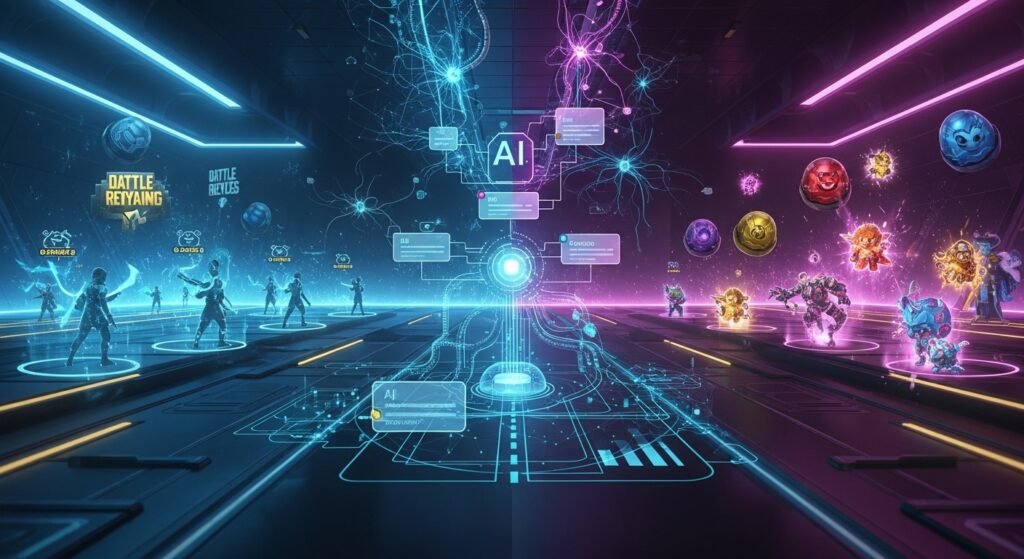
Mobile games were the testing ground for this technology, but it’s everywhere now. Battle royale games use AI to influence matchmaking, pairing you with opponents that create competitive but winnable scenarios. I’ve seen data suggesting some games track your win-loss patterns and actively adjust your matchups to keep you around a 1:1 ratio, because that sweet spot of occasional victory keeps players grinding.
Gacha games those with randomized character or item pulls have gotten particularly sophisticated. The system learns which characters you want based on which ones you preview or use in trial modes. Then it might adjust when to give you small wins (lesser characters) versus when to deploy the big dopamine hit of finally getting that coveted character. Some studies I’ve reviewed suggest these systems can identify “whales” (big spenders) versus casual players within hours and adjust the entire reward economy accordingly.
Even traditional RPGs now incorporate these elements. Quest difficulty, loot drop rates, and enemy spawn patterns can all be AI modulated. That legendary weapon you got right when you were getting bored with your current gear? Possibly not coincidence.
The Benefits Are Real
Before this sounds entirely dystopian, there are genuine upsides I’ve witnessed. Players do have more personalized experiences. Someone with limited gaming skills can still progress and enjoy a story driven game without hitting artificial walls. Competitive players get matched with worthy opponents instead of constantly stomping newbies or getting destroyed by veterans.
I spoke with a game director who showed me data on player satisfaction scores before and after implementing adaptive systems. The improvement was measurable fewer rage quits, longer average playtimes, and interestingly, more positive reviews. When done thoughtfully, these systems can remove frustration and enhance enjoyment.
For developers, especially smaller studios, the business case is compelling. Player retention directly impacts revenue, and in a market with infinite entertainment options, keeping your audience engaged is survival. The data driven insights these systems provide also help developers understand what content players actually want versus what designers assume they want.
The Ethical Minefield

Here’s where my enthusiasm gets tempered by significant concerns. The same techniques that smooth out difficulty curves can be weaponized to maximize monetization. I’ve reviewed implementations where the AI specifically identifies moments of emotional vulnerability right after a loss, or when you’re close to completing a collection to serve up purchase prompts.
There’s limited transparency. As a player, you typically have no idea these systems are operating. You can’t opt out or even know what data is being collected and how it influences your experience. The power imbalance is substantial.
The psychological manipulation question looms large. At what point does personalization cross into exploitation? When these systems are tuned to extend play time or encourage spending rather than pure enjoyment, we’re entering ethically murky territory. I’ve seen internal company presentations where the metrics celebrated are “daily active users” and “average revenue per user” rather than player satisfaction or fun.
There’s also the concern about game design itself. Are we losing the artistic vision of creators when algorithms override intended experiences? Some of the most memorable gaming moments come from overcoming genuinely difficult challenges or experiencing shared events with other players. When everything becomes personalized and algorithmically smoothed, something might be lost.
Where This Is Heading
The trajectory is toward more sophistication, not less. Machine learning models are getting better at prediction and personalization. Future systems will likely incorporate voice analysis, biometric feedback if available through devices, and even more granular behavioral modeling.
We’ll probably see regulatory attention eventually, particularly regarding monetization tactics and data privacy. The conversation about “loot boxes” and gambling mechanics in games was just the beginning. I expect consumer advocacy groups and possibly legislators will turn their attention to retention systems, especially in games marketed to children.
Industry wise, I’m hopeful we’ll see more ethical implementation guidelines emerge, either self imposed by companies wanting to avoid backlash or mandated externally. Some developers I know are already thinking about these questions seriously and trying to balance business needs with player welfare.
The Bottom Line
AI driven retention systems are now fundamental to modern gaming. They’re not going away. As players, the best we can do is become educated consumers understand that these systems exist, recognize their influence, and make conscious decisions about our engagement and spending.
As an industry, we need ongoing conversations about ethical boundaries and transparency. The technology itself is neutral; it’s how we deploy it that matters.
Gaming should ultimately be about enjoyment, creativity, and connection. When retention systems serve those goals, they’re a positive evolution. When they prioritize extraction over experience, we’ve lost the plot.
FAQs
Do all modern games use AI retention systems?
Not all, but most major free to play games and many premium titles incorporate some level of algorithmic retention features. Smaller indie games typically don’t have the resources to implement sophisticated AI systems.
Can I tell if a game is using these systems on me?
Directly? Usually no. Indirectly, you might notice suspiciously well timed rewards, difficulty that seems to adapt to your performance, or purchase prompts that appear at emotionally charged moments.
Are AI retention systems the same as dynamic difficulty?
They’re related but not identical. Dynamic difficulty specifically adjusts challenge levels, while retention systems encompass broader elements including rewards, content delivery, matchmaking, and monetization timing.
Is this practice legal?
Currently, yes, in most jurisdictions. However, data privacy laws in regions like the EU do impose some restrictions on what data can be collected and how it’s used. This is an evolving legal landscape.
Should I be worried about these systems?
“Worried” might be strong, but “aware” is appropriate. Understanding how games are designed to retain you helps you make informed choices about your time and money. Set your own boundaries rather than letting algorithms set them for you.