
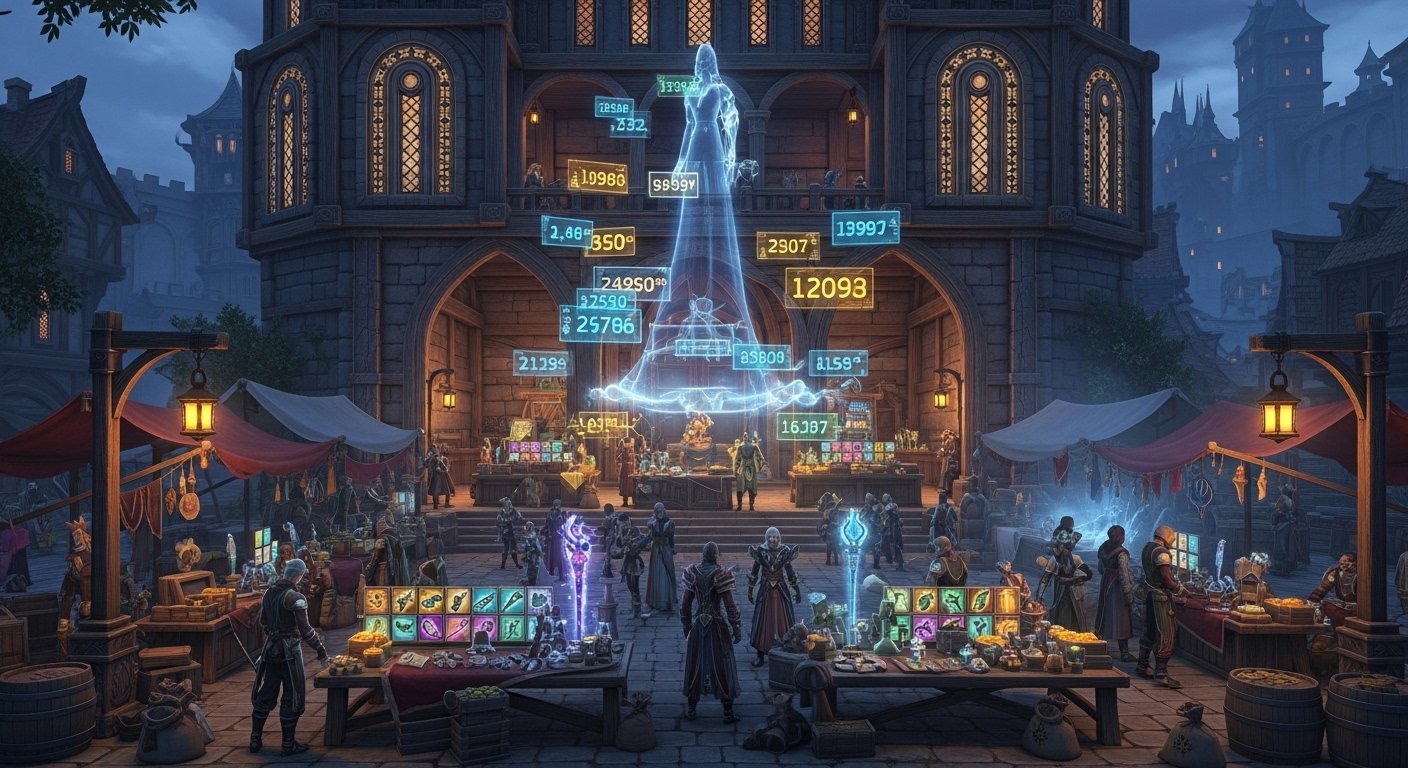
I still remember the exact moment I realized something had changed in one of my favorite MMORPGs. The auction house prices for iron ore, which usually followed predictable weekend patterns, suddenly started fluctuating in ways that felt intelligent. Prices dropped when I was selling and climbed when I needed to buy, almost like the game was reading my intentions. Turns out, it kind of was.
Game economies used to be relatively simple affairs. Developers set fixed vendor prices, maybe threw in some basic supply demand mechanics, and let players duke it out in trading channels. Those days are increasingly behind us. Today’s sophisticated games employ AI systems that monitor, adjust, and sometimes outright manipulate virtual economies in real time, making decisions that affect millions of players and, in some cases, real money.
From Static Spreadsheets to Learning Systems
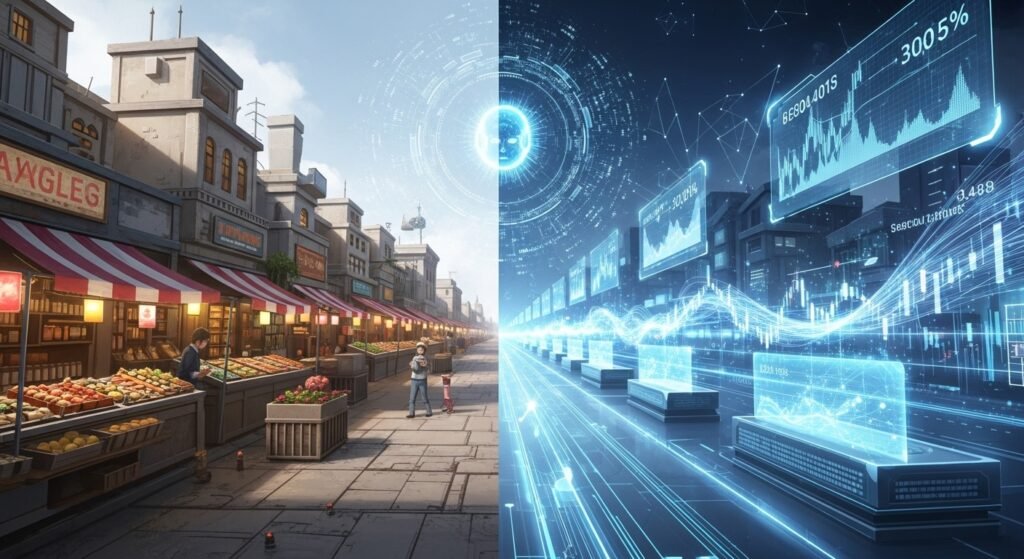
The evolution happened gradually. Early MMOs like EverQuest and RuneScape had economies that were largely player driven but chaotic. Gold farming, market manipulation, and inflation ran rampant because the systems couldn’t adapt quickly enough. Developers would step in with patches and nerfs, but they were always playing catch-up.
Around the mid-2010s, free to play games with aggressive monetization needed smarter tools. They couldn’t just guess at pricing for loot boxes or premium currency they needed systems that could optimize revenue while keeping players engaged. That’s when machine learning models started creeping into the backend architecture.
Modern AI powered economic systems do several things simultaneously. They track individual player behavior patterns, monitoring what you buy, when you buy it, how much currency you’re hoarding, and what activities you engage in. They analyze market wide trends across thousands or millions of players, identifying bottlenecks, surplus conditions, and emerging exploits. Most importantly, they make autonomous decisions about pricing, drop rates, and availability without human intervention.
How It Actually Works Behind the Scenes
Let me break down what I’ve learned from conversations with developers and my own observations. These systems typically operate on multiple layers.
The data collection layer is constantly gathering information. Every transaction, quest completion, login session, and inventory change gets logged. In a popular mobile game I consulted for, the database was capturing roughly 200 data points per player per session. That’s millions of events daily for a moderately successful game.
The analysis layer uses machine learning models often neural networks or ensemble methods to find patterns. These models might predict when a player is likely to quit (churn prediction), identify optimal price points for virtual items, or detect abnormal trading patterns that suggest botting or exploitation.
The action layer is where things get interesting. Based on the analysis, the system might adjust the drop rate of rare items for specific player segments, modify vendor prices, inject or remove currency from the economy through events, or personalize store offers. This happens dynamically, sometimes adjusting every few minutes.
I’ve seen games where two players standing next to each other might see different prices in the same in game shop. The system has determined that one player is price sensitive and might churn if things feel too expensive, while the other has shown willingness to pay premium prices for cosmetics.
Real-World Applications and Examples

Eve Online pioneered having an actual economist on staff monitoring their player driven economy, but they’ve since supplemented human oversight with predictive models. The game’s economy famously mirrors real-world complexity, with market crashes, territorial resource conflicts, and massive fraud schemes. AI tools help CCP Games identify dangerous economic bubbles before they devastate the player experience.
FIFA Ultimate Team and similar sports game modes use dynamic pricing for player cards. The systems adjust based on real world performance, in game meta shifts, and supply demand across the global player base. When a footballer scores a hat trick on Sunday, the AI has already adjusted their card’s market value by Monday morning.
Mobile games like Clash of Clans or Game of War employ what insiders call “personalized storefronts.” The deals you see are specifically calibrated to your spending habits, progression rate, and likelihood to convert. I tested this myself across multiple accounts with different play styles the variance in offers was striking.
The Benefits Are Undeniable (For Someone)
From a developer perspective, these systems are incredibly powerful. They can prevent runaway inflation that destroys game economies. They identify and patch exploits faster than any human team could. They maximize revenue by finding each player’s optimal price point. And they keep casual players engaged by ensuring the economy doesn’t become so competitive that newcomers feel hopelessly behind.
For players, the benefits are more mixed. When working well, AI economic systems can create smoother experiences. You’re less likely to encounter absurd price gouging or completely barren markets for essential items. The game might offer you a deal on exactly what you need right when you need it. Progression feels more balanced and less prone to extreme swings.
The Uncomfortable Questions Nobody Wants to Address

But here’s where I get uncomfortable. These systems operate in near-total opacity. Players have no idea they’re being analyzed and sorted into behavioral categories. The personalized pricing that feels helpful might also be manipulative, especially when real money is involved.
I’ve watched players develop gambling like behaviors around loot systems that are specifically tuned to maximize engagement. The AI identifies your “whale potential” and adjusts accordingly. Is that ethical? Game companies would argue they’re just optimizing their product. Critics would say it’s exploitation, particularly of vulnerable individuals.
There’s also the issue of competitive fairness. If the game is giving different players different drop rates or economic opportunities based on AI profiling, is everyone really playing the same game? In competitive titles, this raises serious questions about integrity.
The data privacy angle concerns me too. These systems require harvesting enormous amounts of player behavior data. Where is it stored? Who has access? What happens if it’s breached or sold? Most terms of service give developers broad rights, but players rarely understand the scope of surveillance.
What’s Coming Next
The technology is only getting more sophisticated. I’m already seeing experiments with AI systems that create entirely procedural economies for different game instances, or that can simulate decades of economic evolution to test balance changes before implementation.
Some developers are exploring blockchain integration, though I’m skeptical that adds much beyond marketing buzz. The real frontier is AI systems that can negotiate with players, understand sentiment from chat and forums, and adjust not just prices but fundamental gameplay mechanics to optimize for whatever metrics leadership prioritizes.
That last part is what keeps me up at night. Are we optimizing for player enjoyment and fair play, or for maximum revenue extraction? The AI doesn’t care it optimizes for whatever goal we program. The question is whether we can trust the gaming industry to program the right goals.
FAQs
What is an AI powered in game economy system?
It’s a backend system that uses machine learning and data analysis to automatically manage virtual economies, adjusting prices, drop rates, and availability based on player behavior and market conditions without constant human intervention.
Can AI prevent inflation in game economies?
Yes, AI systems can monitor currency supply and demand in real time, automatically adjusting currency sinks (ways to remove currency) and faucets (ways currency enters the game) to maintain relatively stable purchasing power.
Do all modern games use these systems?
Not all, but most major free to play titles and live-service games employ some form of AI driven economic management. Single player games and smaller indie titles typically don’t have the infrastructure or need for such systems.
Is personalized pricing ethical in games?
This remains hotly debated. Supporters argue it improves player experience by offering relevant deals. Critics contend it’s manipulative, especially when real money is involved, and may exploit vulnerable players.
Can players tell if they’re being affected by these systems?
Usually not. The systems operate invisibly in the background, and most changes feel like normal game fluctuations. Only through careful testing across multiple accounts can you sometimes detect personalization.
How do these systems detect cheaters or bots?
They identify abnormal patterns in trading behavior, resource accumulation, and transaction timing that deviate from typical human players, flagging accounts for further review or automated action.