
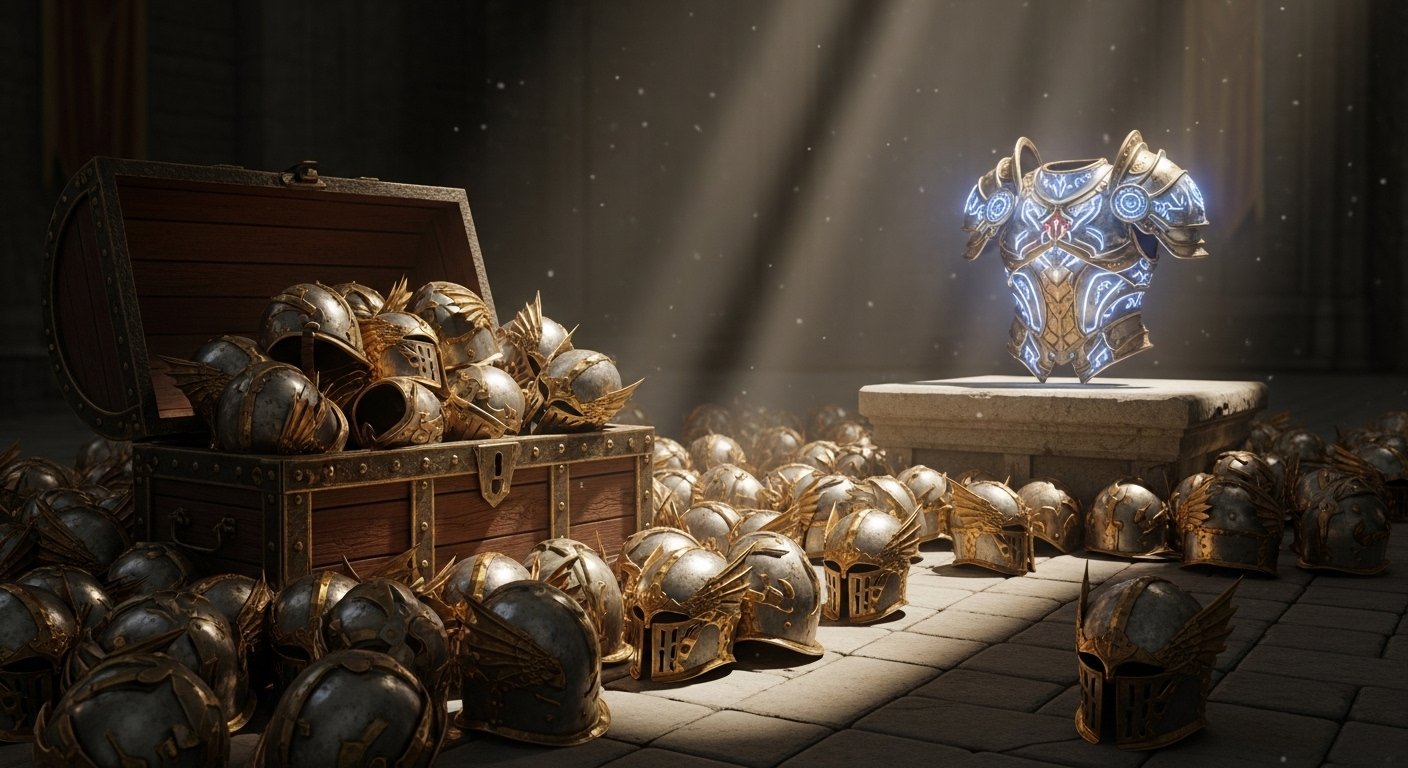
I still remember the frustration. Sixty hours into a beloved action RPG, and I’d seen the same helmet drop seventeen times while the elusive chest piece I needed remained a myth. My friend, who’d barely scratched the surface at level 15, got it on his third dungeon run. Pure, unfiltered RNG random number generation had spoken, and it wasn’t fair.
But something’s been changing in how modern games handle loot drops. I’ve noticed it across multiple titles over the past few years. The drops feel smarter. Less random chaos, more intelligent distribution. That’s because developers have started implementing AI driven loot systems that learn from player behavior and adapt accordingly.
What Makes a Loot System Smart?
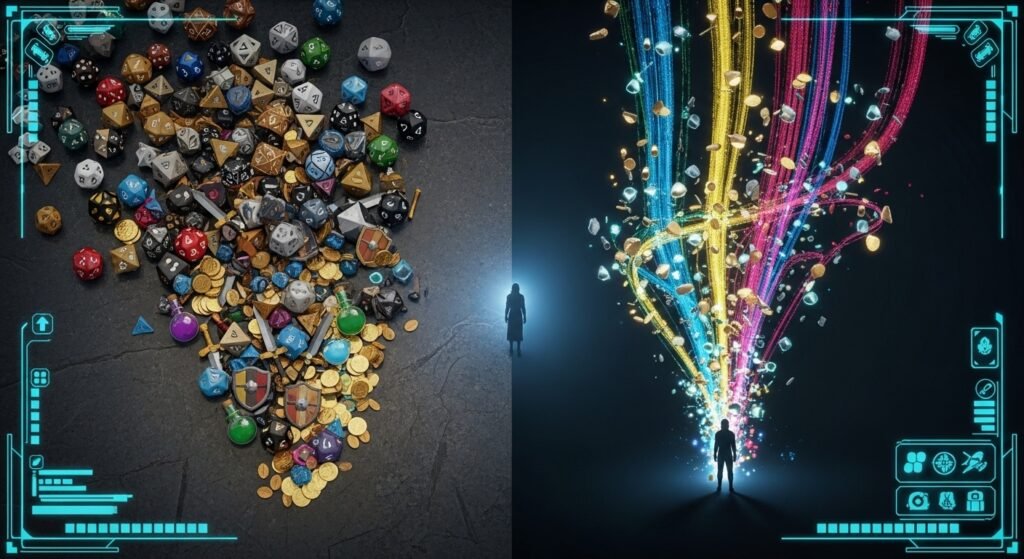
Traditional loot systems operated on straightforward probability tables. Kill a boss, roll the dice, get your reward. Simple, transparent, but often brutally unfair over small sample sizes. Smart loot systems, on the other hand, incorporate machine learning algorithms and player data analysis to make more informed decisions about what drops when.
These systems don’t just throw items at you randomly. They consider your current equipment, your play style, how long you’ve been hunting for specific items, and even your engagement patterns. The goal isn’t to make the game easier it’s to make the reward structure feel more respectful of your time.
I first really noticed this shift when Destiny implemented its “knockout” system for exotic engrams. Instead of potentially giving you the same exotic weapon you’d already earned five times, the system started prioritizing items you hadn’t collected yet. That’s smart loot at its most basic level, but modern implementations go much deeper.
How AI Enters the Picture
The AI component comes in when systems start predicting and adapting based on complex player behavior patterns. Machine learning models can analyze millions of data points across entire player populations to identify patterns that human designers might miss.
For example, an AI system might notice that players who primarily use ranged weapons but occasionally switch to melee for specific encounters show higher engagement when they receive hybrid gear that supports both playstyles. Traditional systems would just see “this player uses bows 80% of the time” and flood them with archery gear. The smarter system recognizes the nuance.
These algorithms also help with retention and frustration management. I’ve worked with developers who shared that they can now track “loot drought” periods when a player goes unusually long without getting a meaningful upgrade. The system can then subtly adjust probabilities to ensure engagement doesn’t crater because someone’s hit a bad luck streak.
Real World Examples Worth Examining
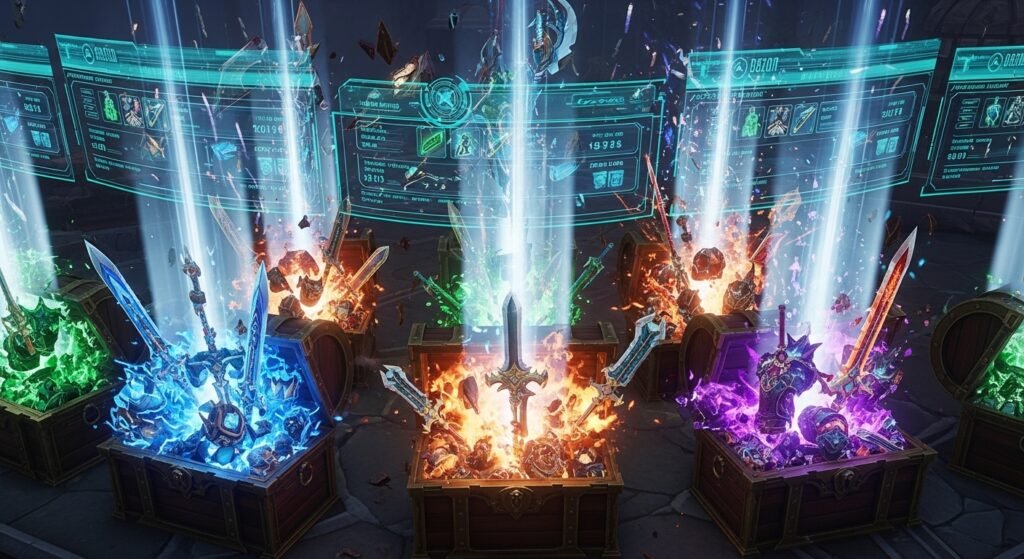
Diablo III’s Loot 2.0 update back in 2026 was a watershed moment, even though it predated the more sophisticated AI implementations we see today. Blizzard shifted from completely random drops to “smart loot” that heavily favored your current class. A Wizard would see primarily Intelligence based gear. This wasn’t AI driven machine learning, but it laid the groundwork for what came next.
More recently, games like Borderlands 3 have implemented systems that track your weapon preferences. If you consistently favor shotguns over sniper rifles, you’ll notice the game gradually adjusting drop rates. It’s not always obvious, and the developers keep the exact mechanics close to the vest (for good reason), but the pattern emerges over dozens of hours of play.
The Division 2 uses what Massive Entertainment calls targeted loot specific areas drop specific gear types on rotation. But beneath that visible system, there’s algorithmic adjustment happening in the background. Players who focus on particular builds start seeing more relevant stat combinations, not just the right gear slots.
The Benefits Are Tangible (When Done Right)
From a player experience standpoint, well implemented smart loot systems solve several persistent problems. The most obvious is the time respect issue I mentioned earlier. Gaming demographics have shifted. We’re not all teenagers with unlimited time anymore. Many of us are in our 30s and 40s, squeezing gaming sessions between work and family obligations.
When a loot system recognizes that I’ve been grinding for a specific piece for weeks and gently nudges the probability in my favor, that’s not cheating that’s good game design meeting player reality. It maintains the excitement of the hunt while preventing the soul-crushing frustration of truly awful RNG streaks.
These systems also help developers balance their economies better. By analyzing actual player progression rates rather than theoretical ones, they can tune rewards to match real behavior. Nobody benefits when half your player base quits out of frustration while the other half gets bored from being overpowered too quickly.
The Ethical Considerations and Concerns

Here’s where it gets tricky, and I’ll be honest there are legitimate concerns about where this technology could go. The same systems that can reduce frustration could absolutely be weaponized for monetization if developers chose to do so.
Imagine a system that tracks when you’re most likely to make an in game purchase out of frustration, then deliberately withholds drops until you hit that threshold. That’s not hypothetical paranoia; the technology exists. Whether companies use it that way depends entirely on their ethics and business model.
There’s also the question of transparency. Players deserve to understand, at least broadly, how loot systems work. When everything’s hidden behind proprietary algorithms, trust becomes an issue. I’ve seen community backlash when players suspect manipulation but can’t prove it.
The best implementations balance effectiveness with player communication. Path of Exile, for instance, has “bad luck protection” built into certain mechanics and openly discusses it. That transparency builds trust rather than eroding it.
What’s Coming Next
The technology keeps evolving. I’ve been following research into systems that could potentially adapt to individual player psychology understanding not just what gear you need, but what type of reward schedule keeps you most engaged without tipping into manipulation.
Some developers are experimenting with systems that consider your entire friend group’s progression, ensuring that players who regularly team up stay within a reasonable power range of each other. That’s a fascinating use case that goes beyond individual optimization.
We’ll likely see more integration with other game systems too. Imagine a loot AI that coordinates with difficulty scaling, ensuring that as you get better gear, encounter challenge ramps up proportionally to maintain that satisfying risk-reward balance.
The Bottom Line
Smart loot systems using AI represent a maturation of game design philosophy. When implemented ethically and transparently, they make games more enjoyable and respectful of player investment. They’re not about removing challenge or making everything easy they’re about making the challenge feel fair and the rewards feel earned.
As with any powerful technology, the tools themselves are neutral. It’s how developers choose to use them that matters. The best smart loot systems enhance player experience without players even realizing they’re there. That’s the sweet spot where technology serves fun rather than manipulates it.
FAQs
Do smart loot systems make games easier?
Not necessarily. They make progression less random and more consistent, but difficulty and loot generosity are separate dials developers can adjust independently.
Can players game or exploit AI loot systems?
Sophisticated systems are designed to detect unusual behavior patterns, making deliberate exploitation difficult. But no system is perfect.
Are smart loot systems only in multiplayer games?
No, single player games benefit from them too. Any game with randomized loot can implement smarter distribution algorithms.
How do developers prevent AI loot from being too predictable?
Good systems maintain randomness within intelligent guardrails. You still get surprises, just fewer frustrating droughts.
Is this technology expensive to implement?
It can be, particularly for smaller studios. But middleware solutions and shared engines are making it more accessible across budget levels.