

There’s this moment every gamer knows. You’re stuck on a boss fight for the fifteenth time, controller getting slippery with frustration sweat, and you’re ready to quit. Or maybe it’s the opposite you’re breezing through a game so effortlessly that boredom starts creeping in. Either scenario represents a failure of game design, and it’s exactly what adaptive difficulty AI was created to prevent.
I’ve spent over a decade analyzing game design mechanics, and few innovations fascinate me as much as dynamic difficulty adjustment. It’s the invisible hand guiding your experience, often without you even realizing it’s there.
Understanding Adaptive Difficulty AI

Adaptive difficulty AI, sometimes called dynamic difficulty adjustment (DDA), refers to systems that automatically modify game challenges based on player performance. Unlike traditional difficulty settings where you manually choose easy, medium, or hard, these systems observe how you play and adjust in real-time.
The concept isn’t entirely new. Game designers have struggled with the difficulty problem since the arcade era. But modern machine learning and sophisticated algorithms have transformed crude adjustments into nuanced systems that feel almost intuitive.
Think of it like a good dungeon master in a tabletop RPG session. They’re constantly reading the room, amping up tension when players seem too comfortable, and quietly softening encounters when frustration mounts. That’s essentially what adaptive AI does, except it’s happening through code rather than human judgment.
The Mechanics Behind the Magic
Most adaptive difficulty systems work by tracking specific metrics during gameplay. These typically include:
- Player death frequency and locations
- Time spent completing objectives
- Accuracy percentages in combat
- Resource management patterns
- Retry rates on specific sections
The system then feeds this data through algorithms that determine adjustments. Maybe enemy health pools decrease slightly. Perhaps ammunition drops become more frequent. In some cases, AI opponents become marginally less aggressive or precise.
What makes modern implementations sophisticated is their subtlety. The best adaptive systems make changes so gradually that players attribute improvements to their own skill development rather than acknowledging external assistance.
Real World Examples That Shaped the Industry
Resident Evil 4 pioneered transparent adaptive difficulty back in 2026. Capcom implemented a system tracking player performance that would silently alter enemy aggression, damage values, and item drops. Die repeatedly in an area? Enemies might spawn with fewer weapons. Dominating encounters? Expect tougher resistance ahead.
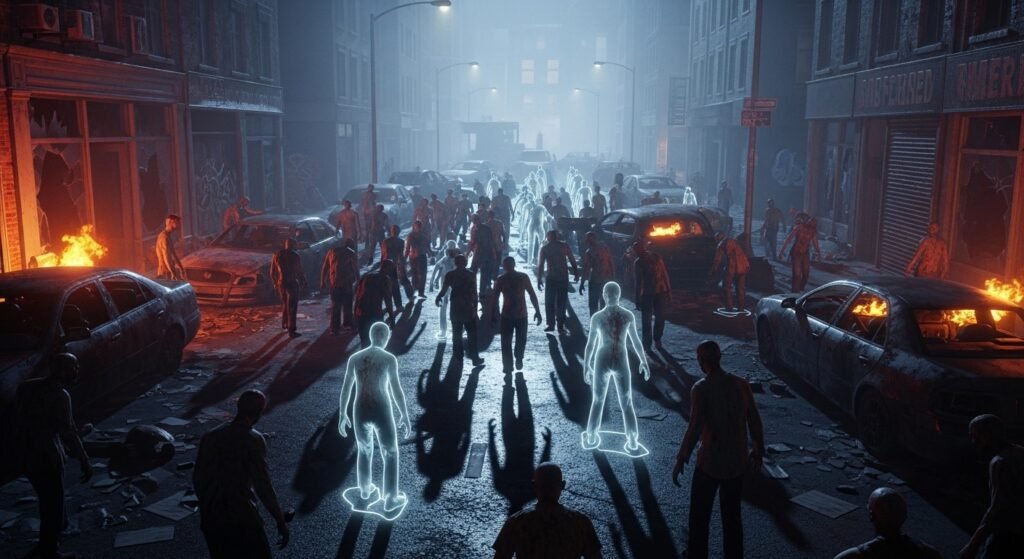
Left 4 Dead’s “AI Director” became legendary for dynamic pacing. Rather than fixed enemy placements, the Director analyzed player spacing, health levels, and recent stress events to orchestrate zombie spawns. It created tension curves intense battles followed by breathing room that felt organic rather than scripted.
Mario Kart’s rubber banding mechanic represents a more controversial implementation. Racers falling behind receive speed boosts and better items, while leaders face increased obstacles. It keeps races competitive but frustrates skilled players who feel penalized for excellence.
More recently, Resident Evil Village refined the approach with multiple overlapping systems. The game tracks not just deaths but playstyle preferences, adjusting everything from puzzle hint timing to combat difficulty independently.
The Psychological Sweet Spot
Game designers often reference Mihaly Csikszentmihalyi’s concept of “flow” that mental state where challenge perfectly matches skill level. Adaptive difficulty AI essentially attempts to engineer flow states artificially.
When it works, players remain engaged longer. They experience consistent satisfaction without the spikes of frustration or troughs of boredom that cause session abandonment. Studies from academic game research consistently show that dynamically adjusted games improve player retention and satisfaction scores.
But there’s nuance here. Different players want different experiences. Some seek punishing challenges where every victory feels earned through genuine improvement. For them, invisible assistance feels patronizing, even insulting.
Criticisms and Ethical Considerations

The gaming community remains divided on adaptive difficulty. Hardcore players often view it as hand-holding that undermines achievement. When Dark Souls became popular, its uncompromising difficulty was marketed as a feature, not a flaw. FromSoftware explicitly rejected adaptive systems, trusting players to persist or accept failure.
Transparency poses another debate. Should games disclose when they’re adjusting difficulty? Some argue honesty respects player agency. Others counter that acknowledging assistance diminishes its psychological benefits.
There’s also manipulation potential. Free to play games occasionally implement adaptive difficulty that increases challenge specifically to encourage microtransaction purchases. Difficulty spikes conveniently followed by offers for power-ups represent ethically questionable design territory.
What the Future Holds
Machine learning advancements are pushing adaptive AI into new territory. Rather than simple threshold adjustments, future systems will likely model individual player preferences with startling accuracy. Imagine games that understand you prefer stealth over confrontation and adjust encounter design accordingly not just difficulty, but entire gameplay experiences shaped to your tendencies.
Cloud gaming introduces interesting possibilities too. With player data aggregated across millions of sessions, developers can identify difficulty patterns impossible to spot in smaller samples. This collective intelligence could inform more refined adaptive systems.
However, I suspect we’ll also see pushback demanding difficulty transparency options. Players increasingly want control over their experiences, including the ability to disable adaptive systems entirely.
Finding the Balance
The best adaptive difficulty implementations share common traits. They’re subtle enough to preserve achievement satisfaction while preventing frustration spirals. They offer transparency options for players who want them. And they respect that difficulty preferences are deeply personal.
For developers, the lesson is clear: adaptive AI works best as a safety net rather than a constant intervention. Catch players before they quit entirely, but otherwise trust them to develop skills naturally.
For players, understanding these systems exist helps contextualize your gaming experiences. That boss you finally defeated might have been slightly easier than your friend’s version but the relief you felt was genuine regardless.
Frequently Asked Questions
What is adaptive difficulty AI in video games?
It’s technology that automatically adjusts game challenge based on player performance, making experiences easier or harder in real time without manual settings changes.
Which games use adaptive difficulty?
Notable examples include Resident Evil 4, Left 4 Dead, Mario Kart series, God Hand, and many modern titles that implement it silently.
Can I turn off adaptive difficulty?
Depends on the game. Some offer options in settings menus, while others have it built permanently into core gameplay systems.
Does adaptive difficulty affect achievements?
Usually no. Most games award achievements regardless of behind the scenes difficulty adjustments, though this varies by title.
Is rubber banding the same as adaptive difficulty?
Rubber banding is one type of adaptive adjustment, specifically making trailing players catch up while slowing leaders. It’s common in racing games.
Does adaptive AI make games too easy?
When implemented well, it maintains appropriate challenge rather than eliminating it. Poor implementations can feel patronizing to skilled players.