

When I started experimenting with artificial intelligence tools for my writing projects about two years ago, I was skeptical. Could a machine really help me create characters that felt alive? The short answer is yes and no. The reality sits somewhere in between, and understanding where these tools excel versus where they fall short has genuinely transformed my creative process.
What Exactly Is AI Assisted Character Development?
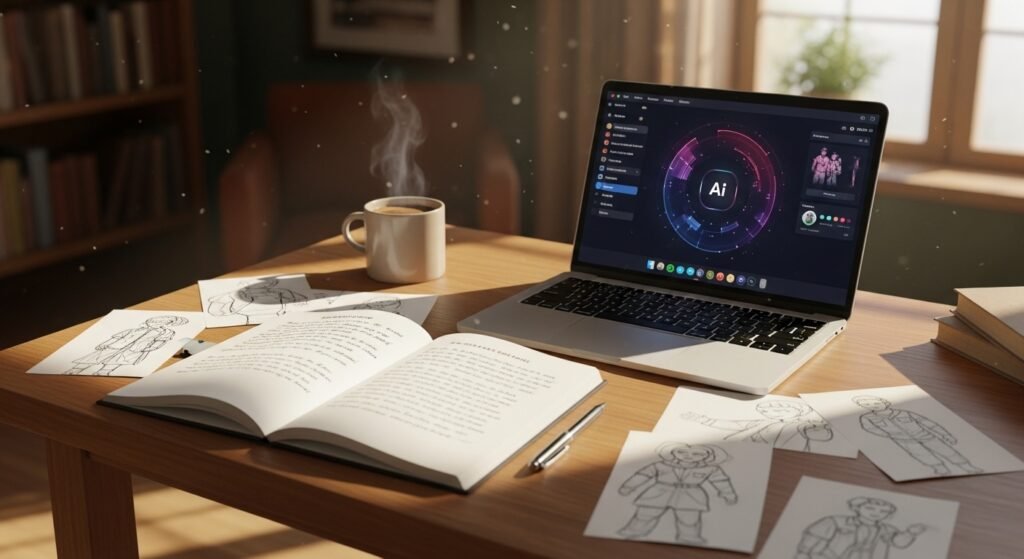
Let’s clear up a common misconception first. AI assisted character development doesn’t mean letting software write your characters for you. That approach produces flat, predictable archetypes that readers spot from a mile away. Instead, think of it as having a brainstorming partner available at three in the morning when inspiration strikes but your critique group isn’t answering their phones.
These tools work through conversation. You describe a character concept, and the software responds with questions, suggestions, or perspectives you might not have considered. Maybe you’re developing a retired detective who takes up beekeeping. The AI might ask about her relationship with structure, whether she sees patterns in the hive that remind her of unsolved cases, or how she handles the lack of closure that came with retirement.
The Practical Applications Writers Are Actually Using
From conversations with fellow authors at conferences and online communities, I’ve noticed several patterns in how working writers incorporate these tools into their character work.
Backstory exploration ranks among the most common uses. Creating rich histories for characters often means generating far more material than ever appears on the page. A fantasy novelist I know uses AI conversations to map out her characters’ childhoods, traumas, and formative relationships. Most of this never makes it into her books directly, but it informs every decision her characters make.
Dialogue testing offers another practical application. Before committing scenes to a final draft, some writers use AI to roleplay conversations between their characters. This helps identify whether each voice remains distinct or if everyone starts sounding the same after fifty thousand words.
Motivation mapping helps writers understand why their characters behave certain ways. When a beta reader says “I don’t understand why Sarah would do that,” running the scenario through an AI conversation often reveals gaps in the character’s established psychology.
Where These Tools Actually Shine

The strongest benefit I’ve experienced is overcoming creative blocks. Sometimes you’re too close to a character to see obvious contradictions or missed opportunities. An external perspective even a digital one can illuminate blind spots.
Speed matters too. Building a supporting cast of twenty characters for a complex novel traditionally meant weeks of development work. AI assistance can compress that timeline significantly, generating foundational sketches that you then deepen and personalize.
Cultural and historical research represents another strength. Writing characters from backgrounds different from your own requires extensive research. While AI should never replace consulting actual community members or primary sources, it can provide starting points and flag potential stereotypes or oversimplifications in your initial concepts.
The Limitations You Need to Understand
Here’s where my initial skepticism proved partially justified. AI tools struggle with true originality. They’re trained on existing fiction, which means they trend toward conventional character types unless you actively push against that tendency.
Emotional depth presents another challenge. The software can suggest that your character might feel conflicted, but it can’t genuinely understand what conflicted feels like. The nuances of human emotion the specific way grief manifests differently in two siblings, or how love and resentment coexist in complicated marriages these require human insight.
Consistency across a long project remains problematic as well. AI doesn’t truly remember your character the way you do. It provides moment to moment assistance without maintaining a genuine understanding of character arcs spanning three hundred pages.
Ethical Considerations Worth Thinking About
The writing community has engaged in substantial debate about these tools, and honestly, that conversation is far from settled.
Authenticity concerns matter. If you’re writing characters from marginalized communities, leaning too heavily on AI risks perpetuating biased or stereotypical representations. The training data reflects existing literature, including its historical blind spots and prejudices.
There’s also the question of creative ownership. At what point does AI assistance become AI authorship? Most writers I’ve spoken with draw the line at using these tools for brainstorming and refinement while ensuring the core creative decisions remain human.
Labor implications deserve mention too. Professional sensitivity readers, developmental editors, and writing coaches offer services that overlap with some AI capabilities. Supporting human experts remains important even when digital alternatives exist.
Making It Work: Practical Advice

After two years of experimentation, here’s what actually works for me.
Start with clear concepts. Vague requests produce vague results. Instead of asking for “an interesting villain,” describe the specific conflict, setting, and thematic concerns you’re working with.
Push back constantly. When the AI suggests something predictable, ask for alternatives. Request the unexpected. Challenge obvious suggestions until you reach something genuinely surprising.
Always filter through your own judgment. The AI suggests; you decide. Every idea passes through your creative vision before reaching the page.
Use it for quantity, then apply quality yourself. Generate lots of material quickly, then spend your human attention on selecting, combining, and refining the best elements.
The Bottom Line
AI-assisted character development represents a genuine tool in the modern writer’s kit not a replacement for creativity but an amplifier for it. The writers getting the most value treat these tools as junior collaborators: helpful for brainstorming and catching obvious problems, but never the final authority on character choices.
Your characters still need your humanity. The fears you understand from experience, the joys you’ve actually felt, the contradictions you’ve witnessed in real people those elements can’t be automated. What AI provides is a thinking space where you can explore possibilities faster and more thoroughly than working alone.
Used thoughtfully, these tools help writers produce richer, more consistent characters. Used carelessly, they flatten fiction into predictable patterns. The difference lies entirely in how you approach them.
Frequently Asked Questions
Can AI create characters entirely on its own?
Technically yes, but the results lack depth and originality. AI works best as a collaborative tool rather than a sole creator.
Which AI tools work best for character development?
Conversational AI platforms that allow extended dialogue work better than simple generators. Look for tools that ask follow up questions rather than just providing single answers.
Will using AI make my characters feel generic?
Only if you accept suggestions without filtering them through your creative judgment. The key is using AI for brainstorming while making final decisions yourself.
Is AI assisted character development considered cheating?
No more than using writing software, thesauruses, or beta readers. It’s a tool that supports the creative process rather than replacing it.
How do I maintain my unique voice while using AI?
Use AI for exploration and idea generation, but write all final prose yourself. Your voice emerges through your word choices and stylistic decisions, not through character concepts alone.
Should beginning writers avoid these tools?
Not necessarily, but developing foundational skills first helps you better evaluate AI suggestions. Understanding character construction fundamentals makes you a more effective collaborator with any tool.