
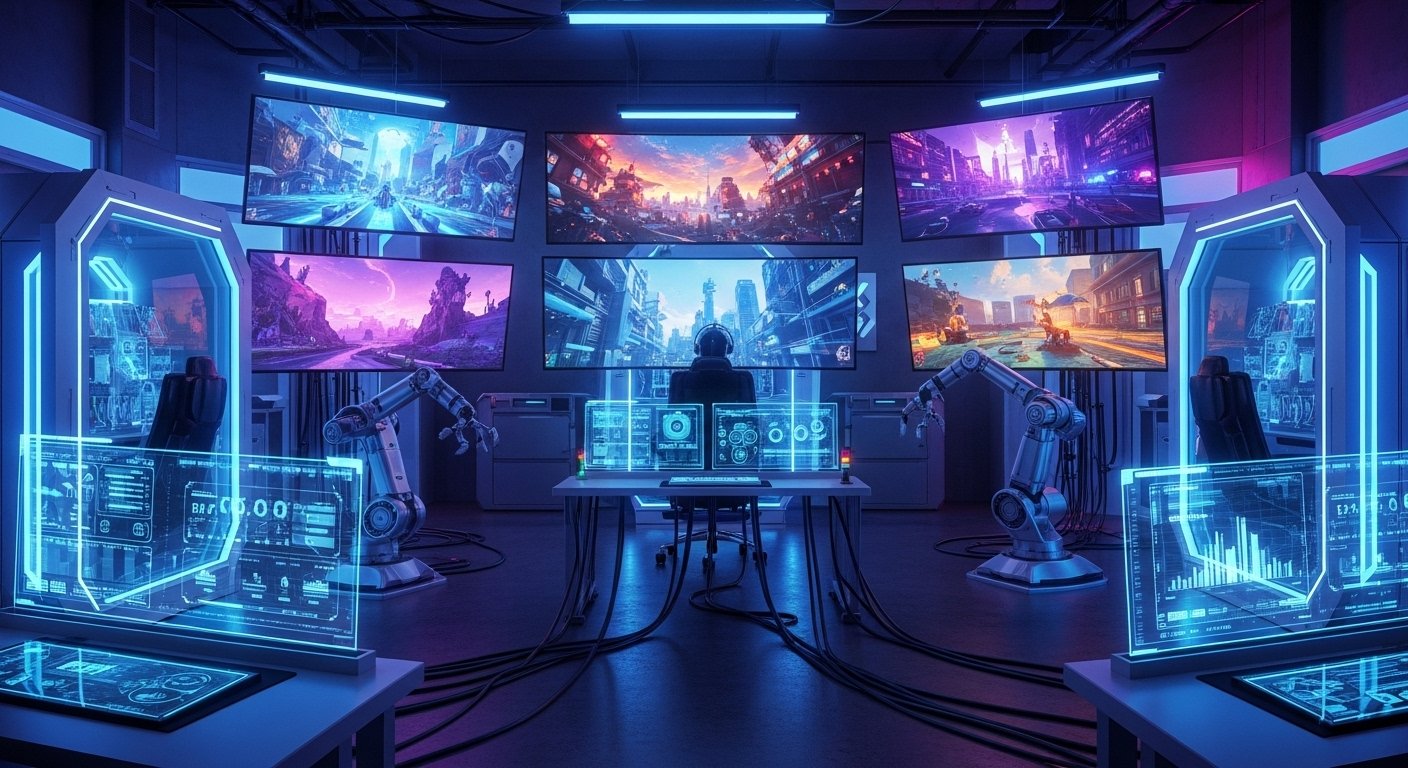
When I first started working in game quality assurance back in 2026, our testing process was painfully manual. We had teams of testers playing the same levels hundreds of times, documenting bugs on spreadsheets, and praying we caught everything before launch. Fast forward to today, and the landscape looks dramatically different. AI automated game testing has fundamentally changed how studios approach quality assurance, and honestly, it’s about time.
The Problem with Traditional Game Testing

Anyone who’s worked in game development knows the testing bottleneck all too well. Modern games are massive. We’re talking about open world titles with thousands of interactive objects, branching dialogue systems with countless permutations, and multiplayer environments where player behavior is unpredictable. Manually testing every possible scenario isn’t just difficult it’s mathematically impossible.
I remember working on a mobile RPG where we discovered a game breaking bug two weeks after launch. A specific sequence of actions that none of our human testers had tried caused inventory corruption. The fix cost the studio significant revenue and player trust. That experience really drove home why we needed something better.
What Exactly Is AI Automated Game Testing?
At its core, AI automated game testing uses machine learning algorithms and intelligent agents to systematically explore game environments, identify bugs, and stress test systems without human intervention. Unlike traditional automated testing that follows predetermined scripts, AI driven testing adapts and learns.
These systems typically work through reinforcement learning, where AI agents play the game repeatedly, discovering optimal paths and edge cases that human testers might overlook. They can simulate thousands of player behaviors simultaneously, running 24/7 without breaks or fatigue.
How It Actually Works in Practice
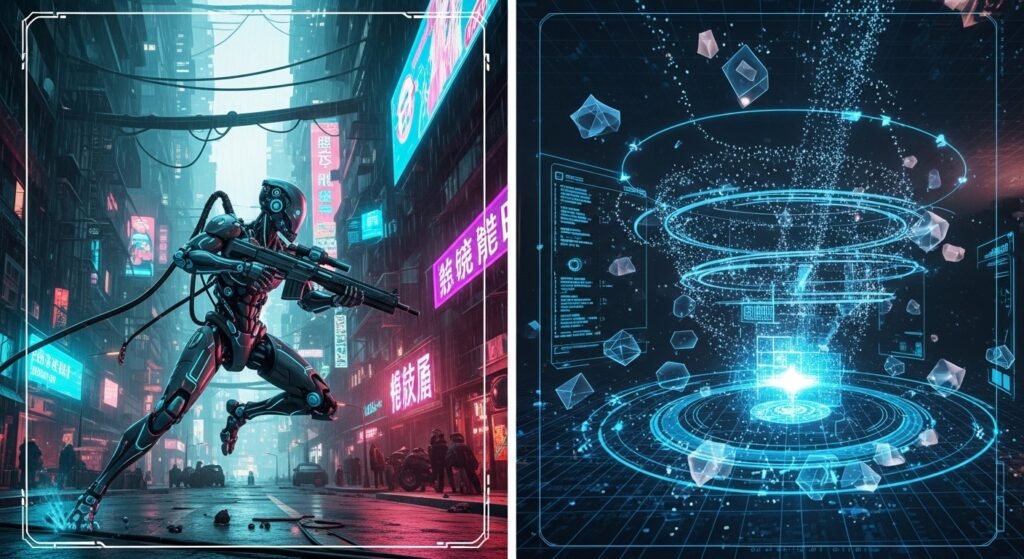
The implementation varies depending on the studio and their specific needs, but most AI testing frameworks share common elements.
Exploration Testing: AI agents navigate game worlds autonomously, mapping collision boundaries, testing physics interactions, and identifying areas where players might get stuck. Companies like Ubisoft have deployed these systems extensively in their open world titles.
Regression Testing: After each build, AI systems automatically verify that existing features still function correctly. This catches those frustrating bugs where fixing one thing breaks something seemingly unrelated.
Load and Performance Testing: AI can simulate thousands of concurrent players, identifying server bottlenecks and performance issues before they affect real users. This proved invaluable during the pandemic when online gaming traffic surged unexpectedly.
Visual Testing: Computer vision algorithms scan for graphical glitches, texture pop in, and rendering anomalies that might escape human notice during fast paced gameplay.
Real-World Success Stories
Electronic Arts has been particularly vocal about their investment in AI testing. Their systems reportedly found bugs that would have taken human testers months to discover including obscure exploits in FIFA’s online modes that could have ruined competitive integrity.
Meanwhile, smaller indie studios are benefiting too. Tools like GameBench and specialized testing platforms have made AI testing accessible beyond AAA budgets. A two person development team I consulted for last year implemented basic AI testing and caught a memory leak that would have crashed the game after approximately three hours of play. They never would have found it through manual testing.
The Limitations Nobody Talks About
Here’s where I need to be honest, because the marketing materials for these systems often oversell their capabilities.
AI testing excels at finding technical bugs crashes, performance issues, broken mechanics. What it struggles with is subjective quality. Is a level fun? Does the difficulty curve feel right? Are the controls responsive enough? These questions still require human judgment.
Additionally, AI systems can generate false positives. I’ve seen testing reports flag “bugs” that were actually intentional design choices. The AI didn’t understand that a particular invisible wall existed to guide players away from unfinished areas during development.
Setup costs remain significant too. Training AI models for a specific game requires considerable time and expertise. For shorter development cycles, the investment might not pay off.
Finding the Right Balance
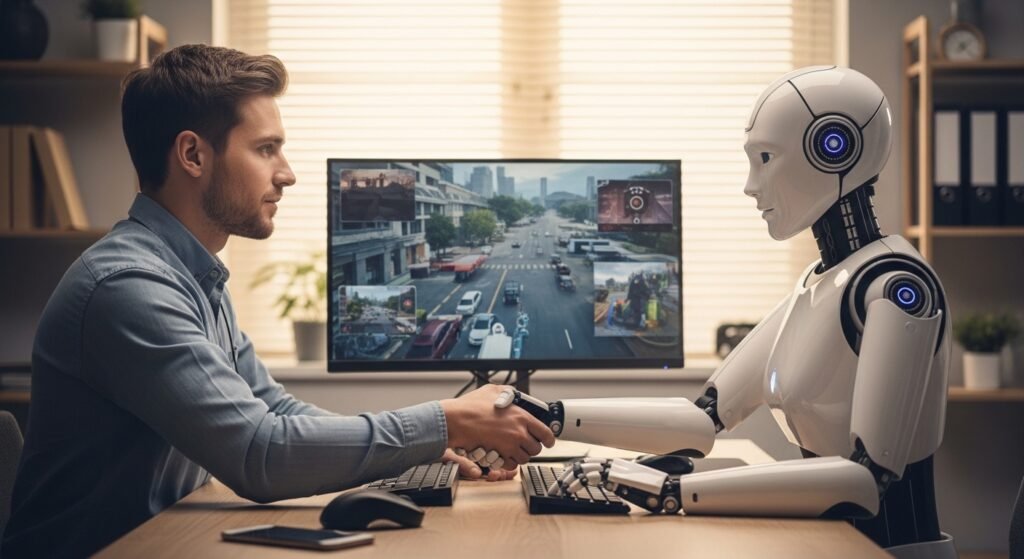
The smartest studios aren’t replacing human testers entirely they’re augmenting them. AI handles the tedious, repetitive work while human testers focus on experience-based evaluation, creative edge cases, and user experience feedback.
This hybrid approach works remarkably well. Human testers can direct AI systems toward suspicious areas, effectively multiplying their coverage. Meanwhile, AI discovered bugs can inform human testers about potential problem patterns elsewhere in the game.
Looking Ahead
The technology is evolving rapidly. We’re seeing AI systems that can actually learn player preferences and simulate realistic behavior rather than just random exploration. Some experimental platforms can even generate written bug reports with reproduction steps, saving hours of documentation time.
Cloud-based testing services are democratizing access further. Studios can now rent AI testing infrastructure rather than building it in house, dramatically lowering the barrier to entry.
The ultimate goal isn’t eliminating QA jobs it’s eliminating bad releases. As someone who’s witnessed the player backlash from buggy launches, that’s a goal worth pursuing.
Final Thoughts
AI automated game testing isn’t magic, and it’s not a replacement for thoughtful human oversight. But it’s become an indispensable tool in modern game development. The studios that figure out how to integrate it effectively will ship more polished products and spend less time firefighting post launch issues.
For developers still on the fence, my advice is simple: start small. Implement AI testing for specific, well defined problems first. Learn what works for your workflow, then expand gradually. The technology rewards patience and iteration.
Frequently Asked Questions
Does AI testing completely replace human QA testers?
No. AI handles technical and repetitive testing while humans focus on subjective quality, user experience, and creative evaluation.
How expensive is implementing AI game testing?
Costs range from free open source tools to enterprise solutions costing thousands monthly. Cloud based services have made it more accessible for smaller studios.
What types of bugs can AI testing find?
AI excels at finding crashes, performance issues, collision errors, pathfinding problems, and visual glitches. It struggles with subjective experience issues.
Which companies are using AI game testing?
Major publishers like EA, Ubisoft, and Sony have invested heavily. Many indie studios now use accessible AI testing tools as well.
How long does it take to set up AI testing for a game?
Initial setup typically requires several weeks, including training AI models and configuring test parameters for your specific project.
Can AI testing work for mobile games?
Absolutely. Mobile games actually benefit significantly due to device fragmentation and the need to test across multiple screen sizes and hardware configurations.