

There’s something genuinely magical about the first time you have a conversation with an NPC that doesn’t feel scripted. I remember playing through certain RPGs and hitting that moment where a character responded to something I said in a way that caught me completely off guard. It felt less like reading a script and more like talking to someone who actually understood context.
That’s the promise of AI dialogue systems in games, and after spending over a decade watching this technology evolve, I can tell you we’re finally at a turning point.
What Are AI Dialogue Systems, Really?

Let’s strip away the marketing buzzwords. An AI dialogue system is essentially software that generates or selects NPC responses based on player input, game state, and contextual information. Unlike traditional branching dialogue trees where developers write every possible response manually, AI driven systems can create more fluid, natural conversations.
The difference matters more than you might think. Traditional dialogue trees feel like choosing options from a menu. You pick response A, the NPC gives reply A1. Pick B, get B1. Rinse, repeat. Players quickly learn they’re navigating a flowchart rather than having a genuine exchange.
AI dialogue systems attempt to break that pattern by introducing variability, context awareness, and sometimes genuine language generation.
The Technology Behind the Conversations
From my experience working with development teams, these systems generally fall into three categories.
First, there’s enhanced selection systems. These still use pre written dialogue, but AI determines which responses fit best given dozens of contextual factors. Think about how your relationship with a faction, recent quest completions, time of day, or even your character’s appearance might influence what an innkeeper says to you.
Second, we have template based generation. The system fills in blanks within structured sentences using relevant information. “I heard you defeated [enemy name] near [location]” pulls from your actual gameplay history.
Third, and most ambitious, are natural language processing systems that can interpret free form player input and generate appropriate responses. This is where things get really interesting and really complicated.
Real World Examples That Actually Work

The Nemesis System in Middle earth: Shadow of Mordor and its sequel showed what contextual dialogue could accomplish. Orcs remembered previous encounters, referenced your fighting style, mocked your past deaths, and evolved their dialogue based on accumulated history. It wasn’t full AI generation, but it proved players respond powerfully to NPCs with apparent memory.
AI Dungeon went to the opposite extreme, offering completely generated narrative responses. It demonstrated both the potential and the chaos of unbounded language models in gaming contexts.
More recently, games like Inworld AI demos and various experimental projects have shown NPCs that can hold sustained conversations, remember past interactions, and respond to questions developers never anticipated.
The upcoming wave of AAA games is already integrating more sophisticated systems. Studios are hiring linguists, dialogue designers, and machine learning specialists to work together in ways that would have seemed excessive five years ago.
Benefits Players Actually Notice
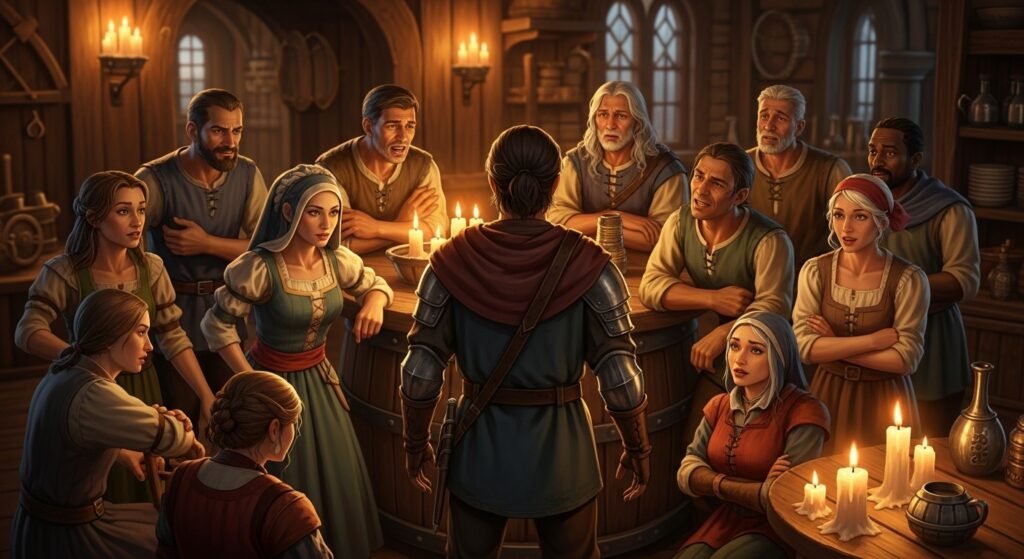
When these systems work well, they create something precious: surprise. Players stop expecting predictable responses. They start experimenting with conversation because they genuinely don’t know what might happen.
This unpredictability extends replayability significantly. If NPCs respond differently based on accumulated choices and generated variations, each playthrough feels less like repeating content and more like discovering new perspectives.
There’s also the immersion factor. Breaking the illusion happens fast with repetitive dialogue. Hearing the same guard mention his arrow wounded knee for the hundredth time pulls you right out of the experience. Dynamic dialogue systems reduce that repetition naturally.
The Limitations Nobody Likes Discussing
Let me be honest about where things still struggle.
Tone consistency is brutal to maintain. Generated dialogue can shift from medieval fantasy vocabulary to modern slang mid sentence if systems aren’t carefully constrained. I’ve seen demos where a noble lady suddenly talked like she was texting friends.
Narrative coherence presents another challenge. When dialogue can vary wildly, how do you ensure players receive essential plot information? How do you maintain dramatic beats when the conversation might go in unexpected directions?
Performance and processing requirements also matter. Running sophisticated language models in real time while also handling physics, graphics, and gameplay systems creates significant technical overhead. This is why many current implementations run server-side, requiring internet connections.
And then there’s the moderation problem. Open ended dialogue systems can be manipulated by players attempting to generate inappropriate content. The development teams working on this technology spend enormous resources on safety measures.
Where This All Heads Next
Based on current trajectories and conversations with developers actively building these tools, I expect we’ll see hybrid systems become standard within the next few years. Pre written critical narrative moments combined with generated ambient dialogue and contextual variations offers a practical middle ground.
Voice synthesis improvements are crucial here too. Generated text means nothing if you can’t voice it convincingly. The progress in speech synthesis over just the past two years has been remarkable, and it’s making dynamic voiced dialogue genuinely feasible.
Multiplayer contexts present fascinating opportunities as well. Imagine NPCs that respond to your group’s collective history, or quest givers whose attitudes shift based on your guild’s server-wide reputation.
Ethical Considerations Worth Mentioning
There’s a conversation happening within the development community about transparency. Should players know when they’re interacting with generated versus written content? Does it matter for their experience?
Questions about creative authorship also surface. When AI systems contribute significantly to dialogue, how do we credit that work? How do writers’ roles evolve?
These aren’t resolved questions, but they’re ones I think the industry will need to address openly as the technology becomes more prevalent.
Final Thoughts
AI dialogue systems represent one of the most exciting frontiers in game development. They’re not replacing human writers at least not the good ones but they’re giving designers new tools to create living, responsive worlds that react to players in increasingly sophisticated ways.
The technology isn’t perfect. It probably won’t be for some time. But playing games where NPCs actually remember your choices, adapt their language to circumstances, and occasionally surprise you with unexpected responses? That feels like a genuine step toward the interactive experiences we’ve been imagining since the earliest text adventures.
Frequently Asked Questions
What is an AI dialogue system in games?
Software that generates or intelligently selects NPC responses based on context, player actions, and game state rather than relying solely on pre scripted dialogue trees.
Which games currently use AI dialogue systems?
Examples include the Nemesis System in Shadow of Mordor, AI Dungeon, and various experimental demos from companies like Inworld AI. Many upcoming titles are integrating similar technology.
Do AI dialogue systems replace voice actors?
Not currently for major titles, though voice synthesis technology is advancing rapidly. Most systems either use text or combine limited recorded dialogue with generated text elements.
Are AI generated conversations always appropriate?
No. Developers implement extensive safety measures to prevent inappropriate content generation, though this remains an ongoing challenge.
Will every game eventually use AI dialogue?
Likely in some form, though implementation depth will vary. Resource-intensive games may use sophisticated systems while smaller titles might use simpler enhanced selection methods