
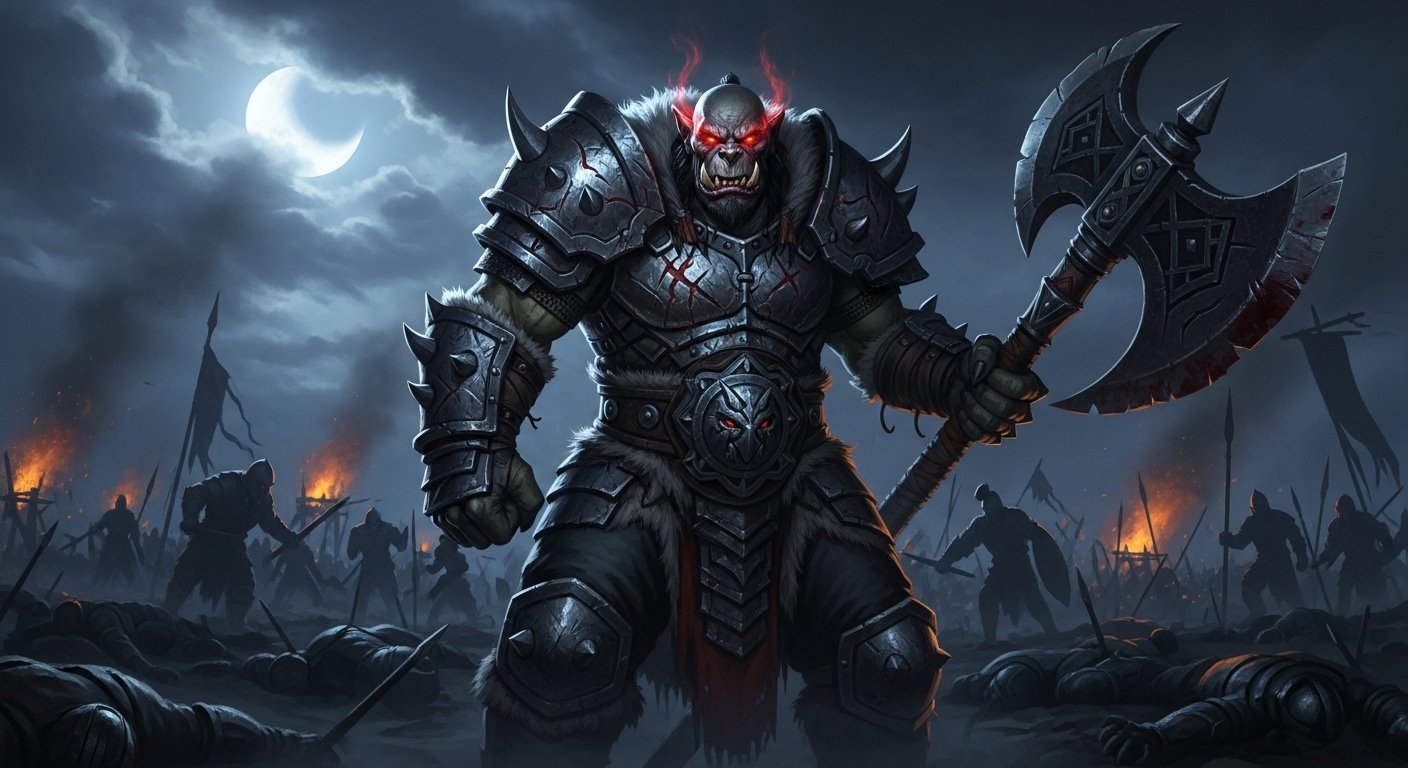
I still remember the first time I encountered an NPC that genuinely surprised me. It was during a late night session of Middle earth: Shadow of Mordor back in 2026, when an orc I’d killed earlier somehow survived, remembered our encounter, and came back stronger with a personal vendetta. That moment fundamentally changed how I thought about gaming narratives. It wasn’t scripted. It felt real.
That experience, powered by the revolutionary Nemesis System, marked a turning point in how artificial intelligence shapes our gaming experiences. Fast forward to today, and we’re witnessing an unprecedented transformation in how games respond, adapt, and evolve around individual players.
The Evolution From Scripted to Sentient-Feeling Worlds
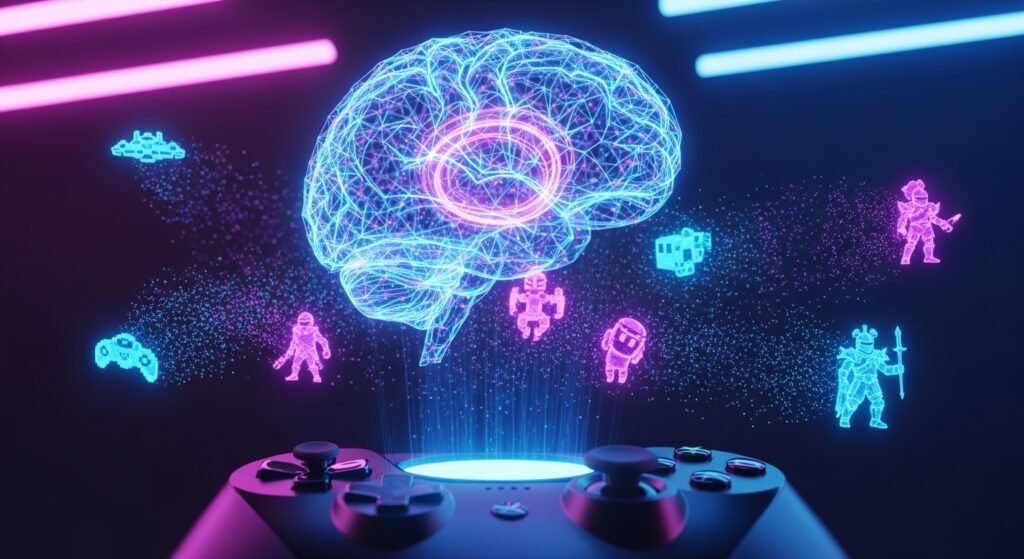
Traditional game design relied heavily on predetermined pathways. Developers created branching narratives, sure, but every possible outcome required manual scripting. The sheer labor involved meant limitations everywhere limited dialogue options, predictable enemy behaviors, and worlds that ultimately felt static beneath their beautiful surfaces.
Modern AI driven gaming experiences operate differently. They generate responses dynamically, creating situations developers never explicitly programmed. When I played through a recent session of Baldur’s Gate 3, the companion reactions felt genuinely organic. Characters remembered obscure choices I’d made hours earlier, weaving them into conversations with contextual awareness that felt almost unsettling in its precision.
This isn’t magic. It’s sophisticated machine learning working alongside traditional game design principles. The combination creates something neither approach could achieve alone.
Procedural Generation: Beyond Random Terrain
No Man’s Sky deserves credit for pushing procedural generation into mainstream consciousness, despite its rocky launch. The game demonstrated both the promise and pitfalls of AI generated content at scale. Eighteen quintillion planets sounds impressive until you realize variety means nothing without meaningful differentiation.
The lesson developers learned? AI generation requires careful constraints and artistic direction. Pure randomness produces noise. Guided intelligence produces discovery.
Recent titles handle this balance better. Games like Dwarf Fortress use AI systems to generate histories, cultures, and interpersonal relationships that span generations. When a dwarf refuses to work with another, there’s often a legitimate backstory perhaps their great grandparents were rivals, or they witnessed a traumatic event together decades ago in simulation time.
These systems transform games from products into persistent worlds with genuine histories.
Adaptive Difficulty and Personalized Challenges

Here’s something that frustrated me for years about traditional difficulty settings: they’re blunt instruments. Easy, Normal, Hard these labels assume all players struggle with the same elements equally. But gaming skill isn’t monolithic. Someone might excel at combat timing while struggling with resource management, or navigate spatial puzzles effortlessly while finding stealth sections impossible.
AI driven adaptive systems address this nuance elegantly. Resident Evil 4’s original adaptive difficulty quietly monitored player performance, spawning fewer enemies or dropping more ammunition when frustration mounted. Players rarely noticed the adjustments consciously they simply felt the game remained consistently challenging without becoming impossible.
Modern implementations go further. Some games now track micro-behaviors: reaction times, decision patterns, preferred strategies. The AI then adjusts not just difficulty but encounter design itself, creating scenarios that challenge specific player tendencies while accommodating strengths.
The result? Personalized experiences that maintain tension without creating walls.
Dynamic NPC Behavior and Emergent Storytelling
The characters inhabiting game worlds have always been gaming’s weakest link. Beautiful environments lose impact when populated by mannequins spouting the same three lines regardless of context. This is changing rapidly.
I recently spent time with a demo showcasing advanced NPC dialogue systems where characters maintained memory across interactions, formed opinions based on player behavior, and could be genuinely persuaded or alienated through sustained relationship building. The technology combines natural language processing with behavioral modeling to create conversations that flow naturally rather than feeling like menu selections.
Games like Watch Dogs: Legion experimented with fully AI generated populations where every character possessed unique backstories, schedules, and relationships. The execution wasn’t perfect epetition emerged at scale but the ambition pointed toward genuinely living game worlds.
The Technical Infrastructure Behind Immersion
Running sophisticated AI systems requires substantial computational resources. This explains why cloud gaming platforms show particular interest in AI enhanced experiences. When processing happens server side, developers access capabilities impossible on consumer hardware alone.
Neural networks trained on millions of gameplay sessions can predict player behavior with surprising accuracy, enabling real time adjustments that feel intuitive rather than calculated. These systems learn continuously, improving their responses based on aggregate player data.
The infrastructure requirements create interesting accessibility questions. Will AI driven gaming experiences remain premium offerings, or will optimization eventually democratize these technologies? Based on historical patterns, I’d expect gradual trickle-down, though flagship titles will likely maintain computational edges.
Ethical Considerations Worth Discussing

Not everything about AI in gaming raises celebration flags. Personalization systems that track player behavior extensively raise legitimate privacy concerns. How much data collection is appropriate? Who owns behavioral profiles generated through gameplay?
There’s also the engagement optimization question. AI systems designed to maximize play time can easily slide into manipulation territory, particularly concerning younger audiences. When difficulty dynamically adjusts to maintain “optimal frustration,” are we enhancing experiences or engineering addiction?
The industry needs thoughtful self regulation here. Transparency about AI systems, meaningful consent mechanisms, and clear ethical guidelines would serve everyone’s long term interests.
Looking Forward
The trajectory seems clear even if specific timelines remain uncertain. Games will increasingly feel less like consumable products and more like living spaces environments that learn, adapt, and grow alongside their communities.
Voice activated gameplay, emotionally responsive narratives, and truly persistent world states all sit within realistic reach. The technology exists. The challenge lies in implementation that serves player agency rather than replacing it.
What excites me most isn’t any single capability but the combinatorial potential. When adaptive difficulty, dynamic NPC behavior, procedural generation, and personalized storytelling work together seamlessly, we’ll have achieved something genuinely new interactive experiences that feel less like playing a game and more like inhabiting an alternate reality.
That orc who remembered killing him? He was just the beginning.
Frequently Asked Questions
What is AI driven immersive gaming?
AI driven immersive gaming uses artificial intelligence to create dynamic, responsive game worlds that adapt to individual player behavior, preferences, and skill levels in real time.
Which games currently use AI for immersion?
Notable examples include Middle earth: Shadow of Mordor’s Nemesis System, Baldur’s Gate 3’s companion AI, No Man’s Sky’s procedural generation, and Resident Evil 4’s adaptive difficulty.
Does AI replace human game developers?
No. AI tools assist and enhance developer creativity but cannot replace human vision, artistic direction, and narrative design that make games meaningful.
Will AI gaming require expensive hardware?
Not necessarily. Cloud gaming platforms increasingly handle computational requirements server side, potentially democratizing access to AI enhanced experiences.
Are there privacy concerns with AI in gaming?
Yes. Behavioral tracking and personalization systems raise legitimate questions about data collection, consent, and how player information gets used or shared.
How does adaptive AI difficulty work?
These systems monitor player performance metrics continuously, then dynamically adjust enemy behavior, resource availability, and encounter design to maintain appropriate challenge levels.