
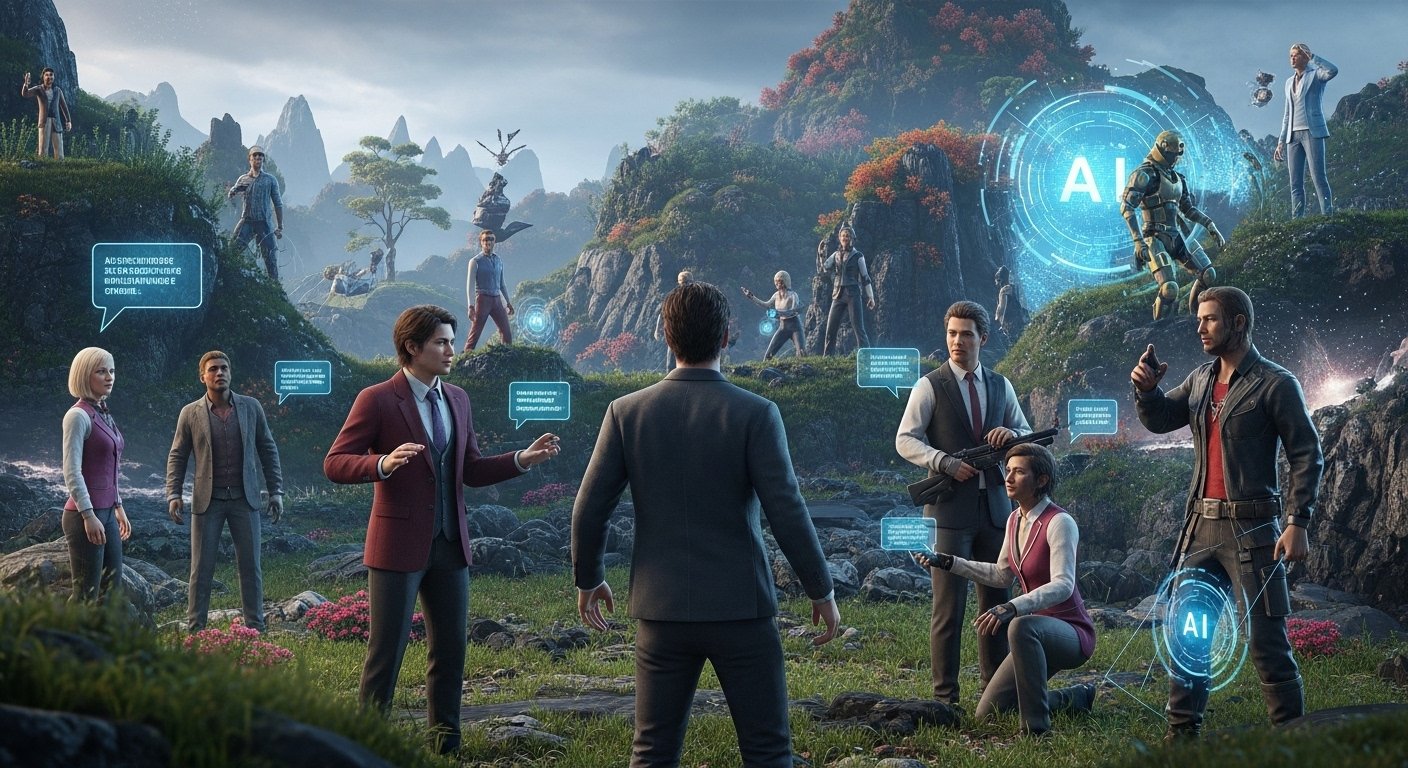
I remember the first time I encountered a truly intelligent NPC in a video game. It was around 2026, and I was playing through a stealth mission when the enemy guard didn’t just follow a predictable patrol route he actually stopped, looked around suspiciously, and called for backup based on subtle environmental cues I’d left behind. That moment stuck with me because it felt genuinely unpredictable, almost human.
Gaming has come a long way since the days of simple enemy patterns and scripted responses. Today, artificial intelligence drives some of the most immersive experiences in entertainment, creating virtual worlds that respond, adapt, and evolve in ways that blur the line between programmed behavior and authentic intelligence.
Understanding AI-Driven Realism
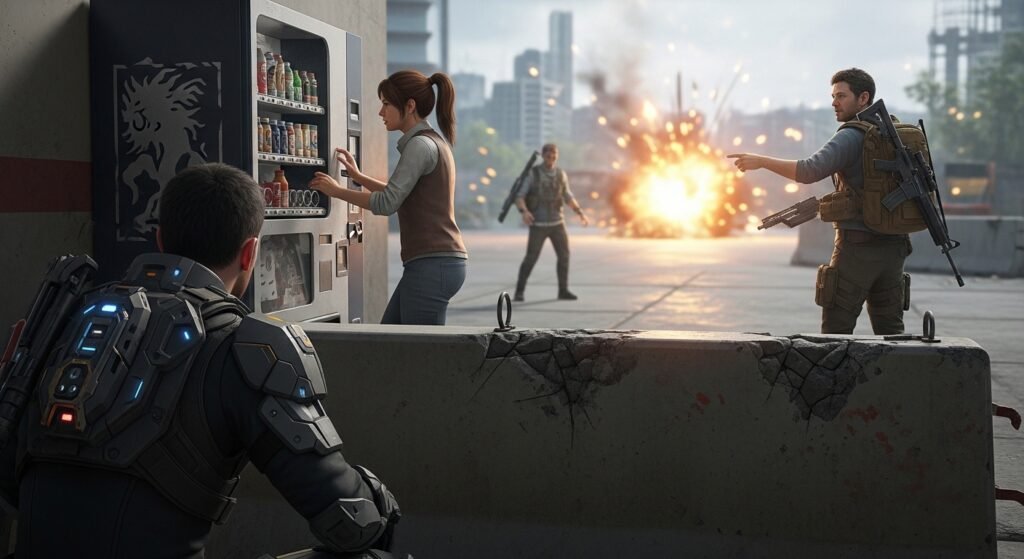
When we talk about AI driven realism in gaming, we’re not just discussing prettier graphics or smoother animations. We’re examining how intelligent systems make games feel alive. This encompasses everything from how characters behave and interact to how environments respond to player actions.
Traditional game design relied heavily on pre-programmed scripts. Enter a room, and enemies would spawn at designated points. Approach a character, and they’d deliver the same dialogue regardless of context. While functional, this approach created predictable, often lifeless experiences.
Modern AI changes this equation entirely. Machine learning algorithms, neural networks, and sophisticated behavioral systems now power games that can surprise even their developers.
NPC Behavior: The Heart of Immersion
Non-player characters represent perhaps the most visible application of AI in gaming. The difference between a compelling open world experience and a forgettable one often comes down to how believable its inhabitants feel.
Take the Nemesis System introduced in Middle earth: Shadow of Mordor back in 2026. Enemy orcs remembered previous encounters with players, developed grudges, formed relationships with other characters, and evolved based on their experiences. An orc who killed you might gain confidence and promotion within the ranks. One who survived your attack might return scarred and vengeful. This wasn’t scripted it emerged from AI systems creating genuine narrative consequences.
Red Dead Redemption 2 pushed NPC behavior even further. Characters in that game react to weather, time of day, your appearance, your reputation, and countless other variables. Townsfolk remember how you treated them. Shop owners might refuse service based on past interactions. It creates a social ecosystem that feels organic rather than mechanical.
Adaptive Difficulty and Player Response
One underappreciated aspect of AI driven realism involves how games respond to player skill and behavior. Rubber banding AI in racing games has existed for decades, but modern systems take adaptation far beyond simple difficulty adjustments.
Resident Evil 4’s Director system monitored player performance and adjusted enemy aggression, resource availability, and encounter timing accordingly. Struggling players received subtle assistance; skilled players faced tougher challenges. The beauty was that players rarely noticed these adjustments happening.
Left 4 Dead’s AI Director took this concept further, dynamically generating zombie hordes, item placement, and dramatic crescendos based on team performance and pacing needs. No two playthroughs felt identical because the AI was essentially crafting a unique experience each time.
Procedural Generation and Dynamic Worlds

AI doesn’t just control characters it builds worlds. Procedural generation powered by intelligent algorithms creates environments that feel handcrafted despite being computationally generated.
No Man’s Sky demonstrated both the potential and limitations of this approach. Its AI generated an entire universe of planets, each with unique ecosystems, creatures, and landscapes. While early versions felt somewhat hollow, subsequent updates refined these systems to create genuinely surprising discoveries.
Minecraft’s terrain generation, though simpler, remains remarkably effective. The algorithm creates believable landscapes with proper biome transitions, cave systems, and geographic features that feel naturally formed rather than randomly assembled.
Graphics and Physics: Visual Intelligence
AI increasingly drives visual realism through techniques like DLSS (Deep Learning Super Sampling) and ray tracing optimization. These systems use trained neural networks to upscale images, predict frames, and enhance visual quality without proportional performance costs.
Physics simulation benefits similarly. Rather than calculating every possible interaction, AI driven physics engines predict realistic outcomes based on learned patterns. Characters ragdoll convincingly, cloth drapes naturally, and destruction unfolds believably all powered by intelligent prediction rather than brute-force calculation.
The Conversation Question
Perhaps the frontier most people are watching involves conversational AI. Games like Cyberpunk 2026 and Skyrim relied on branching dialogue trees impressive in scope but ultimately finite. Players inevitably exhaust conversation options and encounter repetition.
Emerging technologies suggest futures where NPCs engage in genuinely dynamic conversations, understanding context, remembering past exchanges, and responding with appropriate emotional intelligence. Some independent developers are already experimenting with language models that allow truly freeform NPC interaction.
However, this raises important considerations. Unpredictable AI conversations could introduce inappropriate content or break narrative consistency. Finding the balance between freedom and control remains an ongoing challenge.
Current Limitations and Honest Perspective
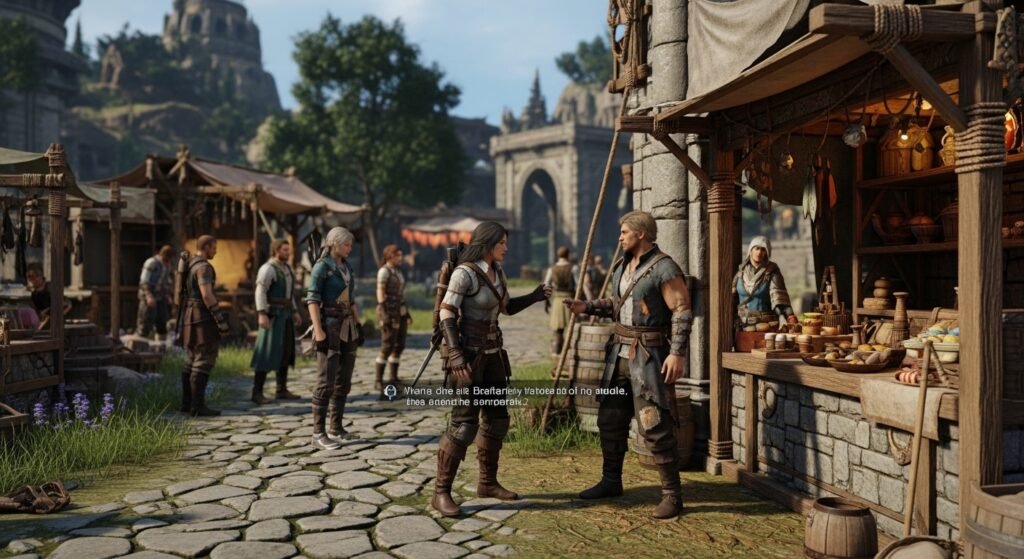
It’s worth noting that AI-driven realism isn’t without drawbacks. Sophisticated AI systems demand significant computational resources, potentially limiting accessibility. Behavioral AI can sometimes produce bizarre edge cases NPCs walking into walls, guards ignoring obvious threats, or characters delivering contextually inappropriate responses.
Additionally, there’s a creative argument worth considering. Highly scripted experiences allow developers precise narrative control. When AI introduces unpredictability, some authored storytelling magic might be lost. The best implementations typically blend handcrafted moments with emergent AI behavior.
Looking Forward
The gaming industry continues investing heavily in AI research. Cloud computing enables more complex AI processing without requiring powerful local hardware. Machine learning techniques grow more sophisticated annually. Player expectations correspondingly increase.
Within the next five years, we’ll likely see games where every character maintains consistent personality, remembers all interactions, and responds with genuine contextual awareness. Virtual worlds will react to player presence in increasingly subtle ways ecosystems that actually evolve, economies that genuinely fluctuate, stories that emerge organically from player choices.
The ultimate goal isn’t replacing human creativity but augmenting it giving designers tools to create living, breathing worlds that would be impossible to script by hand.
Frequently Asked Questions
What is AI driven realism in gaming?
AI-driven realism refers to using artificial intelligence to create more believable game experiences, including intelligent NPC behavior, adaptive difficulty, dynamic world generation, and realistic physics simulation.
Which games best demonstrate AI driven realism?
Notable examples include Middle earth: Shadow of Mordor (Nemesis System), Red Dead Redemption 2 (NPC behavior), and Left 4 Dead (AI Director for dynamic gameplay).
Does AI replace human game designers?
No. AI augments designer capabilities, handling procedural tasks and creating emergent behaviors, while humans provide creative direction, storytelling, and artistic vision.
Will AI make games too unpredictable?
Developers balance AI freedom with designed constraints. Most systems operate within defined parameters to maintain narrative coherence while allowing emergent experiences.
Does AI driven gaming require powerful hardware?
Advanced AI features can be demanding, though cloud computing and optimization techniques increasingly make sophisticated AI accessible across various hardware configurations.