
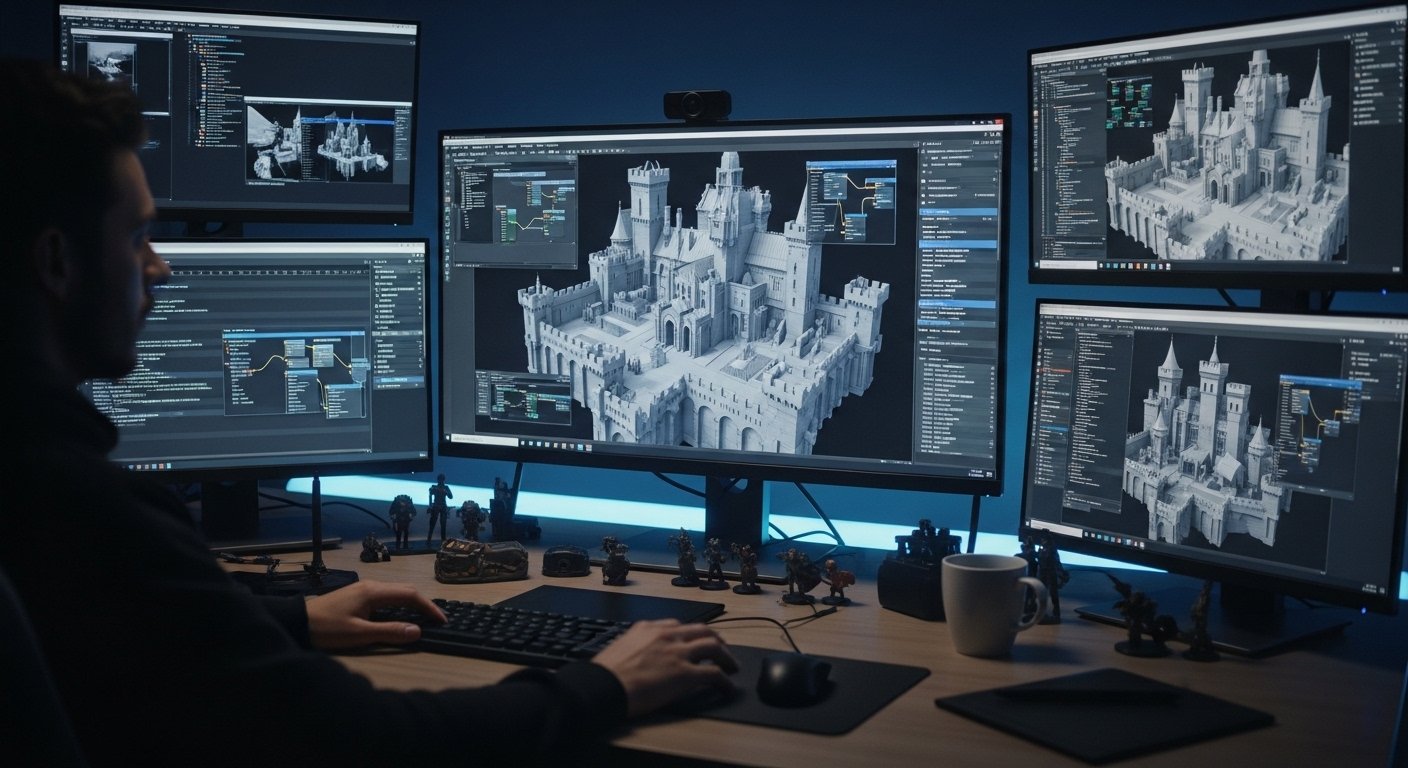
The first time I saw a colleague generate a fully textured medieval castle in under three minutes, I knew the game development landscape had shifted permanently. After spending over a decade in game art production, watching countless late nights burn away while artists painstakingly crafted every stone and shadow, witnessing this moment felt both thrilling and slightly unsettling.
Game asset creation has always been the most time consuming aspect of development. We’re talking about everything from character models and environmental textures to sound effects, animations, and user interface elements. Traditional pipelines demanded months of specialized labor. Now? The rules are being rewritten entirely.
Understanding Game Assets and Why They Matter
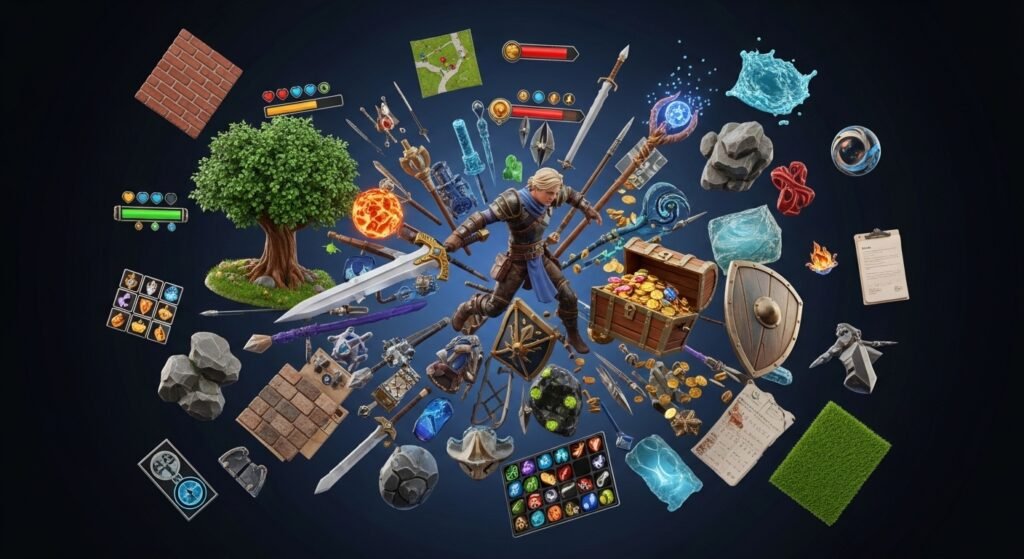
Before diving deeper, let’s establish what we’re actually discussing. Game assets encompass every visual, auditory, and interactive element players encounter. Think character sprites, 3D models, background music, weapon designs, terrain textures, particle effects, and voice lines. Each asset traditionally required dedicated specialists concept artists, 3D modelers, texture artists, sound designers, animators.
Small studios have historically struggled here. You might have brilliant gameplay mechanics but lack resources for polished visuals. This created an uneven playing field where budget often trumped creativity.
How Modern Generation Tools Are Changing Production
Today’s procedural generation systems leverage machine learning to produce game ready assets from simple text descriptions or reference images. I’ve personally experimented with several platforms over the past eighteen months, and the progress has been remarkable.
For 2D artwork, tools can now generate character portraits, item icons, and environmental concept art that rivals mid level professional work. You describe wanting a “worn leather satchel with brass buckles, fantasy RPG style,” and within seconds you’re reviewing multiple variations.
3D asset generation has caught up surprisingly fast. Platforms now export models complete with UV mapping and basic rigging. Are they perfect? Rarely. Do they provide excellent starting points? Absolutely. I recently watched a small team prototype an entire forest environment in an afternoon something that previously consumed weeks.
Texture generation deserves special mention. Creating seamless, tileable textures for terrain, walls, and surfaces was tedious work. Current tools produce photorealistic stone, wood, fabric, and organic materials that integrate smoothly into existing engines.
The Real Benefits for Development Teams
Having implemented these workflows across several projects, I’ve observed tangible advantages worth noting.
Rapid prototyping stands out immediately. Concepts that existed only in design documents can now be visualized instantly. This accelerates iteration cycles dramatically. Teams spend less time wondering “what would this look like” and more time playing with actual representations.
Cost reduction helps smaller studios compete. A five person indie team can now achieve visual variety that previously required dedicated art departments. This democratization opens doors for creators worldwide who have ideas but limited budgets.
Creative exploration expands exponentially. When generating variations takes seconds rather than hours, designers experiment more boldly. I’ve seen projects discover unexpected aesthetic directions simply because someone generated fifty variations of a concept and found something unexpectedly compelling in batch thirty-seven.
Limitations and Challenges That Remain
Let’s be honest about what doesn’t work yet, because overpromising helps nobody.
Consistency remains problematic. Generating a single impressive asset is achievable; maintaining coherent visual language across hundreds of assets is harder. Character designs might drift stylistically between generations. Environmental pieces may clash subtly in lighting assumptions.
Technical specifications often need adjustment. Polygon counts might be inappropriate for target platforms. Texture resolutions don’t always match project standards. Generated animations frequently require cleanup for smooth game implementation.
Unique artistic vision is difficult to replicate. If your project requires a highly distinctive aesthetic think Cuphead’s hand drawn animation or Okami’s brushwork current tools struggle to capture such specific styles convincingly.
Where Industry Professionals Actually Stand
Conversations across studios reveal mixed perspectives, which seems healthy and honest.
Many artists I respect have embraced these tools as creative accelerators. They generate base materials, then customize, refine, and polish results. Their expertise shifts toward curation, direction, and finishing rather than starting from blank canvases every time.
Others express legitimate concerns about skill devaluation and market disruption. Entry level positions focused on basic asset creation face uncertain futures. Studios must consider how training pipelines and career pathways evolve.
The most pragmatic voices acknowledge that tools are tools. Photoshop didn’t eliminate illustration; it transformed the profession. These generation systems likely follow similar patterns changing workflows rather than eliminating creative roles entirely.
Ethical Considerations Worth Discussing
Several important questions deserve ongoing attention.
Training data sourcing raises intellectual property concerns. Many generation systems learned from artwork scraped without explicit creator consent. Legal frameworks are still catching up to these realities.
Disclosure practices vary wildly. Should games indicate when assets were procedurally generated? Players and critics have differing expectations here.
Market saturation presents quality concerns. When asset production becomes trivially easy, markets may flood with visually similar, creatively uninspired content. Standing out requires more deliberate artistic direction than ever.
Practical Implementation Advice
For teams considering adoption, several strategies improve outcomes.
Start with non critical assets. Background elements, placeholder content, and prototype materials offer lower-risk testing grounds. Evaluate quality and workflow integration before committing to hero assets.
Establish style guides first. Provide generation tools with reference collections representing your desired aesthetic. This improves consistency across batches.
Budget time for refinement. Generated assets rarely ship directly. Plan editing, optimization, and integration work realistically.
Maintain traditional skills internally. Even teams heavily utilizing generation should retain artistic expertise for direction, quality control, and unique elements that define their creative identity.
Looking Forward
The trajectory seems clear: these tools will improve continuously. Real time generation during gameplay, personalized asset creation based on player preferences, and increasingly sophisticated outputs all appear imminent.
Smart studios are adapting now, developing hybrid workflows that combine generation efficiency with human creativity. Those treating this as either savior technology or existential threat probably miss the nuanced reality.
Game development has always evolved with available tools. This represents another evolution significant, but manageable for teams willing to learn and adapt thoughtfully.
Frequently Asked Questions
Can generated assets be used commercially?
Most platforms allow commercial usage under their licensing terms, though specific agreements vary. Always verify license conditions before shipping.
Do generated assets require optimization?
Usually yes. Polygon counts, texture sizes, and technical specifications often need adjustment for specific engines and platforms.
Will this technology replace game artists?
Unlikely entirely. Roles will shift toward creative direction, curation, and specialized work that requires unique artistic vision.
How consistent are results across multiple generations?
Consistency remains challenging. Style guides and reference images help, but manual curation ensures coherent visual language.
What types of assets work best with current tools?
Textures, concept art, environmental elements, and generic props typically produce strongest results. Unique characters and stylized content require more refinement.
Are there legal risks with generated content?
Intellectual property concerns exist regarding training data. Using established commercial platforms with clear licensing reduces risk.