

The first time I saw procedurally generated dialogue in action during a game demo back in 2026, I was skeptical. As someone who’s spent over a decade writing for video games, my initial reaction was defensive. Would this technology eventually replace writers like me? Fast forward to today, and my perspective has shifted dramatically. Here’s what’s actually happening with AI generated game dialogue the good, the complicated, and everything in between.
Understanding the Shift in Game Narrative Development
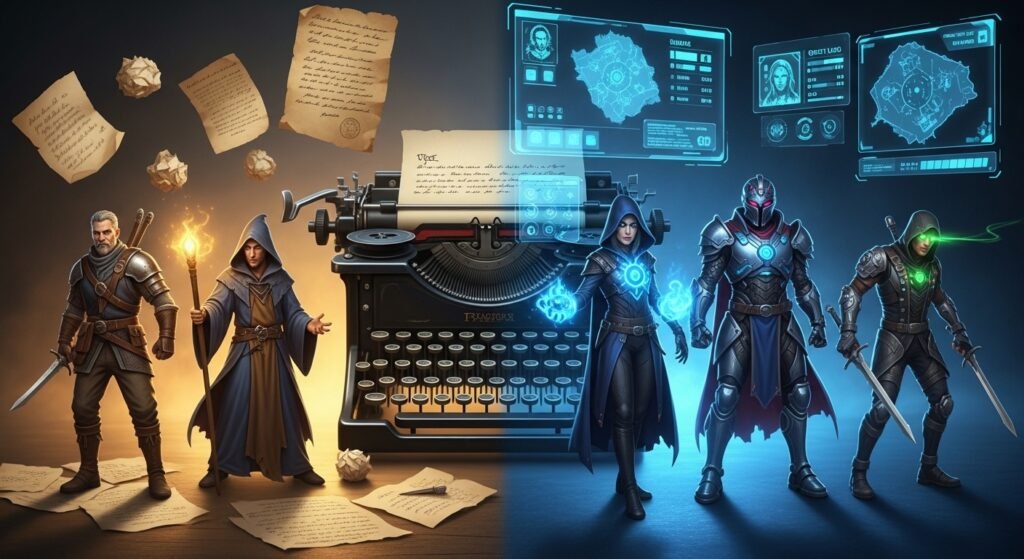
Traditional game dialogue has always been labor intensive. I remember working on an RPG where we wrote over 200,000 words of dialogue, and still players complained about repetitive NPC conversations. The fundamental problem? Human writers can only produce so much content within budget and timeline constraints.
AI generated game dialogue changes this equation entirely. These systems can create dynamic, contextual conversations that respond to player choices, world states, and character relationships in ways that pre written scripts simply cannot match. When a blacksmith comments on your recent dragon slaying victory differently based on your reputation, equipped items, and previous interactions that’s where the magic happens.
How Modern Games Are Implementing Dynamic Dialogue
Several studios have already integrated these technologies into their development pipelines, though many remain tight lipped about specifics for competitive reasons. From conversations with colleagues at industry events, I’ve gathered that implementation typically falls into three categories.
First, there’s the augmentation approach. Writers create core narrative beats and character frameworks, while AI systems fill in peripheral conversations. Think of background chatter in a busy marketplace or generic quest NPCs. This preserves narrative quality where it matters while expanding the world’s depth.
Second, some developers use reactive dialogue systems that modify pre written lines based on context. The base structure exists, but word choice, tone, and specific references shift according to gameplay variables. It’s like having thousands of dialogue variants without actually writing them all manually.
Third and this is where things get genuinely exciting some experimental projects feature fully generative conversations. Players can essentially ask NPCs anything, and the system constructs appropriate responses maintaining character voice and world consistency.
The Quality Question: Does It Actually Work?
Here’s where I need to be honest. The technology isn’t perfect. I’ve playtested games using these systems and encountered everything from brilliantly immersive exchanges to moments that completely shattered my suspension of disbelief.
The successes tend to happen when designers establish tight guardrails. Character personalities need robust definition. World rules must be clearly encoded. Conversation topics require appropriate boundaries. When a medieval innkeeper suddenly references concepts that shouldn’t exist in their world, players notice immediately.
One indie developer I spoke with described their approach: “We treat the AI like a junior writer who needs extensive editorial oversight. It generates raw material, but human designers curate and refine constantly.” This hybrid model seems most sustainable currently.
Writer Perspectives: Threat or Tool?

My fellow game writers have mixed feelings, unsurprisingly. Some view AI dialogue generation as threatening their livelihoods. Others myself included see it as potentially liberating.
Consider this perspective: if AI handles the mundane “Have you seen my missing goat?” conversations, writers can focus on crafting meaningful story moments, complex character arcs, and emotionally resonant narratives. The tedious work of writing hundreds of shopkeeper barks becomes less consuming.
That said, legitimate concerns exist about devaluation of writing work. Studios might reduce writing budgets expecting AI to compensate. Finding the right balance requires industry wide conversations that frankly aren’t happening enough yet.
Player Reception and Engagement Metrics
Early data from games incorporating AI generated dialogue shows interesting patterns. Player engagement with NPCs increases when conversations feel fresh and reactive. The repetition fatigue that plagues traditional RPGs diminishes significantly.
However, players also report occasionally feeling “uncanny valley” effects with dialogue something seems slightly off even if they can’t articulate why. This suggests we haven’t quite cracked natural language flow that matches human-written quality consistently.
Technical Challenges and Limitations
Creating believable AI game dialogue involves substantial technical hurdles. Voice acting integration remains complicated generative text paired with pre recorded voice lines creates obvious mismatches. Some studios explore AI voice synthesis, but this introduces additional quality and ethical considerations.
Memory management poses another challenge. Conversations need to reference previous interactions accurately. When NPCs “forget” important exchanges, immersion breaks immediately. Building robust memory systems that track relevant conversation history without consuming excessive resources requires clever engineering.
The Ethical Dimension
We cannot discuss AI generated content without addressing ethics. Questions about disclosure matter should players know when they’re experiencing AI written dialogue? What about the training data used to develop these systems? Were writers fairly compensated for work that trained the models?
These conversations continue evolving. Responsible studios are establishing guidelines, though industry standards remain underdeveloped. As someone who values both technological progress and fair treatment of creative professionals, I believe transparency should be prioritized.
Looking Forward: Where This Technology Leads

Based on current trajectories, I expect AI generated dialogue becoming standard within five years for certain game types. Open world RPGs and simulation games will benefit most immediately. Linear, narrative focused experiences will likely maintain traditional writing approaches longer.
The games that will truly shine are those blending both approaches thoughtfully using AI for breadth while preserving human craft for depth. That combination could finally deliver on the promise of truly living game worlds.
FAQs
Can AI fully replace human game writers?
Not currently. AI generates dialogue but lacks genuine creativity, emotional intelligence, and narrative understanding that human writers provide.
Do players actually notice AI generated dialogue?
Sometimes. Well implemented systems feel seamless, but poor implementation creates noticeable inconsistencies that break immersion.
Which games currently use AI generated dialogue?
Many studios keep this confidential, but indie developers and some major publishers have confirmed experimenting with these technologies.
Does AI dialogue reduce game development costs?
Potentially, though implementation requires significant upfront investment in systems, training, and quality assurance.
Will AI generated dialogue improve over time?
Yes, rapid advancement suggests future systems will produce increasingly natural, contextually appropriate game conversations.