
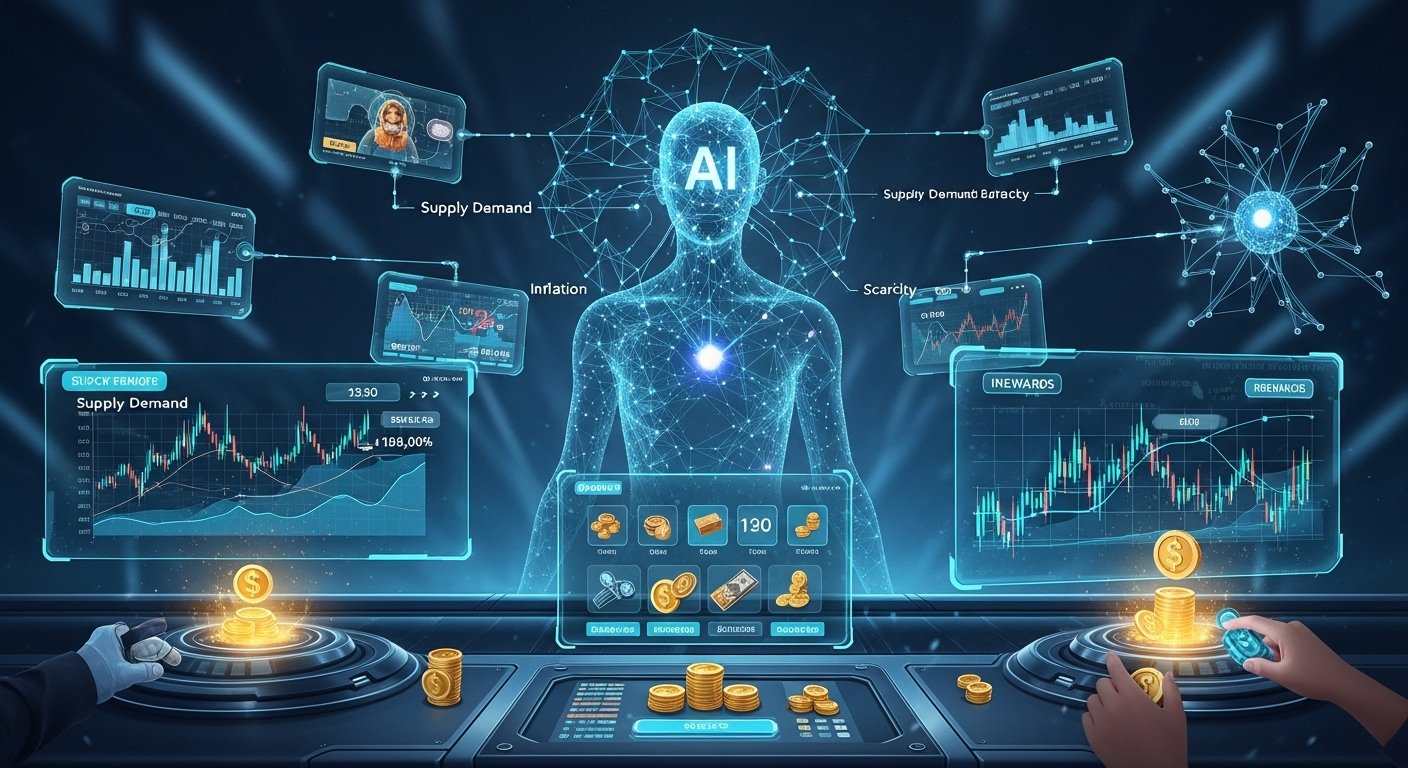
I remember the first time I witnessed a game economy completely collapse. It was a mid sized MMO back in 2026, and within three weeks of launch, their in game currency had hyperinflated to the point where rare items were selling for billions of gold pieces. The developers had miscalculated quest rewards, underestimated player farming efficiency, and failed to implement proper currency sinks. Players quit in droves. The studio never recovered.
That disaster taught me something crucial: balancing a game economy is wickedly complex, more akin to managing a small nation’s financial system than most people realize. And increasingly, developers are turning to artificial intelligence to help solve this puzzle.
The Balancing Act Nobody Sees
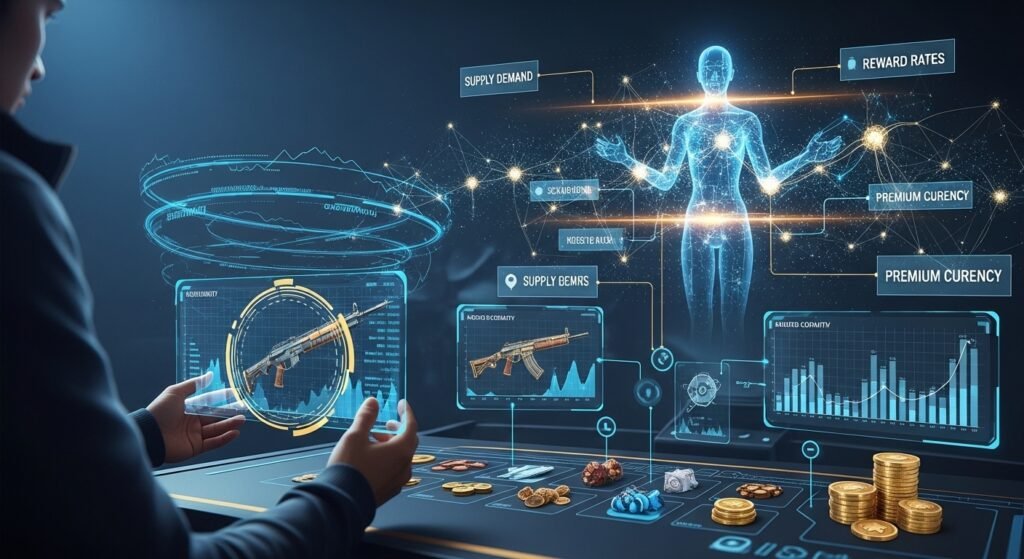
When you’re playing your favorite online game, you probably don’t think much about why that legendary sword costs exactly 5,000 gold or why crafting materials drop at specific rates. But behind those numbers lies an intricate web of interconnected systems that can make or break player experience.
Game economies need to accomplish several things simultaneously. They must reward player effort without trivializing achievements. They need to create scarcity without frustration. Premium currency systems have to feel fair while still generating revenue. And everything needs to stay balanced as player behavior evolves often in completely unexpected ways.
Traditional approaches relied heavily on spreadsheets, economic theory, and beta testing. Designers would build models, run simulations, and hope their assumptions held once real players entered the mix. Sometimes they worked. Often they didn’t.
Where AI Enters the Picture
The application of AI to game economy balancing isn’t about replacing human designers at least not yet. Instead, it’s about giving them tools to see patterns and predict outcomes that would be impossible to spot manually.
Machine learning algorithms excel at processing enormous datasets and identifying relationships between variables. In practical terms, this means AI can track millions of player transactions, monitor resource flows, detect emerging exploits, and predict how changes to one part of the economy will ripple through the entire system.
I’ve seen studios use neural networks to model player behavior patterns, clustering players into economic archetypes: hoarders, traders, grinders, whales, and casual spenders. Understanding these groups helps designers create systems that serve different playstyles without letting any single group destabilize everything else.
Real World Implementation
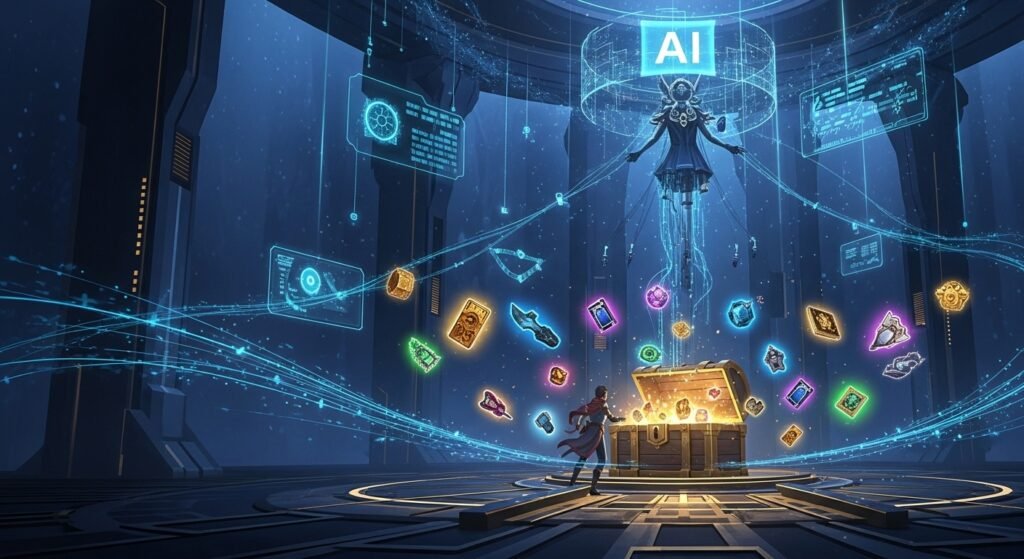
Take path of exile style loot systems, where countless item combinations and rarity tiers exist. Some studios now use AI to analyze drop rates in real time, adjusting them based on actual player acquisition patterns rather than theoretical calculations. If the data shows that players are getting too much high-tier loot too quickly, the system can subtly adjust probabilities. Too little, and it can ease up.
The key word there is “subtly.” Good implementation feels invisible to players.
Mobile games have been particularly aggressive in adopting AI driven economy balancing, partly because they have clearer revenue metrics to optimize against. One approach I’ve encountered involves reinforcement learning agents that essentially “play” thousands of simulated versions of the game, testing different economic parameters to find configurations that maximize both player engagement and monetization.
This gets ethically murky, of course. There’s a fine line between creating a balanced economy and manipulating players into spending money. The best studios recognize this distinction; others don’t.
The Dynamic Adjustment Challenge
Static economies where prices and rewards never change are easier to balance but often feel lifeless. Dynamic economies feel more realistic and engaging, but they’re exponentially harder to manage.
EVE Online has famously employed an actual economist to monitor their player driven economy, publishing quarterly economic reports like a central bank. But even with expert oversight, unexpected cascades happen. AI systems can help by continuously monitoring economic indicators and flagging anomalies before they become crises.
I know of one studio that implemented an early warning system using anomaly detection algorithms. When transaction patterns deviate significantly from established baselines say, a sudden spike in trades of a particular item the system alerts designers. Often this catches exploits or unintended interactions days or weeks before they would have been noticed otherwise.
Limitations and What AI Can’t Do
Here’s what doesn’t work: completely automated, hands off economy management. I’ve yet to see a successful implementation where AI just runs everything without human oversight.
The problem is that AI optimizes for the metrics you give it, and player satisfaction is notoriously difficult to quantify. An algorithm might discover that slightly decreasing reward rates increases player retention (by extending content lifespan), but it can’t account for how that makes the game feel to play. It won’t understand that frustration is building until players start leaving and by then, you’re managing a problem rather than preventing one.
AI also struggles with unprecedented situations. When a new game mechanic is introduced or a major content update drops, there’s no historical data to learn from. Human intuition and experience still matter enormously in these scenarios.
The Transparency Question
Should players know when AI is adjusting their game’s economy? Some developers are transparent about it; others keep the systems entirely behind the curtain.
My take: transparency builds trust, but it needs to be done carefully. Players don’t need to know every algorithmic detail, but they deserve to understand the general principles. If drop rates are dynamic, say so. If pricing adjusts based on server wide activity, explain the reasoning. The alternative is conspiracy theories and community distrust.
Looking Forward
The sophistication of AI in game economy balancing will only increase. I expect we’ll see more predictive systems that can forecast the economic impact of new content before it launches, more sophisticated player modeling that accounts for social dynamics and not just individual behavior, and better tools for detecting and preventing exploitation.
What I hope we also see is more discussion about ethical guidelines. The power to subtly manipulate player behavior through economic levers is significant, and with AI making those manipulations more effective, the responsibility grows heavier.
The best game economies feel fair, rewarding, and somewhat mysterious like there’s a living world operating by rules you can learn but never completely master. AI is becoming an invaluable tool in creating that feeling, but it’s still just that: a tool. The craft of designing game economies that players love remains fundamentally human work, requiring empathy, creativity, and judgment that no algorithm can replicate.
At least not yet.
Frequently Asked Questions
Q: Do all modern games use AI for economy balancing?
No, AI implementation is still relatively limited, mostly in larger studios or mobile games with extensive live service models. Many games still rely on traditional balancing methods.
Q: Can AI create a perfectly balanced game economy?
Not really. “Perfect” balance is subjective and depends on design goals. AI can optimize for specific metrics, but it can’t determine what “fun” means for your particular game.
Q: Does AI-driven balancing mean developers are manipulating players?
It can, but doesn’t have to. Ethical implementation focuses on improving player experience and maintaining healthy economies. Unethical use optimizes purely for monetization regardless of player satisfaction.
Q: How quickly can AI adjust game economies?
It varies. Some systems make real time adjustments to things like drop rates; others analyze data and provide recommendations that humans implement through patches.
Q: Will AI replace human game economy designers?
Unlikely in the foreseeable future. AI is a powerful analytical tool, but game design requires creativity, empathy, and understanding of player experience that remains distinctly human.