

I still remember the first time I spoke to an NPC and got a genuinely unique response. It wasn’t a pre recorded line. It wasn’t pulled from a dialogue tree. The character actually understood what I asked and responded accordingly. That moment fundamentally changed how I think about gaming.
Voice interaction in video games isn’t exactly new. We’ve had basic voice commands since the early 2000s. But what’s happening now? That’s something entirely different. We’re watching game worlds become genuinely responsive to human conversation, and honestly, it’s both thrilling and a little unsettling.
From Button Mashing to Genuine Conversation
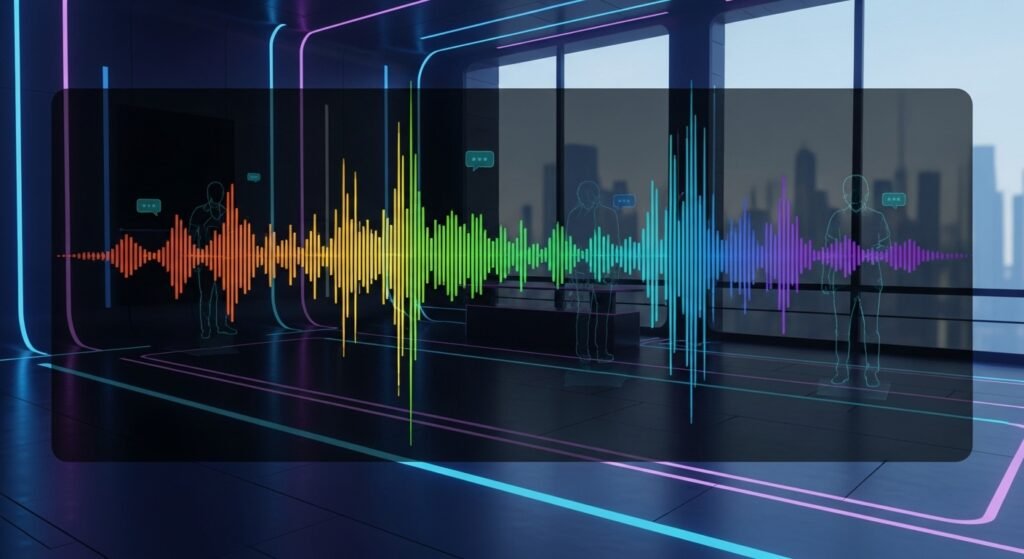
Traditional gaming communication has always felt like a compromise. You select dialogue options from a menu, pick between a few predetermined responses, and watch conversations unfold along predictable paths. It works, sure. But there’s always that invisible wall between you and the game world.
AI powered voice interaction tears down that wall.
Modern natural language processing allows games to interpret not just what you say, but how you say it. Tone, intent, context these subtle elements now factor into how game characters respond. Ask a tavern keeper about rumors in a friendly tone, and you might get useful information. Bark the same question aggressively, and watch them clam up or call the guards.
Real Examples Worth Noting
Several games have already started implementing this technology with varying degrees of success. Ubisoft’s experiments with AI companions that respond to voice commands showed promising results, though they were limited in scope. Indie developers have been particularly adventurous here, with smaller projects using conversational AI to create detective games where you actually interrogate suspects using your own words.
One project that caught my attention recently allows players to negotiate with enemy factions through actual spoken dialogue. No menu options. Just talk. The AI interprets your proposal, considers it against the faction’s goals and personality, and responds genuinely. Sometimes negotiations fail spectacularly. Other times, you talk your way out of fights you had no business surviving.
That unpredictability? That’s what makes it feel real.
The Technology Behind the Magic
Without getting too technical, AI voice interaction in games typically combines several technologies working together. Speech recognition captures and transcribes what you say. Natural language understanding interprets the meaning behind your words. The game’s AI then formulates an appropriate response based on character personality, game state, and narrative context. Finally, text to speech or dynamic voice synthesis delivers the response.
The most impressive implementations use large language models trained specifically for gaming contexts. These systems understand fantasy terminology, game specific lore, and conversational patterns that feel appropriate for different character types. A grizzled warrior speaks differently than a nervous merchant, and the AI maintains those distinctions consistently.
Why This Matters for Players
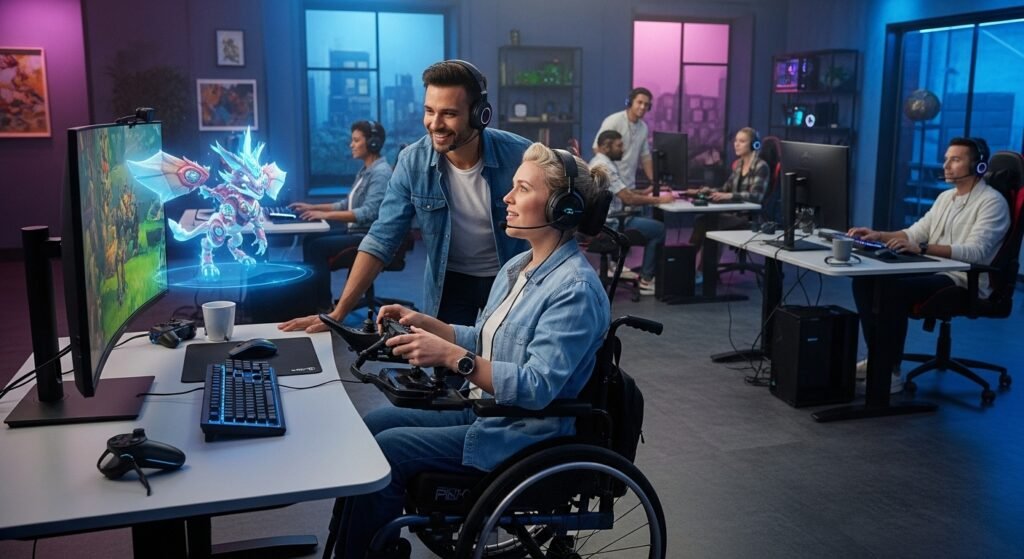
Beyond the obvious cool factor, AI voice interaction offers tangible benefits that improve gaming experiences:
Accessibility improvements stand out immediately. Players with motor disabilities who struggle with complex controller inputs can now interact through speech. Those who find reading extensive dialogue difficult can simply have conversations naturally.
Immersion reaches new depths when you’re not constantly reminded you’re playing a game. Breaking away from dialogue menus keeps you present in the moment, maintaining emotional investment in ways traditional systems never could.
Replayability skyrockets because conversations genuinely differ each playthrough. No more memorizing optimal dialogue paths. Every interaction carries fresh possibilities.
Current Limitations and Honest Challenges
I’d be lying if I claimed this technology was perfect. It’s not. Not even close.
Response latency remains an issue. Even fractions of a second between speaking and receiving a response can break immersion. Our brains expect conversation to flow naturally, and any delay feels jarring.
Voice recognition accuracy varies wildly across different accents, speech patterns, and environmental conditions. Background noise from your gaming setup can confuse systems. Players with speech impediments often face frustrating recognition failures.
Then there’s the problem of context memory. While AI characters can handle individual exchanges well, maintaining coherent memory across extended play sessions proves challenging. You might have a meaningful conversation with a character, only to find they’ve forgotten everything when you return later.
The Ethical Dimension

Here’s something that doesn’t get discussed enough: what happens when game characters become convincingly human through conversation?
Players form attachments to characters. That’s always been true. But when those characters respond dynamically to personal conversations, that attachment intensifies. Game developers have a responsibility to consider the psychological implications, particularly for younger players or vulnerable populations.
There’s also the data question. Voice interactions generate significant amounts of personal data. How that data gets stored, processed, and potentially used raises privacy concerns that the gaming industry hasn’t fully addressed.
Looking Forward
The trajectory seems clear. Within the next few years, AI voice interaction will become standard in major titles rather than experimental novelty. Development tools are becoming more accessible, meaning even smaller studios can implement sophisticated voice systems.
Multiplayer applications intrigue me most. Imagine cooperative games where team communication happens naturally through AI mediated interactions with the game world. Or competitive scenarios where diplomacy and deception through voice create entirely new strategic dimensions.
We’re witnessing the early stages of something transformative. The games our kids play will feature conversations indistinguishable from talking with actual humans. That prospect excites and concerns me in equal measure.
Final Thoughts
Voice interaction in games represents more than technological achievement. It’s a fundamental shift in how we relate to virtual worlds and characters. The barrier between player and game world grows thinner with each advancement.
Whether that’s entirely positive remains to be seen. But as someone who’s been gaming for over two decades, I can’t help feeling genuinely excited about where this heads next.
Frequently Asked Questions
Do I need special equipment for AI voice interaction in games?
Most implementations work with standard gaming headsets or built in microphones. High-quality microphones improve recognition accuracy but aren’t strictly required.
Will AI voice interaction replace traditional dialogue systems?
Unlikely to replace entirely. Most games will probably offer both options to accommodate player preferences and accessibility needs.
Can AI voice interaction work offline?
Some basic systems function offline, but sophisticated AI responses typically require internet connectivity for cloud processing.
Is my voice data being stored when I play?
Policies vary by developer. Check privacy settings and terms of service for specific games. Many offer opt out options for data retention.
Does AI voice interaction work in multiplayer games?
Implementation in multiplayer remains limited but growing. Technical challenges around simultaneous inputs make this more complex than single player applications.