

There’s a moment in every gamer’s life when they realize the characters around them aren’t just following scripts. Maybe it was when an enemy in a stealth game actually outsmarted you, or when a companion character made a decision that genuinely surprised you. That’s artificial intelligence at work, and it’s been quietly revolutionizing video games for decades.
I’ve spent years analyzing game design and watching the industry evolve, and few developments fascinate me more than how AI has transformed interactive entertainment. From the predictable ghost patterns in Pac Man to the eerily lifelike NPCs in modern open world games, artificial intelligence in video games has come remarkably far.
The Evolution of Game AI
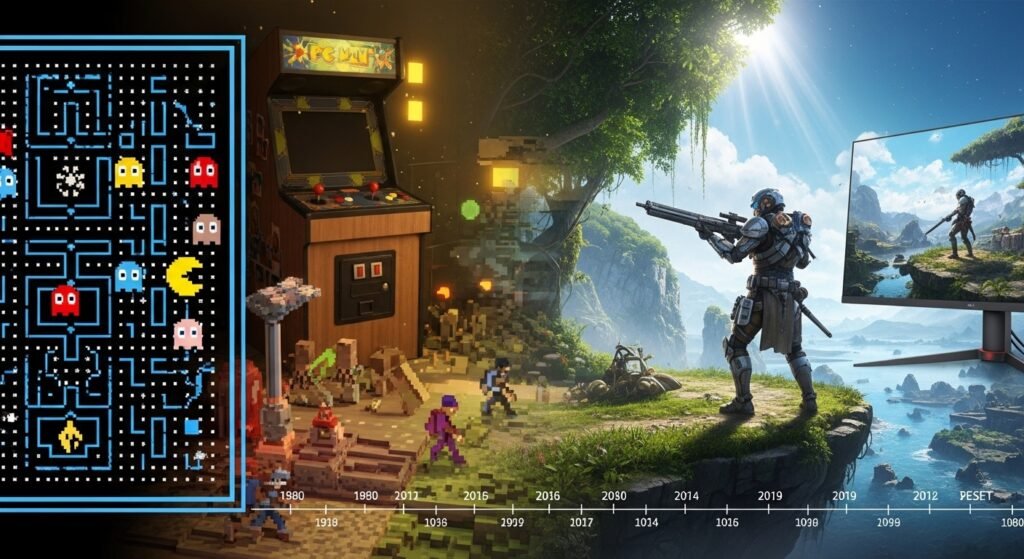
Let’s start with some perspective. When Pac Man hit arcades in 2026, each ghost had its own simple behavioral pattern. Blinky chased directly, Pinky tried to ambush, Inky was unpredictable, and Clyde alternated between pursuit and retreat. This wasn’t sophisticated by today’s standards, but it represented something revolutionary: enemies that seemed to think.
Fast forward to the 1990s, and games like Half Life introduced squad based enemy AI that could coordinate attacks, flank players, and retreat when outgunned. Players suddenly faced opponents that felt genuinely dangerous, not because of difficulty spikes, but because of intelligent behavior.
The real breakthrough came in the 2000s with games like F.E.A.R., whose enemy soldiers still impress designers today. They would communicate, suppress fire, and genuinely work together. I remember playing through that game multiple times just to watch how the AI responded differently to various approaches.
Types of AI Systems in Modern Games
Understanding how AI functions in games requires breaking down its various applications. It’s not just one system but a collection of technologies working together.
Pathfinding remains fundamental. When your character walks around obstacles or an enemy navigates through a complex environment, algorithms like A* calculate optimal routes in real time. Games with massive open worlds, like Red Dead Redemption 2, require incredibly sophisticated pathfinding to make hundreds of NPCs move believably through diverse terrain.
Behavior trees and state machines govern how characters make decisions. Think of it like a flowchart that determines what an NPC should do based on current circumstances. Is the player nearby? Attack. Is the NPC low on health? Retreat. Is it nighttime? Go home and sleep. These systems create the illusion of characters living their own lives.
Machine learning has started making inroads, though it’s less common than you might think. Training neural networks for games is computationally expensive, and the results can be unpredictable. However, games like Forza Motorsport use machine learning to create “Drivatar” opponents that learn from actual player behavior, making AI racers feel distinctly human.
Procedural generation often works alongside traditional AI. Games like No Man’s Sky generate entire planets algorithmically, while roguelikes like Hades create unique dungeon layouts with every run. This isn’t intelligence in the traditional sense, but it demonstrates how algorithmic systems can create seemingly infinite content.
Real World Examples That Get It Right
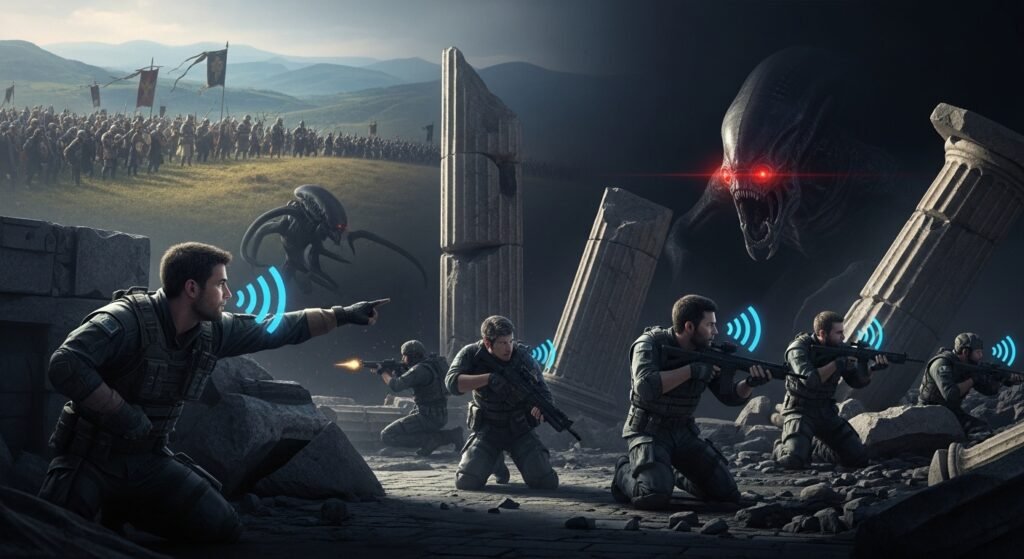
Some games deserve special recognition for their AI implementations. The Last of Us Part II features enemy AI that calls out to teammates by name, communicates player position, and reacts emotionally when allies fall. The result is combat that feels genuinely tense and morally complicated.
Alien: Isolation created one of gaming’s most terrifying antagonists with its Xenomorph AI. The creature learns from player behavior, adapting to strategies that worked previously. Hide in lockers too often, and it starts checking them. Use the motion tracker frequently, and it learns to listen for the beeping. Playing that game felt like being genuinely hunted.
On the strategy front, Total War games manage massive battles with thousands of units, each making tactical decisions based on terrain, morale, and enemy positioning. The computational complexity behind these systems is staggering, yet modern hardware handles it seamlessly.
Adaptive Difficulty and Player Experience
One of AI’s most underappreciated roles involves making games accessible without feeling patronizing. Resident Evil 4 pioneered dynamic difficulty adjustment, quietly tracking player performance and tweaking enemy aggression, item drops, and spawn rates accordingly.
This philosophy continues today. Left 4 Dead’s “AI Director” analyzes player performance in real-time, adjusting zombie spawns and item placement to maintain tension without becoming frustrating. Good runs trigger more challenging encounters; struggling teams receive subtle assistance.
The genius lies in invisibility. Players shouldn’t notice these systems working. When done well, every session feels challenging but fair, regardless of skill level.
Challenges and Ethical Considerations

Creating convincing game AI isn’t straightforward. Developers face constant trade offs between realism and fun. Perfectly optimal AI would be unbeatable and frustrating. The goal isn’t creating the smartest opponents but the most enjoyable ones.
There’s also the uncanny valley problem. As NPCs become more lifelike, any behavioral inconsistencies become more jarring. A character who discusses philosophy but can’t navigate around a chair breaks immersion instantly.
Privacy considerations have emerged around adaptive systems that collect behavioral data. While most games use this information locally, some online games analyze player patterns for matchmaking or monetization purposes, raising legitimate concerns.
Looking Ahead
The future looks genuinely exciting. Large language models are beginning to enable NPCs that can hold actual conversations rather than cycling through preset dialogue. Imagine asking a shopkeeper about rumors and receiving genuinely unique responses based on your actions throughout the game.
Cloud computing may eventually allow games to run sophisticated AI systems remotely, enabling complexity impossible on local hardware. Meanwhile, advances in reinforcement learning could create opponents that genuinely adapt to individual players over extended periods.
However, I’d caution against expecting miracles immediately. Game development remains complicated, expensive, and time consuming. Revolutionary AI implementations will likely appear gradually, one impressive game at a time.
Final Thoughts
Artificial intelligence in video games has journeyed from simple ghost patterns to systems capable of genuine surprise. Whether creating believable worlds, challenging opponents, or accessible experiences, AI remains essential to modern game design.
What excites me most isn’t any single technology but the accumulated effect of decades of innovation. Every game builds on lessons learned previously, pushing interactive entertainment toward experiences that feel genuinely alive.
Frequently Asked Questions
What is AI in video games?
AI refers to systems controlling non player character behavior, decision making, pathfinding, and adaptive game elements that respond to player actions.
Do video games use machine learning?
Some games do, particularly for opponent behavior learning and procedural content generation, though traditional rule based AI remains more common.
Which game has the best AI?
Opinions vary, but Alien: Isolation, F.E.A.R., and The Last of Us Part II frequently receive praise for exceptional enemy AI implementation.
Does AI affect game difficulty?
Yes, many modern games use adaptive difficulty systems that quietly adjust challenge based on player performance.
Will AI replace human game developers?
Unlikely. AI assists development through procedural generation and testing, but creative direction, storytelling, and design require human judgment.
Can game AI actually learn from players?
Certain games implement learning systems, like Forza’s Drivatars, that analyze and replicate player behavior patterns.