
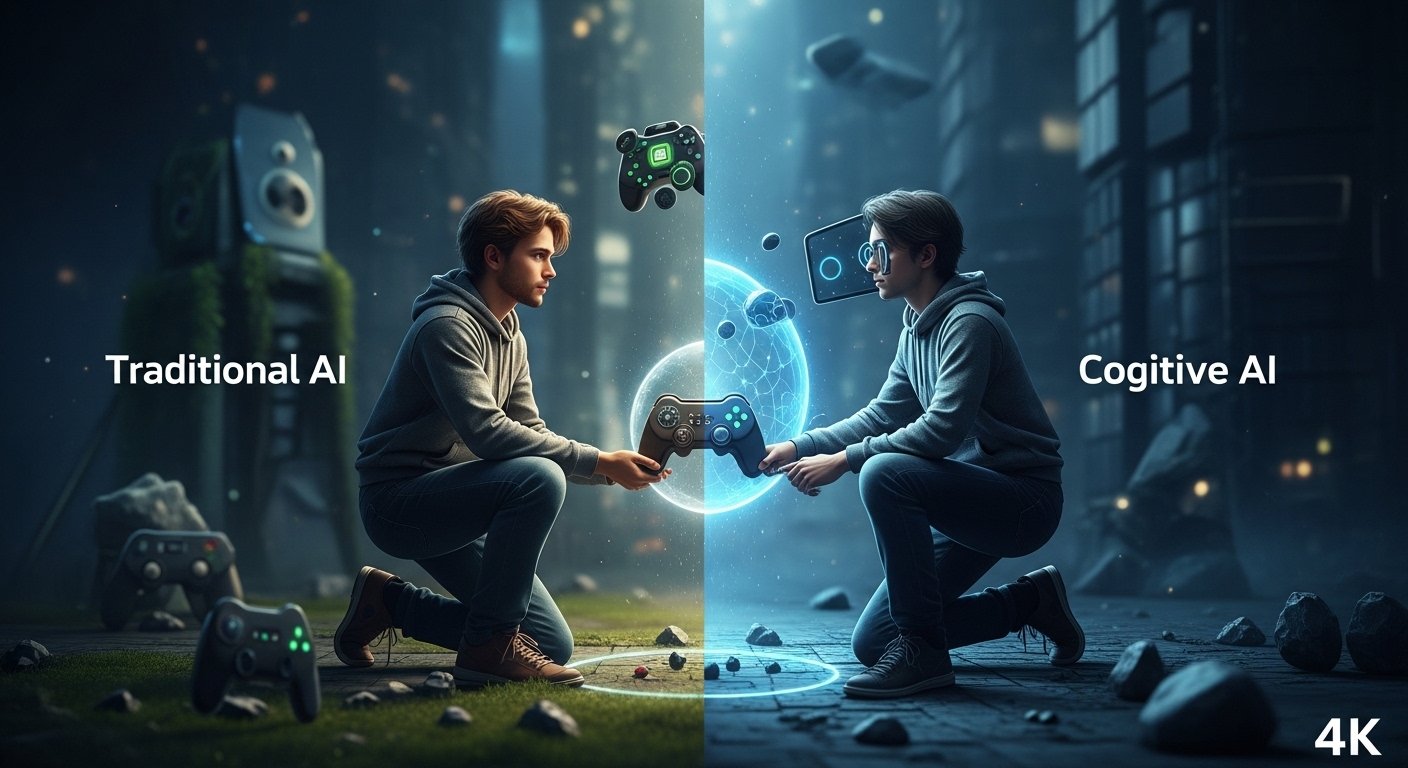
I’ve spent over a decade watching game AI evolve from scripted patrol routes to something genuinely surprising. Last month, while playtesting an upcoming title I can’t name yet, an NPC merchant remembered I’d stolen from his shop three in game weeks earlier and adjusted his pricing accordingly. No scripted trigger. No predetermined consequence. Just memory. That moment crystallized what cognitive AI means for the future of gaming.
Understanding Cognitive AI Beyond the Buzzword
Traditional game AI operates on decision trees and state machines. Enemy sees player, enemy attacks. Shopkeeper has dialogue options A, B, and C. It’s reactive, predictable, and honestly, we’ve all learned to exploit it.
Cognitive AI fundamentally changes this equation. These systems don’t just respond they perceive, learn, remember, and adapt. Think of it as the difference between a calculator following instructions and a problem solver understanding context.
The technical foundation combines machine learning, natural language processing, behavioral modeling, and neural networks. But what matters to players isn’t the architecture. What matters is that NPCs finally feel like they inhabit the world rather than populate it.
Where Traditional AI Hits Its Ceiling
Anyone who’s played open world games knows the limitations. Guards who forget you murdered their colleague after you hide in a barrel for sixty seconds. Companions who walk into your line of fire repeatedly. Enemies who follow identical attack patterns regardless of how many times you’ve countered them.
These aren’t bugs they’re design constraints. Traditional AI requires developers to anticipate every scenario and program specific responses. With cognitive AI, characters develop behavioral patterns based on accumulated experience within the game world itself.
I spoke with a senior designer at a major studio last year who described it bluntly: “We used to write a thousand ‘if then’ statements and hope we covered everything. Now we’re teaching systems to write their own responses.”
Real World Applications Already Emerging
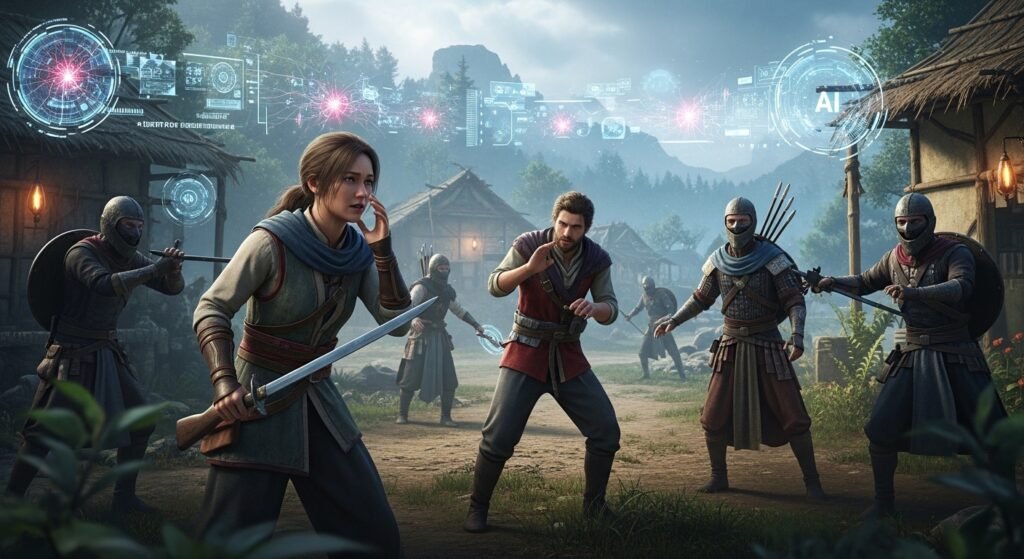
The technology isn’t theoretical. Several games have already implemented cognitive AI elements, though full integration remains emerging.
Dynamic NPC Behavior
In recent titles, non player characters can now form opinions about the player based on observed actions. Help a village, and word spreads organically. Betray one faction, and their allies become wary without explicit scripting. This emergent reputation system creates consequences that feel earned rather than manufactured.
Adaptive Enemy Intelligence
Some combat systems now feature enemies that genuinely learn. Rush every encounter aggressively, and opponents start baiting you into traps. Play defensively, and they develop pressure tactics. This isn’t difficulty scaling it’s tactical evolution based on your specific playstyle.
Conversational Depth
Natural language processing enables dialogue that responds to context rather than keyword matching. Early implementations are rough around the edges, sure. But the trajectory points toward conversations that feel less like navigating menu options and more like actual exchanges.
Procedural Narrative Generation
This application excites me most. Cognitive AI can generate storylines, quests, and character arcs based on player behavior and world state. Not randomly generated fetch quests, but narratively coherent experiences shaped by your choices and playstyle.
The Technical Challenges Nobody Talks About
Let’s be realistic about the hurdles. Cognitive AI demands substantial processing power. Running sophisticated neural networks alongside real time graphics and physics creates performance challenges that even next-gen hardware struggles with.
Cloud processing offers one solution, but introduces latency concerns and requires constant connectivity. Edge computing represents another approach, though it limits complexity.
There’s also the predictability problem. Games need cognitive AI that’s intelligent enough to surprise players but consistent enough to remain fair. An enemy that becomes too adaptive might feel frustrating rather than challenging. Balancing emergence with designed experience requires careful calibration.
Data training presents additional concerns. These systems need massive behavioral datasets to function effectively. Where that data comes from, how it’s collected, and what biases it contains are legitimate questions the industry must address.
Ethical Considerations Worth Discussing
When NPCs remember and learn, interesting ethical questions emerge. If a character develops genuine behavioral patterns based on player interaction, do we have responsibilities toward how we treat them? It sounds philosophical, but game designers are genuinely grappling with this.
More practically, cognitive AI could enable manipulation tactics. Characters that learn what motivates individual players might exploit psychological vulnerabilities to encourage specific behaviors including spending patterns. The line between engaging gameplay and exploitation requires industry attention.
Player data usage also warrants scrutiny. Adaptive systems that learn from behavior necessarily collect that behavior. Transparency about what’s gathered and how it’s used should become standard practice.
What This Means for Game Development
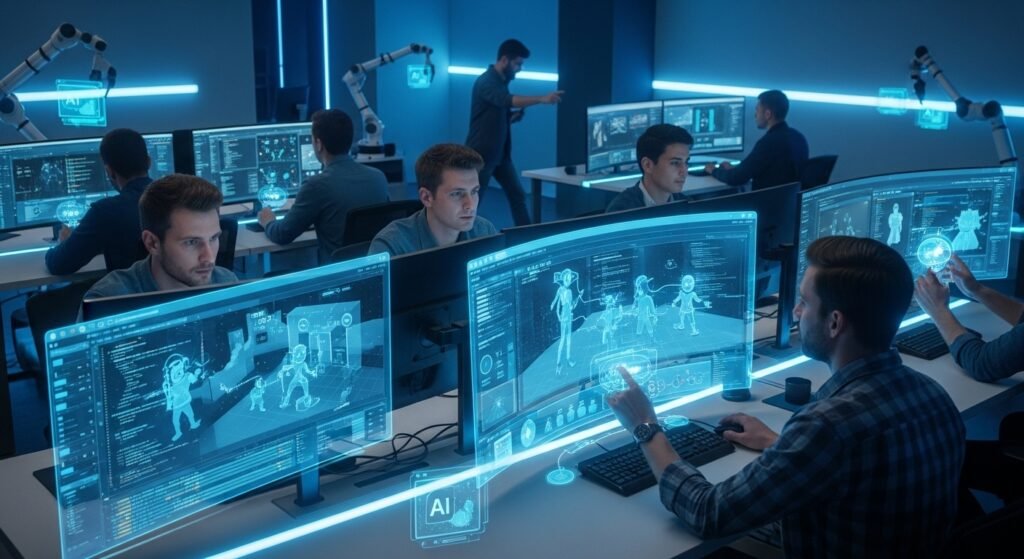
Development pipelines are shifting. Teams increasingly include AI specialists alongside traditional designers and programmers. The skill set required to create compelling games now encompasses machine learning expertise that barely existed in studios a decade ago.
Smaller studios face particular challenges. Cognitive AI development requires resources that favor larger publishers. However, middleware solutions and accessible frameworks are emerging that could democratize these capabilities over time.
Testing methodologies need reinvention too. Traditional QA can’t effectively evaluate systems designed to behave unpredictably. New approaches combining automated testing with human evaluation are developing, but standards remain inconsistent.
Looking Forward
The games releasing in the next three to five years will likely represent transitional implementations impressive in moments but inconsistent overall. Full realization of cognitive AI’s potential probably lies further ahead, dependent on hardware advancement, development tool maturation, and accumulated industry learning.
What excites me isn’t any single application but the cumulative effect. Worlds that remember. Characters that grow. Challenges that adapt. Stories that emerge. Gaming has always promised interactive entertainment, but cognitive AI might finally deliver genuinely responsive experiences.
The merchant who remembered my theft? That’s a glimpse of where we’re heading. Not just smarter enemies or chattier companions, but game worlds that actually acknowledge and incorporate your presence within them.
Frequently Asked Questions
What exactly is cognitive AI in gaming?
Cognitive AI refers to game systems that can perceive, learn, remember, and adapt based on player behavior and world events, rather than following predetermined scripts.
How does cognitive AI differ from regular game AI?
Traditional AI follows programmed rules and decision trees. Cognitive AI develops responses through machine learning and behavioral modeling, creating emergent and unpredictable behaviors.
Which games currently use cognitive AI?
Several recent titles incorporate elements like adaptive enemy behavior and dynamic NPC relationships. Full cognitive AI implementation remains emerging, with more comprehensive examples expected in upcoming releases.
Will cognitive AI make games harder?
Not necessarily harder more responsive. These systems adapt to individual playstyles, potentially creating more personalized challenge levels rather than uniform difficulty increases.
Does cognitive AI require internet connection?
It depends on implementation. Cloud based processing requires connectivity, while on device solutions work offline but may offer reduced complexity.
What hardware requirements does cognitive AI demand?
Current implementations benefit from next gen console and modern PC hardware. Processing requirements continue decreasing as optimization techniques improve.