
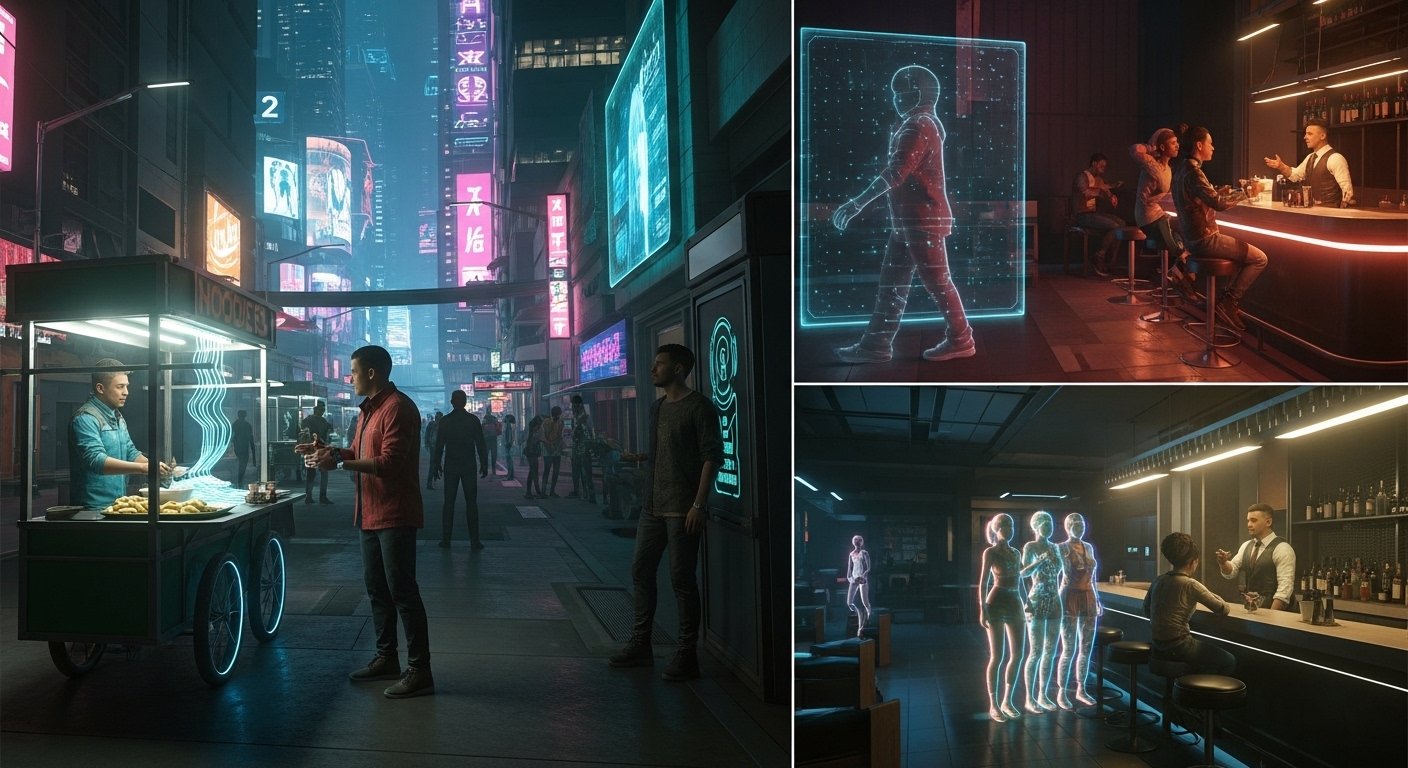
I’ve been covering the gaming industry for over a decade, and honestly, nothing has excited me more than watching artificial intelligence reshape how games are built and played. The changes happening right now? They’re just the tip of the iceberg.
Having spent time at GDC conferences, spoken with developers at indie studios and triple A publishers alike, and logged countless hours testing next gen titles, I can tell you the future of AI in gaming isn’t some distant fantasy. It’s unfolding right now, and some of these applications will fundamentally change your relationship with video games.
NPCs That Actually Feel Alive
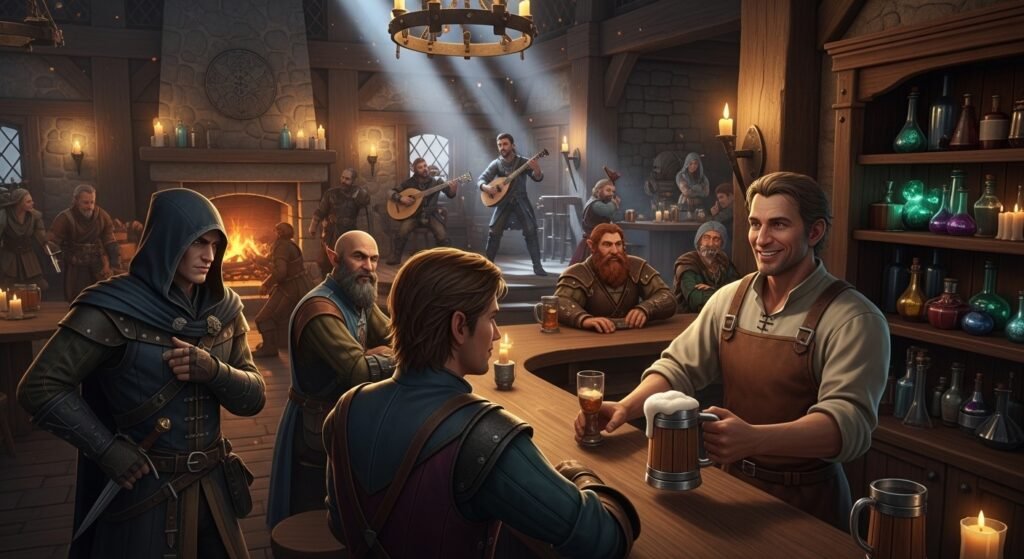
Let’s start with what frustrates most gamers: non player characters that feel like cardboard cutouts with scripted dialogue trees. We’ve all experienced it talking to a shopkeeper who repeats the same three lines, or watching enemies patrol the exact same route for hours.
The next generation of AI driven NPCs won’t follow predetermined scripts. Instead, they’ll generate responses dynamically based on context, player history, and in game events. Imagine walking into a tavern where the bartender remembers you helped save the village last week and offers you a free drink. Or where a rival character holds a grudge because you embarrassed them three quests ago.
Studios like Ubisoft and CD Projekt Red are already experimenting with large language models integrated into character systems. The results I’ve seen in early demos are genuinely impressive characters that hold coherent conversations, remember past interactions, and react emotionally to player choices.
Procedural Content That Doesn’t Feel Procedural
Procedural generation isn’t new. Games like Minecraft and No Man’s Sky have used algorithms to create vast worlds for years. But here’s the problem: procedurally generated content often feels repetitive or soulless.
Future AI systems are changing this equation entirely. Machine learning models trained on thousands of hand crafted levels can now generate content that feels deliberately designed. We’re talking about dungeons with logical architecture, cities with realistic traffic flow, and questlines that actually make narrative sense.
One indie developer I spoke with recently showed me a prototype where AI generated entire side quests complete with characters, motivations, dialogue, and branching outcomes in real time. The quality wasn’t perfect, but it was far better than anything I’d seen five years ago.
Adaptive Difficulty That Reads Your Mind
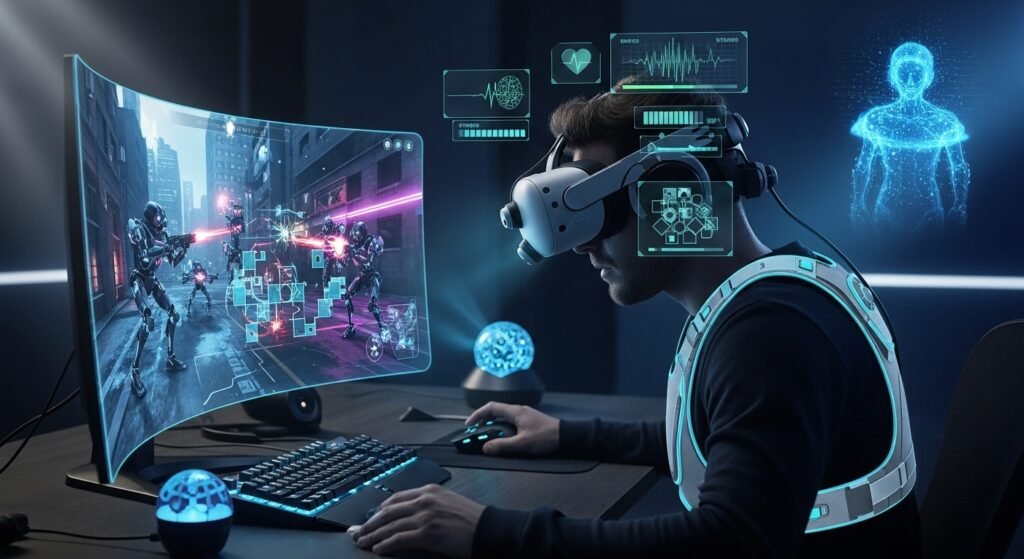
Okay, not literally. But AI powered difficulty systems are getting remarkably good at understanding player skill and emotional states.
Current adaptive difficulty typically adjusts enemy health or damage output. Future systems will be far more nuanced. By analyzing player behavior patterns how often you dodge, your reaction times, which strategies you favor AI can modify everything from puzzle complexity to enemy tactics.
The goal isn’t just to make games easier or harder. It’s to keep players in that perfect “flow state” where challenges feel just right. Some experimental systems even track biometric data through controllers or wearables, detecting frustration or boredom before you consciously feel it.
Revolutionizing Game Development Itself
This is where things get really interesting for the industry. Creating modern games requires enormous teams and budgets that exclude most creators. AI is democratizing development in ways that seemed impossible a decade ago.
Smaller studios now use machine learning to generate texture assets, compose adaptive soundtracks, and even write initial dialogue drafts for writers to refine. Animation systems powered by AI can create realistic character movement from simple motion capture, eliminating the need for expensive studio setups.
Quality assurance is another area seeing massive transformation. Testing games traditionally requires hundreds of human testers playing thousands of hours. AI testing systems can simulate millions of player behaviors overnight, finding bugs and exploits that would take human teams months to discover.
Natural Voice Interactions
Voice commands in games have historically been clunky and limited. Anyone who’s tried voice controls in older titles knows the frustration of repeating commands five times before the game understands you.
Modern speech recognition combined with natural language processing is finally making voice interaction viable. Future games won’t require specific phrases or commands. You’ll be able to talk naturally with characters, negotiate with merchants in your own words, or command squadmates with regular sentences.
Some developers are even exploring AI voice synthesis that allows NPCs to respond with dynamically generated speech rather than pre recorded lines. The voice quality is approaching human like levels, though there are still telltale artifacts that give it away.
The Multiplayer Dimension
AI companions and opponents in multiplayer games are getting sophisticated enough to replace human players seamlessly. This matters more than you might think.
Dead multiplayer modes kill games faster than almost anything else. When player populations drop, matchmaking suffers, wait times increase, and remaining players leave a death spiral that’s claimed countless online titles. AI opponents that genuinely mimic human play styles could keep multiplayer modes viable indefinitely.
Some competitive games are exploring AI teammates that fill in when players disconnect, matching the playstyle and skill level of the departed player. Early implementations have been rough, but the technology is improving rapidly.
Ethical Considerations We Can’t Ignore
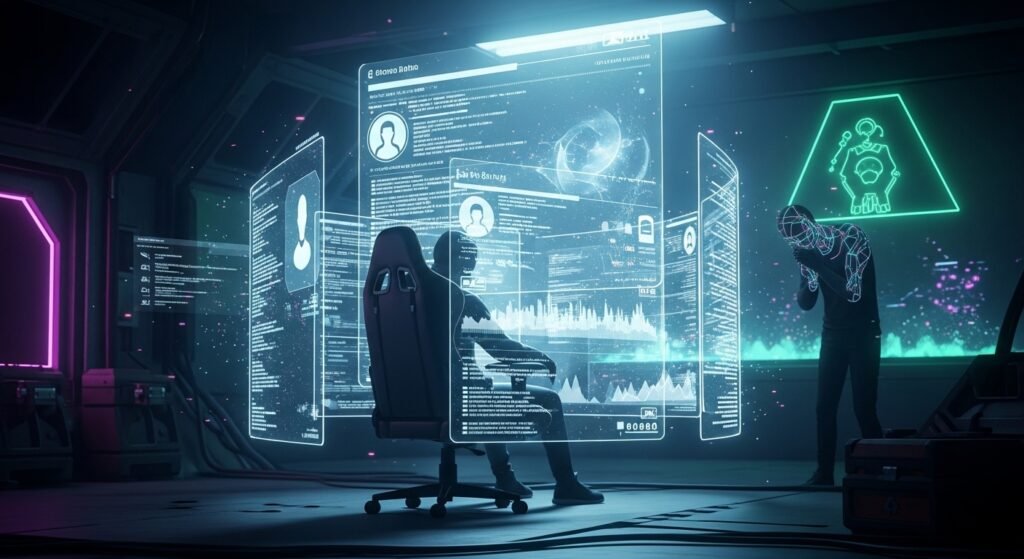
Not everything about AI in gaming is positive. There are legitimate concerns about AI systems designed to maximize engagement crossing into manipulation territory. When AI can analyze player psychology in real time, the potential for exploitative monetization grows.
Data privacy is another issue. These intelligent systems require player data to function effectively. How that information is collected, stored, and used deserves serious attention from both developers and regulators.
And there’s the employment question. If AI can generate assets, test games, and even write content, what happens to the humans currently doing those jobs? The industry needs to grapple with these transitions thoughtfully.
Looking Ahead
The gaming landscape five years from now will look dramatically different than it does today. More personalized experiences, living worlds that evolve without developer intervention, and creative tools that let anyone build the games they’ve always imagined.
What excites me most isn’t any single technology it’s how these systems will combine to create experiences we haven’t even conceived yet. Gaming has always pushed technological boundaries, and AI represents perhaps its greatest frontier.
FAQs
When will AI powered NPCs become mainstream?
Major studios are targeting 2026-2028 for games featuring advanced AI characters, though early implementations are already appearing in current titles.
Will AI replace human game developers?
AI will transform development workflows and automate certain tasks, but creative direction, design decisions, and artistic vision will remain fundamentally human.
Can AI create entire games independently?
Not yet. Current AI assists with components like assets and testing, but cohesive game creation still requires human oversight and creativity.
Will AI gaming features require better hardware?
Some advanced features will demand more processing power, though cloud computing may offload requirements from personal devices.
How will AI affect game pricing?
Reduced development costs could lower prices, but premium AI features might become their own monetization category.
Are there AI gaming applications available now?
Yes, games like FIFA, Forza, and several indie titles already use machine learning for various features, from opponent behavior to content generation.