
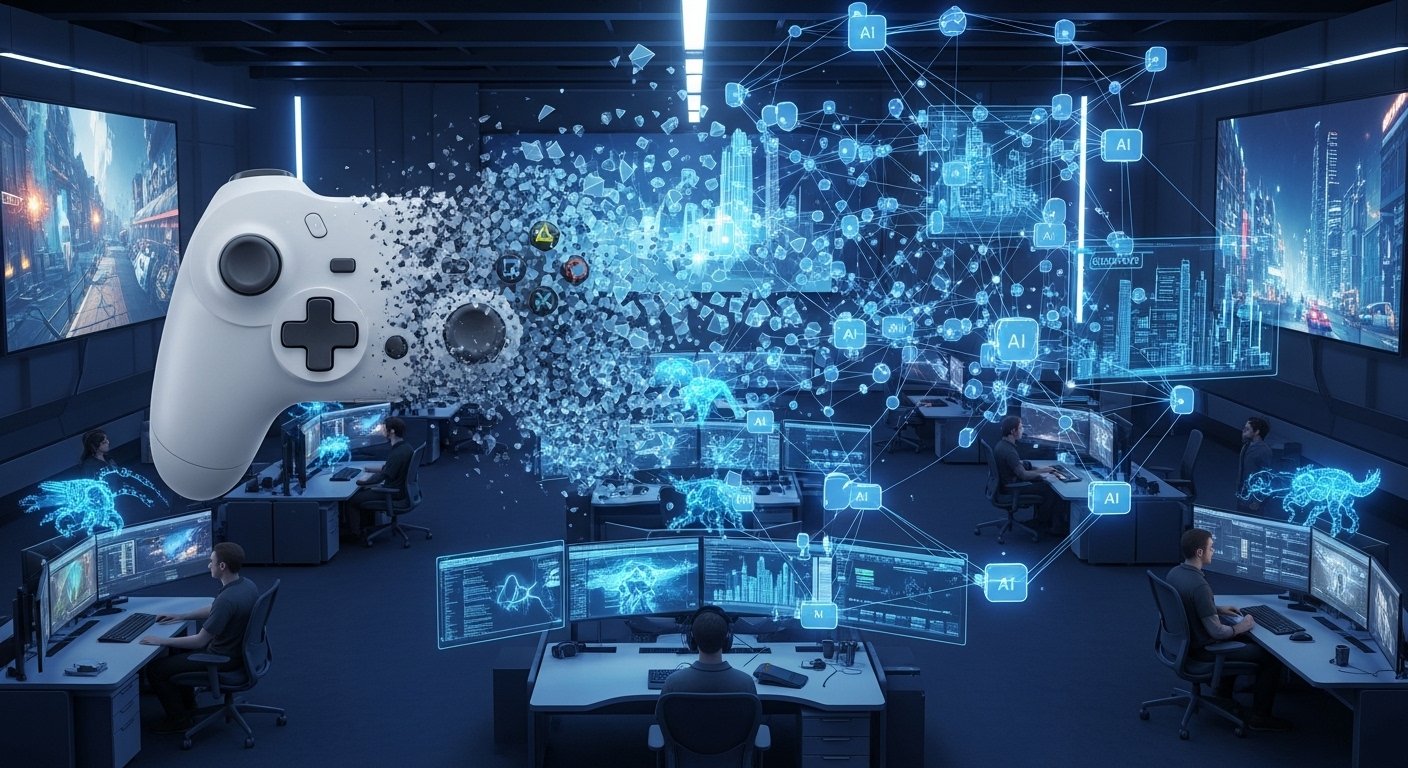
The gaming industry has always been at the forefront of technological innovation, and the recent surge of generative artificial intelligence represents perhaps the most significant shift we’ve seen since the transition to 3D graphics. As someone who’s been following this space closely, I can tell you that generative AI isn’t just changing how games are made it’s fundamentally altering what’s possible within virtual worlds.
The Current Landscape of AI-Generated Gaming Content
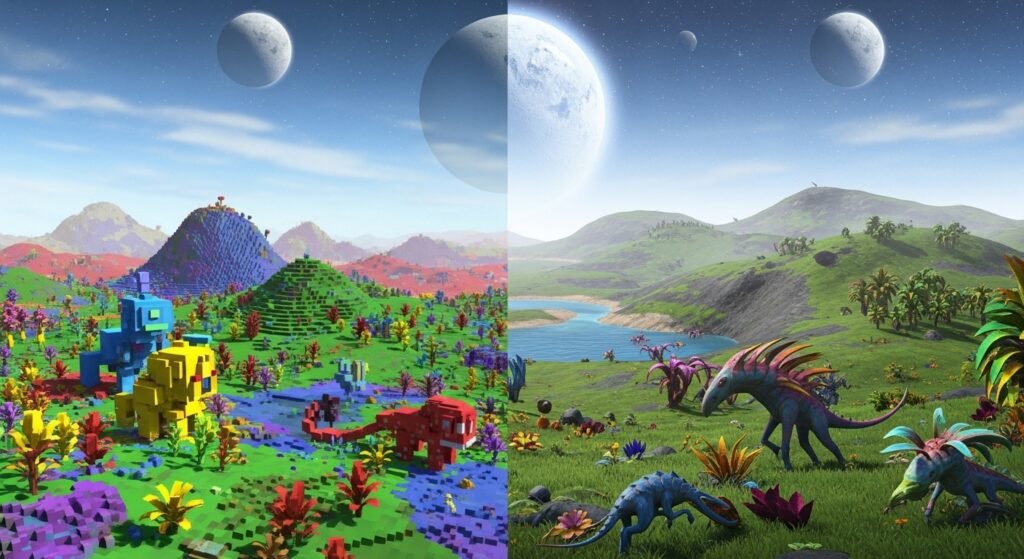
Generative AI in video games encompasses everything from procedural world generation to dynamic storytelling and real time asset creation. Unlike traditional procedural generation that relies on predetermined rules and algorithms, modern AI systems can create content that feels genuinely organic and responsive to player behavior.
Take No Man’s Sky as a prime example of how this technology has evolved. While the game initially launched with traditional procedural generation, recent updates have incorporated more sophisticated AI systems that create not just terrain and creatures, but entire ecosystems with believable interactions. The difference is striking where early procedural games often felt repetitive despite their technical complexity, AI-driven generation produces variations that surprise even experienced developers.
Nvidia’s Canvas tool demonstrates another fascinating application. This AI system allows game artists to paint rough landscape sketches that instantly transform into photorealistic environments. What used to take teams weeks of detailed texture work and lighting adjustments now happens in real time, freeing creative professionals to focus on broader design concepts rather than technical execution.
Dynamic Storytelling and Character Development
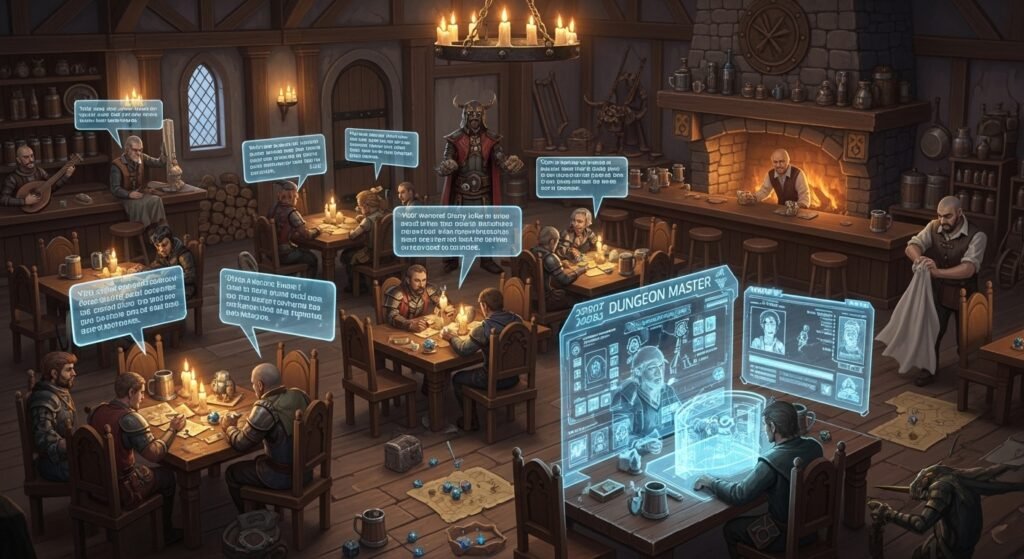
Perhaps the most exciting development I’ve observed is in narrative generation. Games like AI Dungeon pioneered the concept of unlimited, AI generated storylines that adapt to player choices in ways that traditional branching narratives simply cannot match. While these early experiments were often inconsistent, newer implementations are becoming remarkably sophisticated.
Latitude’s AI Dungeon 2 showcased how large language models could maintain narrative coherence across extended play sessions, remembering character details and plot threads that would challenge even experienced human dungeon masters. More recently, major studios have begun integrating similar technology into AAA titles, though often in more subtle ways.
The implications extend beyond just story generation. Non player characters (NPCs) are becoming genuinely conversational, moving beyond scripted dialogue trees to engage in contextual conversations that feel natural and responsive. This shift represents a fundamental change in how players interact with game worlds instead of exhausting preset conversation options, players can engage with virtual characters as they would with real people.
Technical Innovation and Asset Generation
From a development perspective, generative AI is revolutionizing asset creation pipelines. Artbreeder and similar platforms allow developers to generate thousands of character variations from a single base design, each with unique features that would previously require individual artist attention. This democratization of content creation means smaller studios can achieve visual diversity that was once exclusive to major publishers with massive art teams.
Texture generation has seen similar advances. AI systems can now create seamless, high resolution textures based on simple text descriptions or rough sketches. A developer can type “weathered medieval stone wall” and receive dozens of unique, game ready textures within minutes. This capability is particularly valuable for indie developers working with limited resources.
Procedural audio generation represents another frontier that’s rapidly maturing. AI systems can now compose adaptive soundtracks that respond to gameplay situations in real time, creating musical scores that ebb and flow with player actions. Some systems even generate ambient sounds and effects that match the visual environment, creating more immersive audio landscapes without requiring extensive sound libraries.
Challenges and Implementation Hurdles

However, integrating generative AI into game development isn’t without significant challenges. Quality control remains a primary concern. While AI can generate vast amounts of content quickly, ensuring that every generated asset meets quality standards requires sophisticated filtering systems and often human oversight.
Performance optimization presents another hurdle. Real time AI generation demands substantial computational resources, which can conflict with the performance requirements of modern games. Developers must carefully balance the sophistication of AI systems with frame rates and system responsiveness that players expect.
The unpredictability inherent in AI generation can also create problems. While randomness can enhance replayability, it can also generate inappropriate content or break game balance. Developers need robust guardrails to prevent AI systems from creating content that undermines gameplay or violates content guidelines.
Industry Adoption and Business Models
Major publishers are approaching generative AI with a mixture of excitement and caution. Ubisoft has publicly discussed using AI for generating dialogue and quest content, while Electronic Arts has invested heavily in AI research for sports game commentary and player behavior modeling.
The economic implications are substantial. Generative AI could significantly reduce development costs and timelines, potentially changing how games are priced and monetized. Some industry analysts predict we’ll see more experimental and niche titles as development barriers lower, leading to greater diversity in available games.
Ethical considerations around AI generated content are also emerging as industry concerns. Questions about ownership of AI generated assets, the impact on creative jobs, and the authenticity of AI created content are driving important conversations about responsible implementation.
Looking Toward the Future
The trajectory of generative AI in gaming points toward increasingly sophisticated and seamless integration. We’re moving toward games that can generate new content indefinitely, adapting and evolving based on individual player preferences and behaviors.
Personalized gaming experiences represent the ultimate goal games that literally reshape themselves for each player, creating unique adventures that no two people will experience identically. This level of customization could fundamentally change how we think about game design and player agency.
The next few years will likely see AI systems that can generate not just content but entire game mechanics on the fly, creating gameplay experiences that emerge organically from player interactions rather than predetermined design documents.
As this technology continues to mature, the line between developer created and AI generated content will become increasingly blurred, leading to gaming experiences that are more dynamic, personal, and surprising than ever before. The future of gaming isn’t just about better graphics or faster processors it’s about games that truly understand and respond to their players in ways we’re only beginning to imagine.
Frequently Asked Questions
Q: Will AI replace human game developers?
A: No, AI is a tool that enhances human creativity rather than replacing it. Developers still need to design gameplay systems, direct artistic vision, and ensure quality control.
Q: Are AI generated games copyright protected?
A: This remains legally complex and varies by jurisdiction. Most companies use AI as a tool in human directed creative processes to ensure clear ownership.
Q: Can AI create entire games independently?
A: Currently, no. AI can generate assets and content, but game design, programming, and quality assurance still require human expertise and decision-making.
Q: Will AI generated content make games more expensive?
A: Potentially the opposite AI could reduce development costs, though savings might be reinvested in other areas rather than passed to consumers.
Q: How can players tell if content is AI-generated?
A: Often they can’t, and increasingly won’t need to. The focus is shifting toward whether content enhances the gaming experience, regardless of its origin.