

I still remember the first time an NPC genuinely surprised me. It was 2026, playing Red Dead Redemption 2, when a stranger I’d ignored three times earlier recognized my face and called me out for being rude. That moment shifted something in my brain. These weren’t just programmed responses anymore they felt like interactions with actual personalities.
Gaming has come impossibly far from the days when NPCs stood frozen in place, waiting for players to trigger their scripted lines. Today’s human like AI characters remember your choices, adapt to your playstyle, and sometimes make decisions that catch even veteran players off guard.
The Evolution From Scripted Robots to Believable Personalities
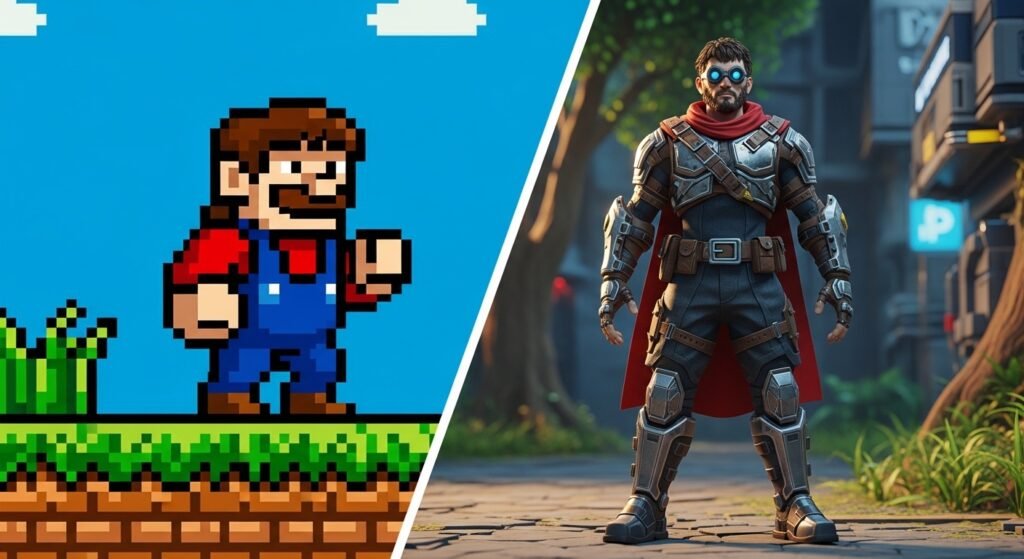
Cast your mind back to early games like Pac Man or Space Invaders. The “enemies” followed predictable patterns. You could memorize them, exploit them, beat them. Fast forward to modern titles, and we’re dealing with characters who hold grudges, form opinions, and react dynamically to world events.
The transformation happened gradually. Games like Half Life 2 introduced companion characters with emotional depth. Alyx Vance wasn’t just following Gordon Freeman around she expressed fear, determination, and even humor at contextually appropriate moments. That was groundbreaking in 2026.
Then came titles like The Last of Us, where Ellie’s behavior during combat and exploration felt organic. She’d take cover without prompting, comment on discoveries naturally, and her emotional responses aligned with narrative beats. Players reported genuinely caring about her safety not because the game told them to, but because her personality earned it.
What Actually Makes AI Characters Feel Human?
After spending years analyzing game design and interviewing developers at various conferences, I’ve identified several key elements that separate forgettable NPCs from memorable virtual companions.
Contextual awareness ranks highest. Human like characters need to understand their surroundings and respond accordingly. A character who cheerfully greets you during a funeral scene instantly breaks immersion. But one who whispers, acknowledges the somber atmosphere, or remains silent? That feels real.
Memory systems come second. When characters remember previous interactions whether you helped them, ignored them, or wronged them it creates relationship depth. The Nemesis System in Middle earth: Shadow of Mordor revolutionized this concept. Orcs remembered fights with you, developed scars from previous encounters, and even mocked your earlier failures.
Behavioral unpredictability within reasonable bounds makes characters fascinating. Humans aren’t perfectly consistent. We have good days and bad days. When AI characters exhibit similar variance sometimes being helpful, occasionally being short-tempered they feel multidimensional.
Standout Examples Worth Experiencing
Several games have pushed boundaries in creating genuinely human like AI companions and adversaries.
Red Dead Redemption 2 deserves repeated mention. Rockstar crafted a world where thousands of NPCs follow daily routines, respond to weather changes, and maintain complex relationship networks. Shopkeepers remember troublesome customers. Gang members discuss recent events around campfires without player prompting.
Baldur’s Gate 3 elevated companion AI to new heights. Party members form opinions about your choices, develop relationships with each other independently, and may even leave your group if they disapprove strongly enough. The characters feel like collaborators rather than tools.
The Last of Us Part II showcased enemy AI with striking humanity. Enemies call each other by name. When you eliminate someone, their companions express genuine grief and rage. This transforms generic combat encounters into morally complex situations.
The Technology Driving These Advances
Creating believable AI characters requires sophisticated systems working in harmony. Behavior trees have been industry standard for years, mapping decision pathways based on environmental conditions. However, newer approaches incorporate machine learning elements and procedural generation.
Developers increasingly use utility based AI systems where characters evaluate multiple factors simultaneously threat levels, resource availability, relationship status, personal goals before choosing actions. This creates emergent behavior that surprises even the programmers who built it.
Natural language processing has also improved dramatically. Characters in games like Cyberpunk 2026 can handle varied player inputs and respond coherently, though we’re still far from true conversational AI in mainstream titles.
The Impact on Player Experience
Human like AI fundamentally changes how players engage with games. When characters feel real, emotional investment follows naturally. Players report feeling genuine guilt when betraying believable characters. They replay sections to save companions they’ve grown attached to.
This emotional engagement also extends playtime. Games with memorable AI personalities see higher completion rates and stronger word of mouth recommendations. Players don’t just finish these games they discuss them, analyze character motivations, and debate moral choices online.
Current Limitations and Honest Challenges
Let’s be realistic about where we stand. Despite impressive advances, current AI characters still break immersion regularly. They repeat dialogue, get stuck on terrain, and occasionally behave nonsensically.
Development costs present significant barriers. Creating truly human like AI requires massive investment in programming, testing, and iteration. Smaller studios often can’t afford these systems, limiting innovation to major releases.
There’s also the uncanny valley problem. Sometimes characters that are almost human feel creepier than obviously artificial ones. Facial animations, voice acting quality, and behavioral consistency all need alignment to avoid unsettling players.
Looking Forward
The next decade promises fascinating developments. Cloud computing may enable more complex AI processing than current hardware allows. Procedurally generated personalities could create unique NPCs for every playthrough. Voice synthesis improvements might eventually allow truly dynamic conversations.
What excites me most is how these advances will democratize game development. As tools improve and become accessible, smaller teams will create deeply human characters without AAA budgets.
Frequently Asked Questions
What makes AI characters in games feel human?
Memory systems, contextual awareness, emotional responses, and unpredictable yet reasonable behavior patterns combine to create believable personalities.
Which games have the most realistic AI characters?
Red Dead Redemption 2, Baldur’s Gate 3, The Last of Us series, and Middle earth: Shadow of Mordor are frequently cited for exceptional AI character design.
Does human like AI affect game performance?
Yes, complex AI systems require significant processing power, which can impact frame rates and loading times on older hardware.
Can AI characters truly replace human interaction in games?
Not yet. While AI characters have improved dramatically, they can’t replicate the unpredictability and creativity of human players.
How long until AI characters become indistinguishable from humans?
Most industry experts estimate another 10-15 years before AI characters consistently pass believability tests in standard gameplay scenarios.