
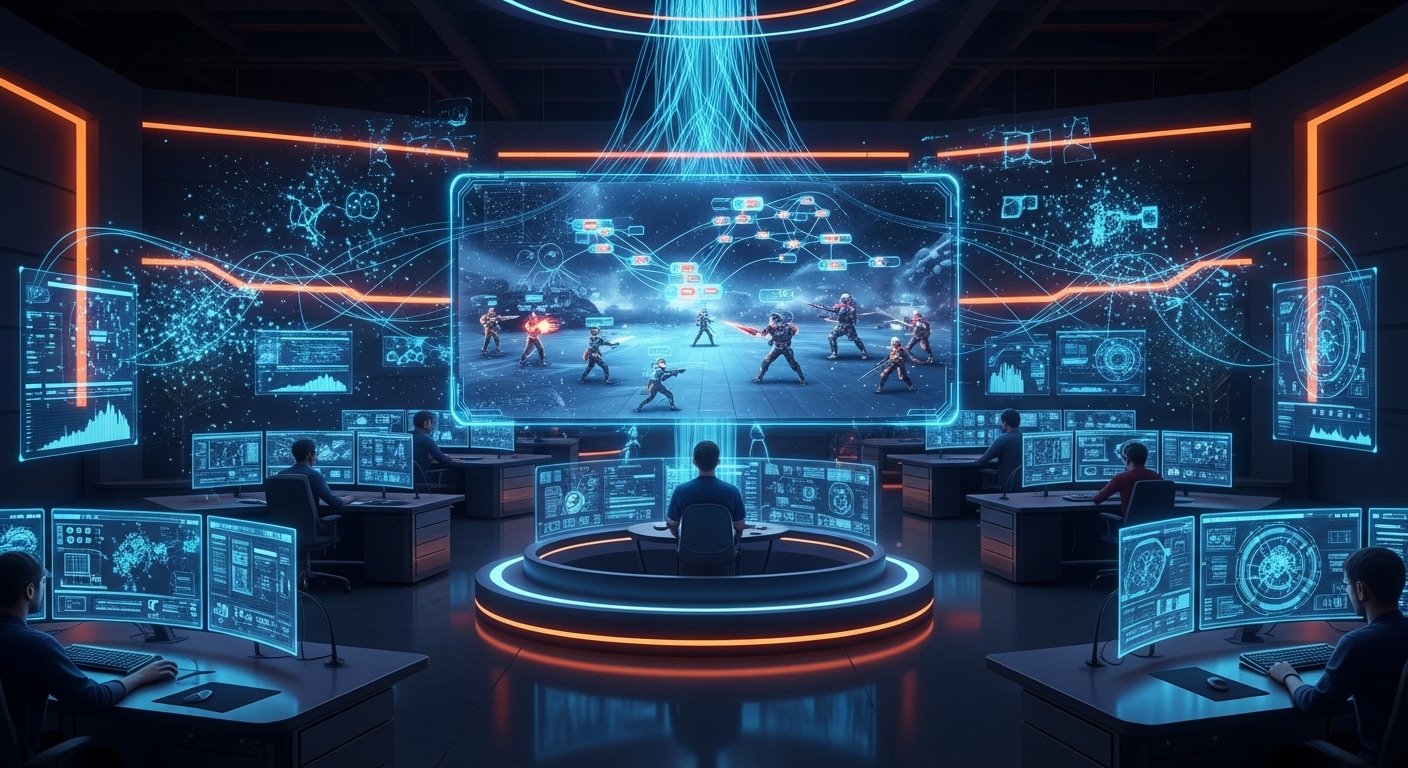
I still remember the first time I saw an NPC actually learn from my playstyle. It was during a playtest session at a mid sized studio in Austin back in 2026. The enemy character adapted to my flanking maneuvers, eventually predicting where I’d move before I made the decision. That moment fundamentally changed how I thought about game design.
The gaming industry has always been at the frontier of technological innovation. But machine learning? That’s taken things to an entirely different level. We’re not just programming behaviors anymore we’re teaching systems to think, adapt, and create.
Beyond Traditional Game AI
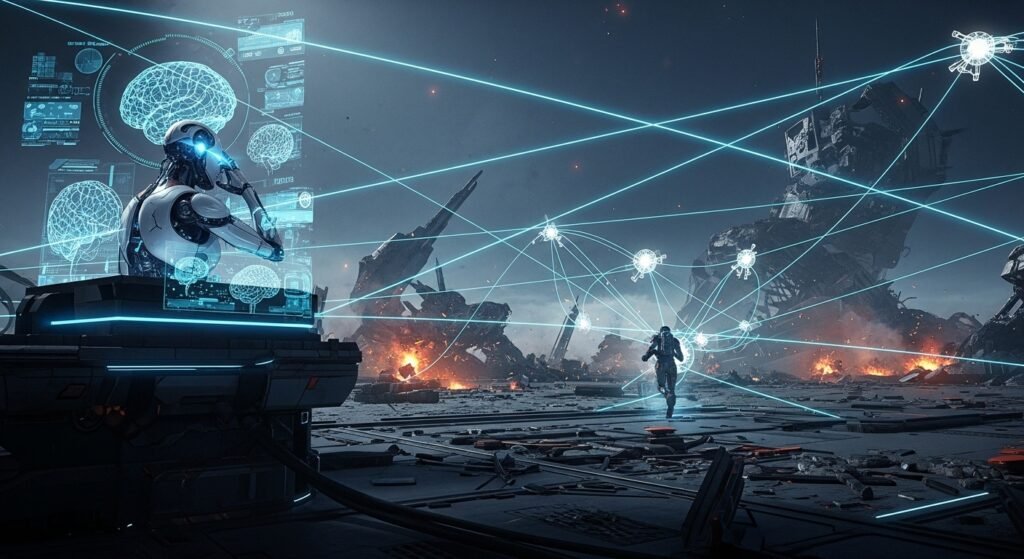
Here’s the thing most players don’t realize: traditional game AI isn’t really intelligent. It’s scripted behavior trees, state machines, and if then logic dressed up to look smart. When that enemy “outsmarts” you in older games, it’s usually because a designer anticipated your move and hard coded a response.
Machine learning flips this paradigm completely.
Instead of developers spending months scripting every possible scenario, ML models learn patterns from data. They observe, process, and generate responses that weren’t explicitly programmed. The result? NPCs that feel genuinely unpredictable, worlds that generate themselves, and experiences tailored to individual players.
I’ve worked alongside teams integrating neural networks into combat systems, and the difference is palpable. Characters stop feeling like puppets on strings. They become something closer to actual opponents.
Procedural Content Generation Gets Smarter
Procedural generation isn’t new. Games like Rogue pioneered it decades ago. But combining procedural techniques with machine learning? That’s where magic happens.
Consider level design. Traditional procedural generation uses algorithms with fixed rules place a room here, connect a corridor there, sprinkle enemies throughout. It works, but results often feel random rather than designed.
ML powered generation learns from existing human designed content. It understands what makes a level flow well, where difficulty spikes should occur, and how environmental storytelling elements connect. Studios like Hello Games have pushed boundaries with No Man’s Sky, though much of that relies on conventional algorithms. The next generation of procedural systems will leverage deep learning to create content indistinguishable from hand crafted work.
One indie team I consulted with trained a model on their previous game’s most popular user created levels. The system started generating new stages that captured design philosophies the team couldn’t even articulate themselves. It was genuinely uncanny.
Player Experience Personalization
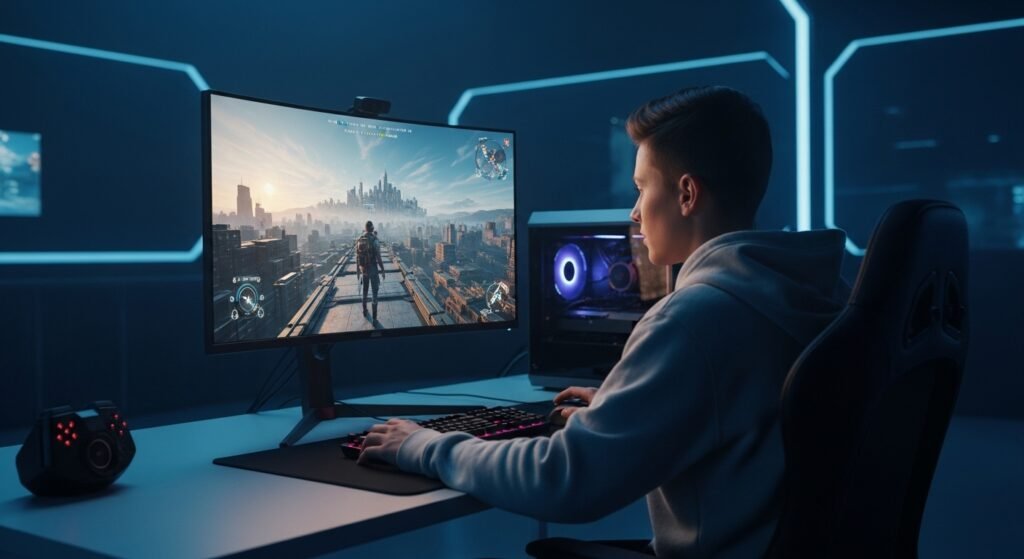
This application excites me most, honestly.
Machine learning enables games to understand players individually. Not through surveys or settings menus, but through observation and inference. How quickly do you solve puzzles? Where do you struggle? What rewards motivate you? When do you usually quit sessions?
Dynamic difficulty adjustment powered by ML goes far beyond simply making enemies hit softer when you die repeatedly. Sophisticated systems analyze dozens of behavioral signals to craft experiences matching player preferences in real time.
Resident Evil 4’s “Director” system was an early precursor, though mostly rule based. Modern implementations use reinforcement learning to continuously optimize player engagement without making adjustments feel obvious or patronizing.
Of course, ethical considerations matter here. There’s a fine line between enhancing enjoyment and manipulating players toward monetization. Studios must implement these systems responsibly, prioritizing player experience over metrics that serve business goals at players’ expense.
Quality Assurance and Automated Testing
Here’s something that doesn’t grab headlines but saves studios millions: ML powered testing.
Games contain millions of potential states. Finding bugs through human testing alone? Practically impossible. Automated testing helps, but traditional automation follows predetermined paths.
Machine learning enables exploratory testing at scale. Agents trained through reinforcement learning can play thousands of hours in days, discovering edge cases human testers would never encounter. They learn to break games creatively clipping through geometry, triggering race conditions, exploiting AI pathfinding quirks.
Unity and Unreal have both invested heavily in ML testing tools. Smaller studios access these capabilities through cloud based solutions that would’ve seemed science fiction a decade ago.
I watched one QA team reduce their critical bug rate by roughly 40% after implementing ML agents alongside human testers. The combination proved more effective than either approach alone.
Animation and Graphics Enhancement
Machine learning drives remarkable improvements in visual fidelity and animation systems.
Motion matching where character animations blend dynamically based on gameplay context relies heavily on ML to create seamless transitions. Characters move naturally because models predict which animation clips connect smoothly rather than relying on predetermined blends.
NVIDIA’s DLSS technology uses neural networks to upscale lower resolution images, enabling better performance without sacrificing visual quality. Similar approaches enhance real-time ray tracing, making previously impossible graphics achievable on consumer hardware.
For animation specifically, studios increasingly use ML to clean mocap data, fill gaps in motion capture sessions, and even generate variations on recorded performances. What once required extensive manual cleanup now happens semi automatically.
Challenges Worth Acknowledging
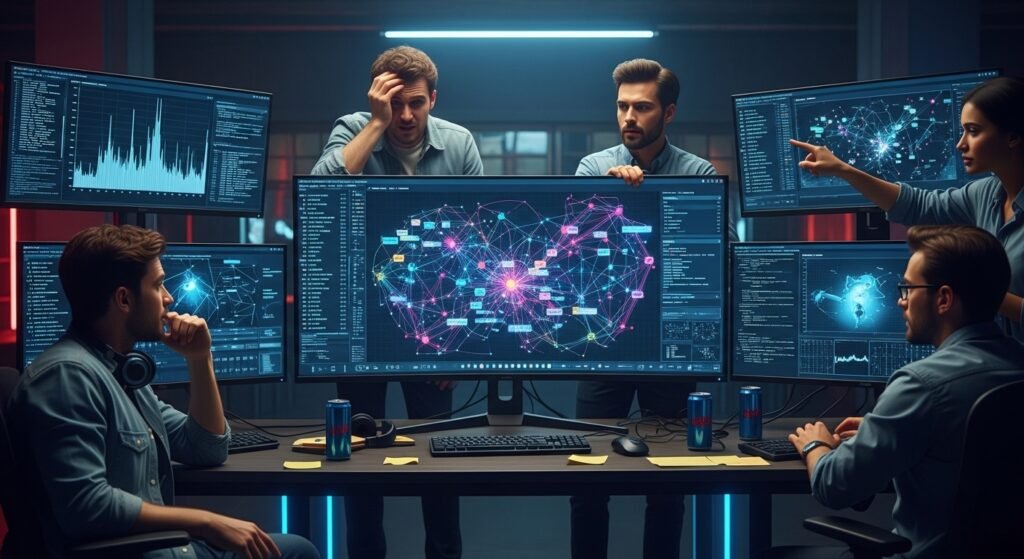
Let’s be realistic about limitations.
Training ML models requires substantial computational resources and quality data. Small teams often lack both. While cloud solutions democratize access somewhat, the learning curve remains steep.
Debugging ML systems presents unique challenges. When a neural network makes unexpected decisions, understanding why proves far more difficult than tracing logic through traditional code. Black box behaviors can frustrate developers and create unpredictable player experiences.
There’s also the question of creative control. Some designers worry that ML generated content lacks intentionality that human vision gets diluted when algorithms contribute significantly to game creation. It’s a valid concern that each team must navigate according to their priorities.
Looking Forward
The trajectory seems clear. Machine learning will become as fundamental to game development as physics engines or audio middleware. Studios already hiring ML specialists outnumber those that aren’t.
What excites me isn’t replacement of human creativity but augmentation of it. Designers freed from tedious tasks can focus on vision and innovation. Players receive experiences impossible to create through traditional means alone.
We’re genuinely witnessing a transformation in how interactive entertainment gets made. Having watched this evolution firsthand over the past several years, I can say confidently: the most interesting applications haven’t been invented yet.
Frequently Asked Questions
What types of machine learning are most common in game development?
Reinforcement learning for AI agents and behavior systems, supervised learning for animation and content generation, and deep learning for graphics enhancement see the widest adoption currently.
Do indie developers have access to ML tools?
Yes, through engines like Unity and Unreal offering ML plugins, plus cloud based services that reduce infrastructure requirements. However, implementation still requires technical expertise.
Will machine learning replace game designers?
No. ML augments human creativity rather than replacing it. Designers remain essential for vision, narrative, and ensuring ML generated content serves player experience appropriately.
How does ML improve NPC behavior specifically?
NPCs trained through reinforcement learning adapt to player strategies, exhibit emergent behaviors, and respond to situations without explicit programming for every scenario.
What are the biggest barriers to adopting ML in game studios?
Technical expertise gaps, computational costs, data requirements, and integration complexity with existing development pipelines present the primary challenges most studios face.