
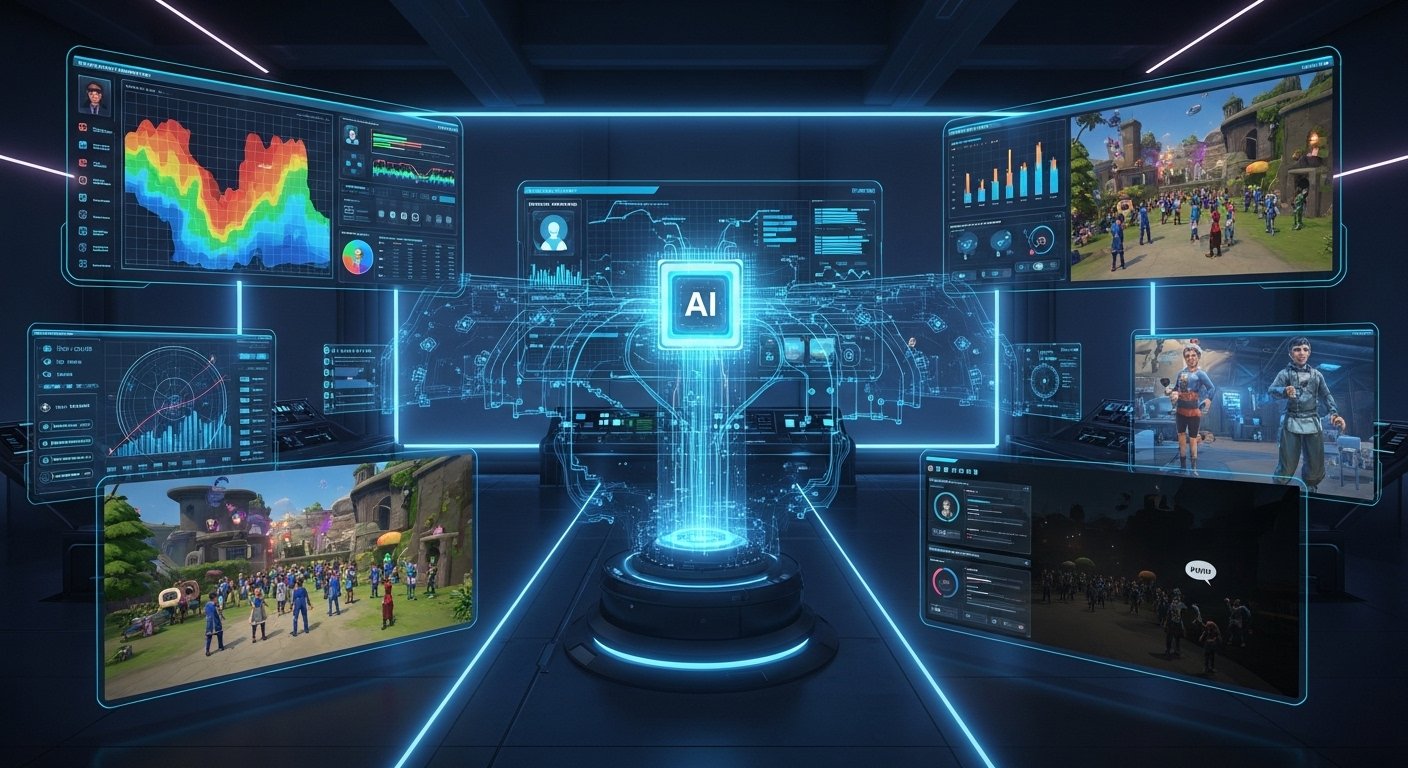
I’ve spent the better part of a decade watching how games keep players hooked—or lose them entirely. When I first started working with game studios, player retention was mostly guesswork dressed up with basic analytics. We’d look at drop-off rates, maybe run some A/B tests, and hope our updates hit the mark. These days? The landscape has changed dramatically, and artificial intelligence has become the secret weapon that separates games that thrive from those that vanish into obscurity.
Understanding the Engagement Challenge
Here’s the thing about modern gaming: players have endless options. Mobile game stores alone host millions of titles, and that’s not counting PC, console, or browser-based games. The average mobile game loses about 77% of its daily active users within the first three days after install. By day 30, that number climbs to roughly 90%. Those statistics kept me up at night during my time consulting for a mid-sized mobile game studio.
Player engagement optimization isn’t about manipulation—though that line gets blurry sometimes, and we’ll address that. At its core, it’s about understanding what makes your game enjoyable for different types of players and delivering more of that experience while smoothing out the friction points that cause people to quit.
How AI Actually Works in This Space
The AI systems I’ve encountered in player engagement fall into several practical categories. Let me break down what’s actually happening behind the scenes, not the marketing fluff you see in press releases.
Behavioral Pattern Recognition is probably the most common application. Machine learning algorithms analyze how thousands or millions of players interact with a game. They identify patterns that human analysts would never spot—like the fact that players who customize their character’s appearance within the first hour are 34% more likely to still be playing after two weeks. (I’m using a realistic example here, though exact numbers vary wildly between games.)
One studio I worked with discovered through their AI analysis that players who joined a guild or clan within 72 hours had dramatically better retention. But here’s where it gets interesting: the AI also identified that directly prompting players to join was less effective than creating specific gameplay moments that naturally led to social interaction. The system optimized when and how to introduce social features based on individual player behavior.
Dynamic Difficulty Adjustment represents another significant application. I remember testing an early version of this system in an action RPG. The game would subtly adjust enemy health, damage output, and spawn rates based on player performance. The goal wasn’t to make the game easier—it was to keep players in what psychologists call the “flow state,” where challenges match skill level closely enough to maintain engagement without causing frustration.
The tricky part? If players notice these adjustments, the magic disappears. Nobody wants to feel like the game is “going easy” on them. The best implementations are invisible, operating within tight parameters that feel natural.
Personalized Content Delivery has become huge, especially in games-as-a-service models. Rather than showing everyone the same offers, events, or content recommendations, AI systems predict what each player segment wants to see. A competitive player might get notifications about ranked tournaments, while a casual player sees new cosmetic items or story content.
I’ve seen this work remarkably well, but also fail spectacularly when the targeting gets too aggressive or miscategorized players. One memorable case involved a system that kept pushing competitive content to someone who just wanted to play casually with friends. They quit, feeling like the game didn’t “get them.”
Real-World Applications and Results

Let’s talk specifics. Major free-to-play games have reported 20-40% improvements in retention metrics after implementing sophisticated AI engagement systems. A battle royale title I consulted for used machine learning to optimize their matchmaking algorithm—not just for skill balance, but for engagement. The system learned that perfectly balanced matches weren’t always the most engaging; players needed occasional “popcorn matches” where they performed well, mixed with challenging encounters.
The subscription-based MMO space has embraced AI differently. These games use predictive models to identify players at risk of canceling subscriptions, then trigger personalized retention campaigns. Maybe that’s special in-game mail with a gift, a limited-time event featuring content the player enjoys, or even direct outreach from community managers. When done thoughtfully, it can genuinely improve player experience. When done poorly, it feels desperate and invasive.
The Ethical Minefield
I’d be dishonest if I didn’t address the uncomfortable parts. Some implementations of engagement optimization cross into territory I personally find problematic. I’ve seen systems specifically designed to identify “whales”—high-spending players—and create psychological pressure points to increase spending. The AI learns which offers, scarcity tactics, and social comparisons work best on vulnerable players.
This isn’t theoretical. Mobile games, particularly those with gacha mechanics, have refined these techniques to a disturbing degree. The same AI that could create a better, more personalized experience gets weaponized to maximize revenue extraction.
The gaming industry needs to reckon with this. Just because we can optimize engagement doesn’t mean every optimization is ethical. I’ve been in meetings where I’ve pushed back on implementations that targeted potentially addictive behaviors, and those conversations are never comfortable. Revenue talks loudly.
Where This Technology Is Heading
Looking forward, I expect engagement optimization to become more sophisticated and, hopefully, more player-friendly. The studios that survive long-term understand that burning out your player base for short-term metrics is a losing strategy.
We’re seeing emerging applications in procedural content generation, where AI creates personalized quests, levels, or challenges tailored to individual play styles. Voice and sentiment analysis might soon detect player frustration in real-time during multiplayer matches, triggering interventions to improve the experience.
The hardware improvements in machine learning inference mean these systems can run more complex models locally rather than requiring constant server communication. That opens up privacy-conscious approaches to engagement optimization that don’t require uploading every player action to the cloud.
Making It Work for Players and Developers

The best implementations I’ve seen treat engagement optimization as a tool for mutual benefit. Players get experiences better tailored to their preferences, less grind, more relevant content, and smoother difficulty curves. Developers get better retention, healthier communities, and yes, improved monetization—but through creating value rather than exploiting psychology.
The key is transparency and player control. Give people options to opt out of certain personalization features. Be clear about what data you’re collecting and why. Design your AI systems with ethical guidelines baked in from the start, not bolted on later.
Wrapping Up
Player engagement optimization using AI represents one of the most significant shifts in game development over the past decade. It’s powerful technology that can genuinely improve gaming experiences when wielded responsibly. But it requires constant vigilance against the temptation to prioritize metrics over player wellbeing.
From where I sit, the studios getting this right are the ones thinking long-term—building trust, creating value, and yes, using sophisticated AI to deliver better experiences. The ones getting it wrong are chasing quarterly targets straight off a cliff.
FAQs
What is player engagement optimization?
It’s the practice of using data analysis and AI to understand player behavior and create experiences that keep players interested, active, and enjoying a game over time.
Do all games use AI for engagement?
No, smaller indie developers often lack the resources. It’s most common in free-to-play games, live-service titles, and games from larger studios with dedicated analytics teams.
Is engagement optimization the same as addiction?
Not inherently, though the line can blur. Ethical optimization creates enjoyable, challenging experiences. Problematic implementations exploit psychological vulnerabilities to maximize time and money spent.
Can players tell when AI is optimizing their experience?
Usually not, if it’s done well. The best systems operate invisibly, making the game feel naturally responsive to your preferences and skill level.
How do I know if a game is using these techniques?
Most modern online games use some form of behavioral analytics and optimization. Reading privacy policies and data usage terms can provide clues, though specifics are rarely disclosed publicly.