
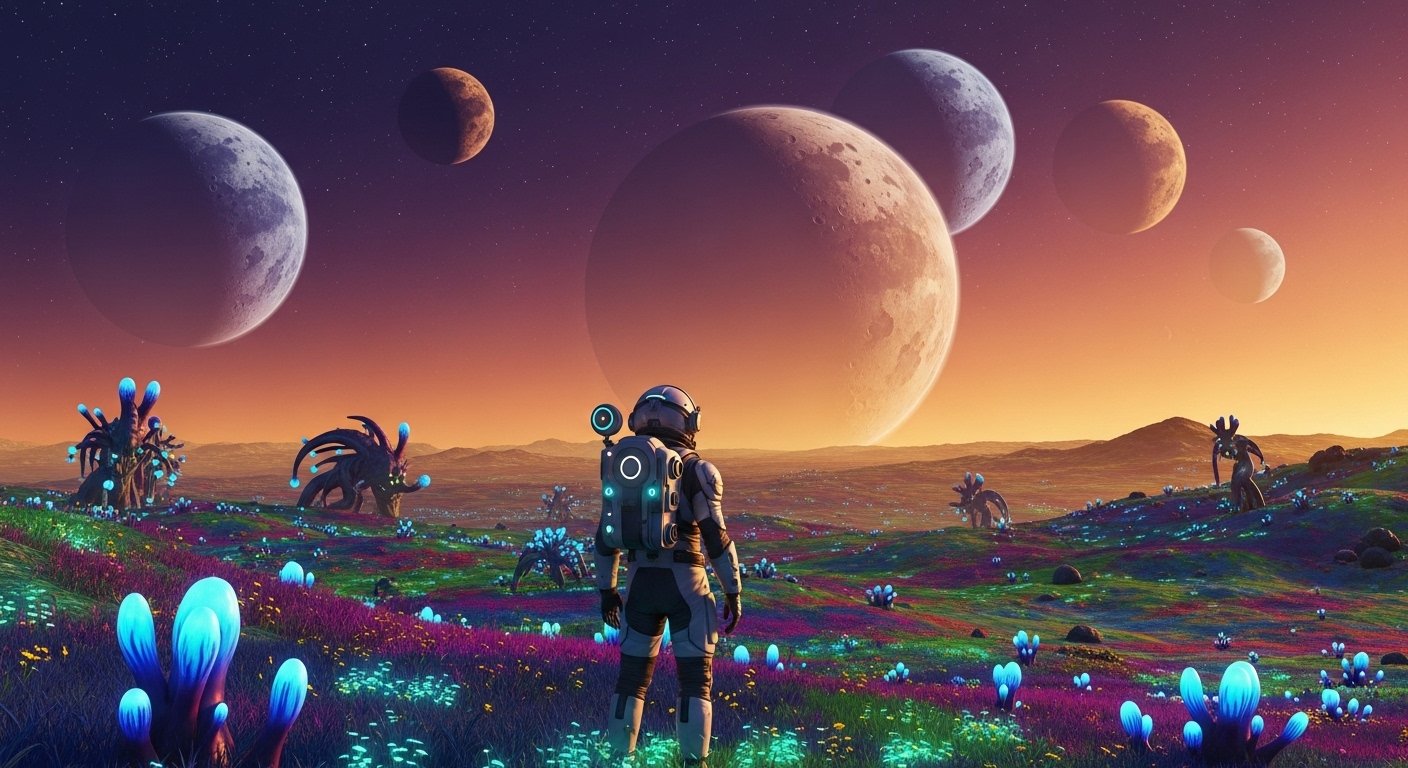
I still remember the first time I witnessed procedural content generation in action. It was 2026, and I was playing No Man’s Sky, watching an entire planet materialize before my eyes unique terrain, bizarre flora, strange creatures all generated algorithmically. That moment changed how I thought about game design and digital content creation forever.
Fast forward to today, and procedural content generation has evolved dramatically. The integration of artificial intelligence has taken what was once rule based randomization and transformed it into something genuinely creative, adaptive, and increasingly indistinguishable from human crafted content.
Understanding Procedural Content Generation
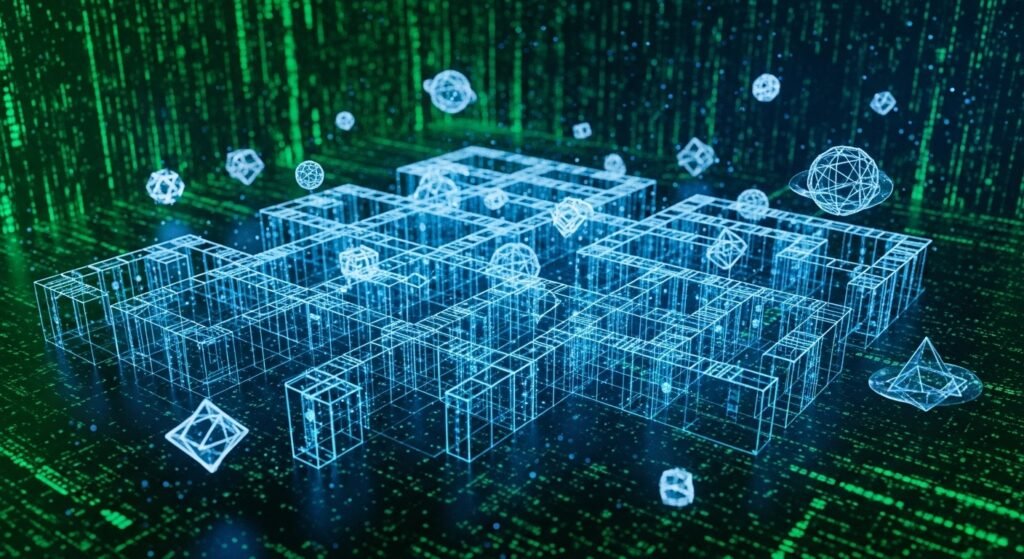
Procedural content generation, commonly abbreviated as PCG, refers to the algorithmic creation of digital content without direct human input for each individual element. Instead of artists and designers manually crafting every texture, level, or character, systems generate these assets following predefined rules and parameters.
Traditional PCG relied heavily on randomization within constraints. Think of early roguelike games where dungeon layouts were randomly assembled from pre-made room templates. Functional? Absolutely. But often repetitive and occasionally nonsensical.
What makes modern PCG different is intelligence actual learning systems that understand context, player preferences, and design principles.
The AI Revolution in Content Generation
When machine learning entered the picture, everything shifted. Rather than following rigid rules, AI powered PCG systems learn patterns from existing content and generate new material that feels coherent and purposeful.
I’ve worked with teams implementing neural networks for terrain generation, and the difference is striking. Traditional algorithms might create technically correct landscapes that somehow feel wrong rivers flowing uphill, forests appearing in deserts, mountains placed awkwardly. Neural network based systems, trained on real world geography and successful game environments, produce terrain that makes geological and aesthetic sense.
The technology operates through several approaches. Generative adversarial networks (GANs) pit two neural networks against each other one creates content while another evaluates it, pushing quality higher through competition. Variational autoencoders learn compressed representations of content types, enabling smooth generation of variations. Reinforcement learning allows systems to optimize content based on player feedback and engagement metrics.
Real World Applications Transforming Industries
Video Game Development
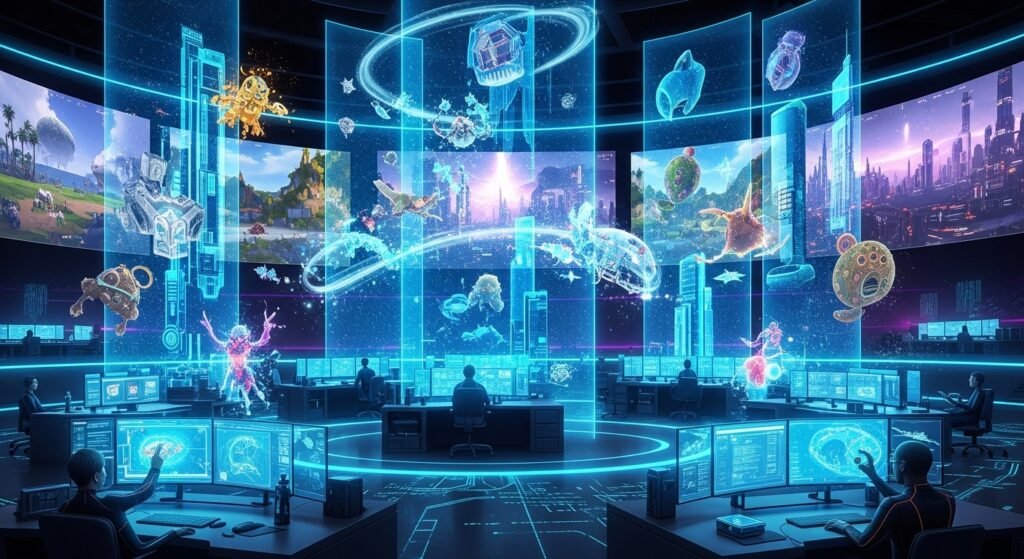
The gaming industry remains the primary beneficiary of AI driven PCG. Studios use these systems for generating:
- Endless worlds and levels: Games like Minecraft and Spelunky 2 rely on PCG for replayability
- Dynamic narrative content: Dialogue systems that adapt to player choices
- Asset creation: Textures, sound effects, and 3D models generated programmatically
- Difficulty balancing: Levels that adjust based on player skill
Ubisoft’s proprietary tools generate building interiors automatically for open world titles. This approach saved their teams thousands of hours on Assassin’s Creed Valhalla while maintaining visual quality standards.
Architecture and Urban Planning
Beyond gaming, architects now use AI generated floor plans and building layouts. Software analyzes successful designs, zoning requirements, and client preferences to suggest optimal configurations. One firm I consulted with reduced initial planning phases by forty percent using these tools.
Film and Media Production
Visual effects studios employ PCG for crowd simulation, environmental generation, and even concept art exploration. The technology enables smaller teams to compete with major studios by automating labor-intensive asset creation.
Benefits That Make PCG Invaluable
The advantages extend beyond simple cost savings, though those are certainly significant.
Infinite variety keeps content fresh. Players exploring procedurally generated worlds encounter genuine surprises, even after hundreds of hours. This extends product lifespan dramatically.
Rapid prototyping accelerates development cycles. Designers can generate dozens of level variations in minutes, testing concepts that would take weeks to manually construct.
Personalization becomes feasible at scale. AI systems can generate content tailored to individual player preferences, skill levels, and play styles something impossible with static, pre made content.
Resource efficiency allows smaller teams to create ambitious projects. Independent developers now build experiences rivaling major studio releases.
Challenges and Honest Limitations
Having implemented these systems professionally, I’d be dishonest if I didn’t address the significant challenges.
Quality control remains problematic. AI generated content occasionally produces nonsensical or broken results. Someone must review outputs, and as generation volume increases, oversight becomes overwhelming.
Coherence across generated elements frequently fails. A system might generate beautiful individual rooms that make no architectural sense when combined. Maintaining global consistency while allowing local variation requires sophisticated solutions many teams lack.
The uncanny valley effect appears in generated content too. Players often sense something artificial about procedurally generated worlds a lack of intentionality, meaning, or narrative purpose that hand-crafted content provides.
Technical barriers remain high. Implementing AI powered PCG requires expertise many development teams don’t possess, plus computational resources that increase production costs.
Looking Forward
The trajectory seems clear. As neural networks improve and hardware becomes more accessible, AI powered procedural generation will become standard practice across creative industries.
We’re already seeing hybrid approaches emerge systems where human designers establish vision and parameters while AI handles execution and variation. This collaboration seems most promising, combining human creativity with machine efficiency.
The ethical dimensions deserve attention too. Questions about authorship, copyright, and the value of human creativity will intensify as AI-generated content becomes ubiquitous.
Final Thoughts
Procedural content generation powered by AI isn’t replacing human creativity it’s amplifying it. The technology handles repetitive tasks while designers focus on meaningful creative decisions. Having seen this evolution firsthand, I’m genuinely optimistic about where it’s heading.
The key lies in understanding these tools as exactly that: tools. They’re remarkably powerful, increasingly sophisticated, but ultimately serving human creative vision.
Frequently Asked Questions
What is procedural content generation in simple terms?
It’s using algorithms and AI to automatically create game levels, graphics, music, or other digital content instead of building everything manually.
Which games use AI procedural content generation?
Notable examples include No Man’s Sky, Minecraft, Hades, Spelunky, and Dwarf Fortress. Many modern open world games use PCG for environmental details.
Is AI generated content as good as human-created content?
Currently, AI excels at variation and scale but struggles with narrative purpose and emotional depth. Hybrid approaches combining both work best.
Can small developers use procedural content generation?
Absolutely. Tools like Wave Function Collapse algorithms and accessible machine learning frameworks enable independent developers to implement PCG systems.
Does procedural generation eliminate jobs for artists and designers?
No. It shifts their roles toward oversight, creative direction, and crafting the high impact elements that require human intentionality.
What skills are needed to implement AI-powered PCG?
Strong programming fundamentals, understanding of machine learning basics, and domain knowledge in your content area (game design, architecture, etc.) are essential.